Rabbit Holes · 6 January 2025
1814 day by day: Here we go!
How it all started, the first days
Short summary: I'm going to try to read a Norwegian newspaper from 1814 day by day, through 2025, and use this page as a place to reflect and share a bit of what I come across.
These last few years I've gotten very interested in history, and since I don't have any deadlines or homework - just a personal hobby - I love diving deep down “rabbit holes”. Sometimes it's useful to get your head above the water, and get a bit of an overview, chronology, eras, big analyses… But I often think it's much more interesting, and also gives me a better understanding, to pick a few areas where I go “deep”. I can for example read three historical novels about Charlemagne in German, or I can immerse myself in French tragedies from the 18th century, and not just read about them, but also read them (and see them).
“Primary sources” sounds fancy, and suggests that I'm doing some kind of advanced source criticism, but what it's about for me is simply reading the texts that were written back then - both great literature (Homer, Dante, Ibsen), but also everyday things, like old newspapers.
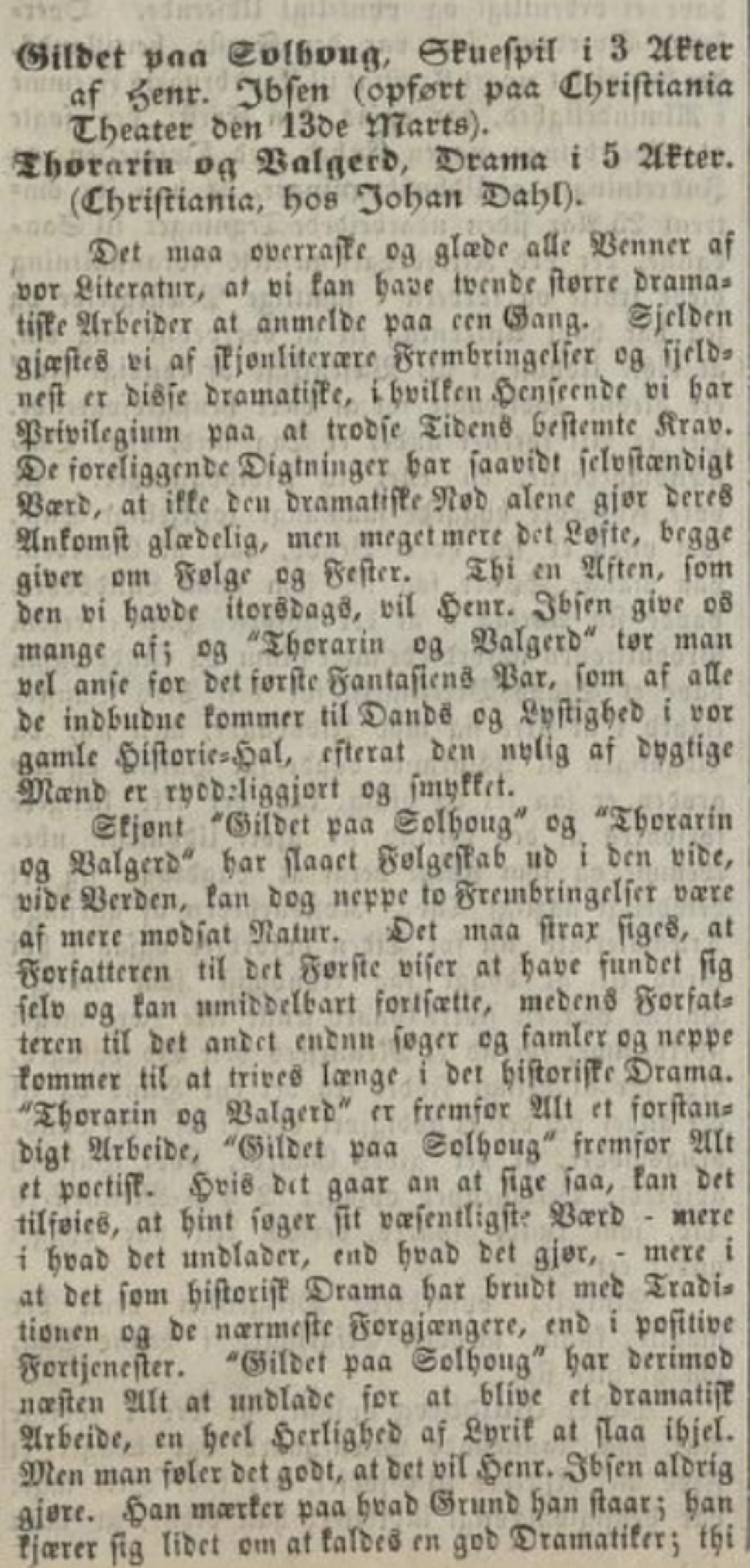
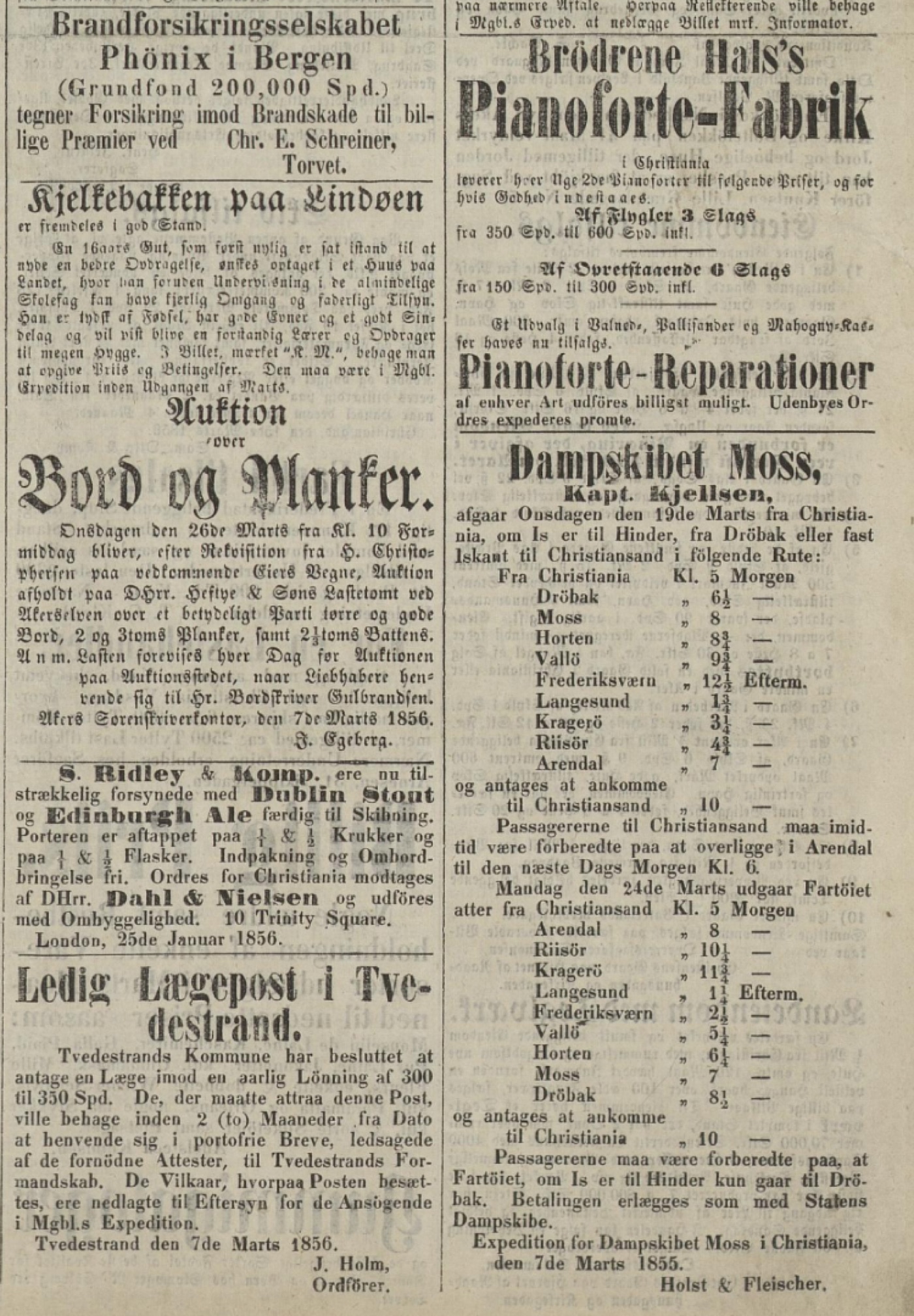
One of my favorite finds last year was the National Library's digital collections, where you can do a free-text search across newspapers and books several hundred years back. When I read Ibsen or Holberg, I often wonder “How did people react to this when it came out”… and with nb.no it's just a few keystrokes away. And when I'm already reading about the first performance of “The Feast at Solhaug”, in a review by Bjørnstjerne Bjørnson, I also see lots of little notices, ads for soap, pipe tobacco, books being sold, maids wanted etc. A fascinating picture of another time.
I really know far too little about early Norwegian history - even about what actually happened in 1814. I looked up the first article I could find about the Treaty of Kiel, where Norway was “given over” from Denmark to Sweden, and it was incredibly interesting to read the reflections of “that time”… That gave me an idea: What if I spent a year reading the newspaper from another century? If I picked a newspaper, and started reading 1 January 1814, on 1 January 2025, and so on? I have a hypothesis that it could be interesting to follow a whole year - see how political issues develop and get reported etc.
I expect that a few rabbit holes will turn up - maybe people or things I'll want to look up on Wikipedia. It could also be interesting to find newspapers in other languages - Swedish, Danish, German, French etc. But I think it's useful to pick a focus, and try to go deep.
The first step (I'm doing this while I write the post), is to choose a newspaper. Let's see on nb.no which newspapers are available for 1814.
When I search for newspapers that came out the first two weeks of 1814, I get a handful.
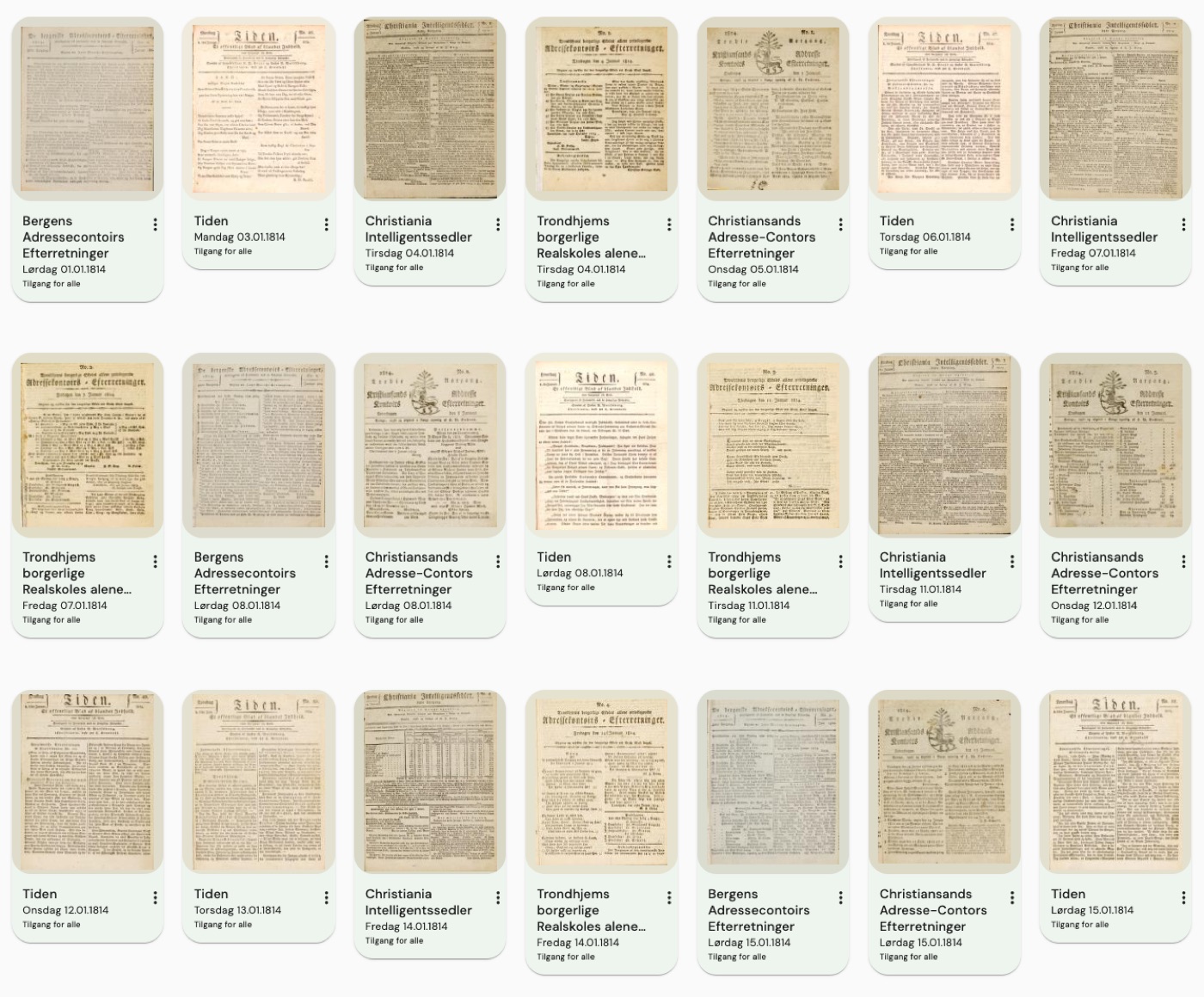
After looking through them a bit, I see that this is very early for Norwegian newspapers, they get considerably more interesting a bit further into the 1800s… So I think I'll read a combination of newspapers instead of focusing on one, and supplement with a few foreign ones.
So what's happening then the first week of January, 1814?
And already the first article I read (from Bergens Adressecontoir) is exciting - but what is mobilieskat
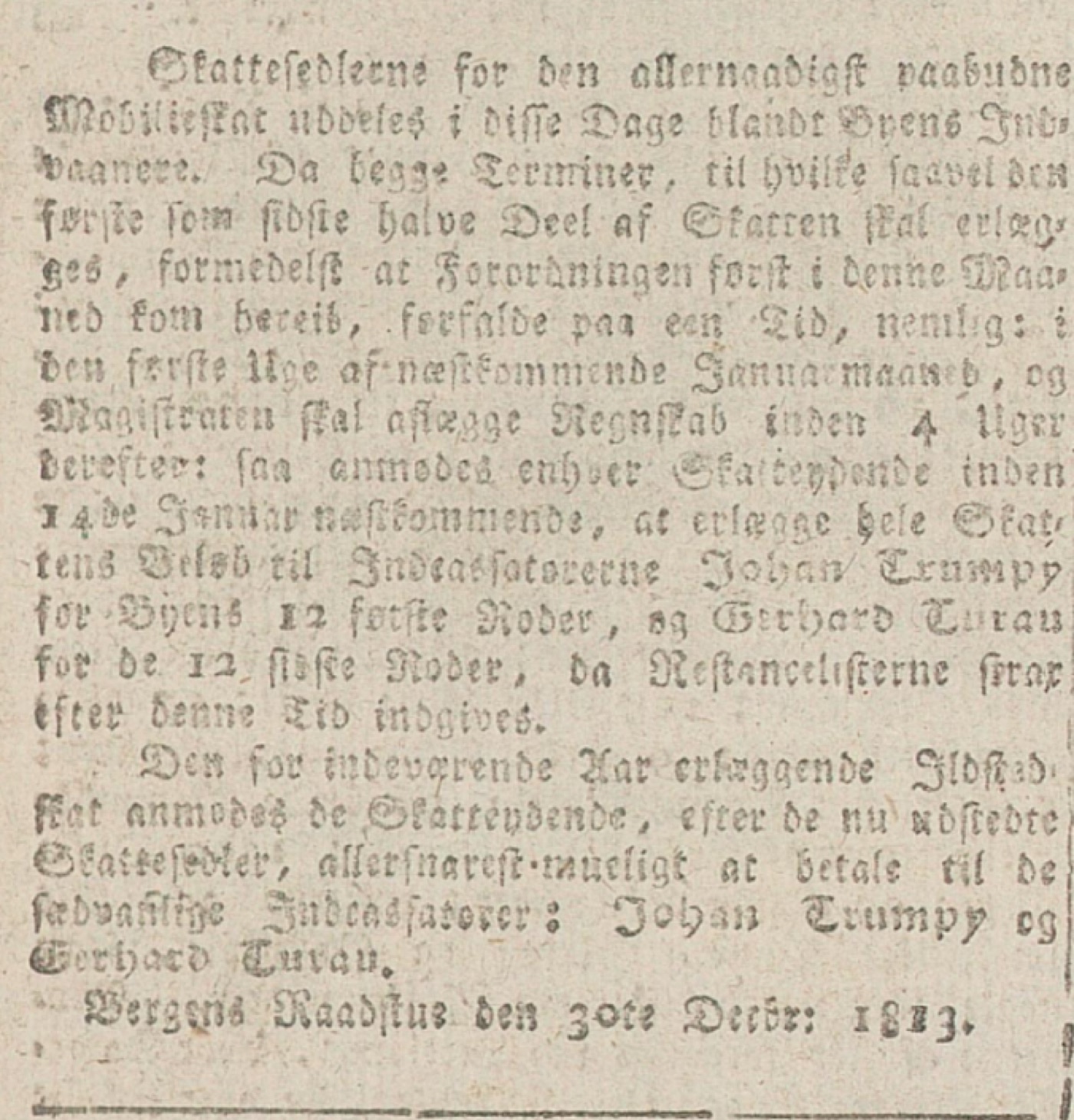
"The tax notices for the most graciously decreed Mobilieskat are being handed out these days among the town's inhabitants. Since both due dates, on which the first as well as the last half of the tax are to be paid, because the Ordinance only reached us this month, fall due at one time, namely: in the first week of next January, and the Magistrate is to render its accounts within A weeks after that: every taxpayer is therefore requested, before the coming 14th of January, to pay the whole amount of the tax to the collectors Johan Trumpy for the town's first 12 wards, and Gerhard Turau for the last 12 wards, as the lists of arrears will be handed in right after this time.
The installment payable for the current year the taxpayers are requested, according to the tax notices now issued, to pay as soon as at all possible to the aforementioned collectors: Johan Trumpy and Gerhard Turau.
Bergen Town Hall, 30 Decbr. 1813."
Well, this is apparently some kind of extraordinary tax imposed because of the Napoleonic Wars, which comes out to 10 times the “hearth tax” (which I'd never heard of either). You learn all sorts of things here!
Hearth tax, an extra tax on hearths, decreed several times. The ordinances of 1 December 1699 and 1 June 1711 required 4 marks per hearth in town and country, except for those of «the common peasant»; nobody was to pay for more than four hearths. This hearth tax replaced an older cattle tax. The ordinance of 6 May 1812 decreed a hearth tax, calculated by the cubic volume of the room, for all market towns, loading places and outlying harbors except Finnmark; Kongsberg was exempt. The base rate was 24 skilling per year for a room of 60 cubic ells, increasing by 1 skilling for every fifth cubic ell above 60. The rooms were to be measured by two appointed men, or you could rely on measurements done for the building tax of 1802. The tax did not cover uninhabited public buildings or buildings where recipients of poor relief lived. This hearth tax was abolished by the tax law of 1 July 1816 § 1 no. 21. Compare mobilieskatt. H.W.
We read on about pensions for war invalids, that the mail from Bergen on 30 October was lost on the crossing from Norway to Jutland, after the mail boat was sunk by the enemy. A play “De syv Tusinde Rigsdaler” where the proceeds go to the wives and children of captured sailors. An auction of the inventory from a captured ship - The Mary. And then there are little notices about a reward for a lost white rooster, and a yellow-striped hen, a leather hat and a silk scarf.
What strikes me when I read this, is that it's from a country at war. And even though I rationally knew that Denmark was part of the Napoleonic Wars, and that Norway as part of Denmark had to be involved, I've never really reflected on the fact that Norway was at war in these years, with sailors being taken prisoner and losing their lives, widows and orphans, etc.
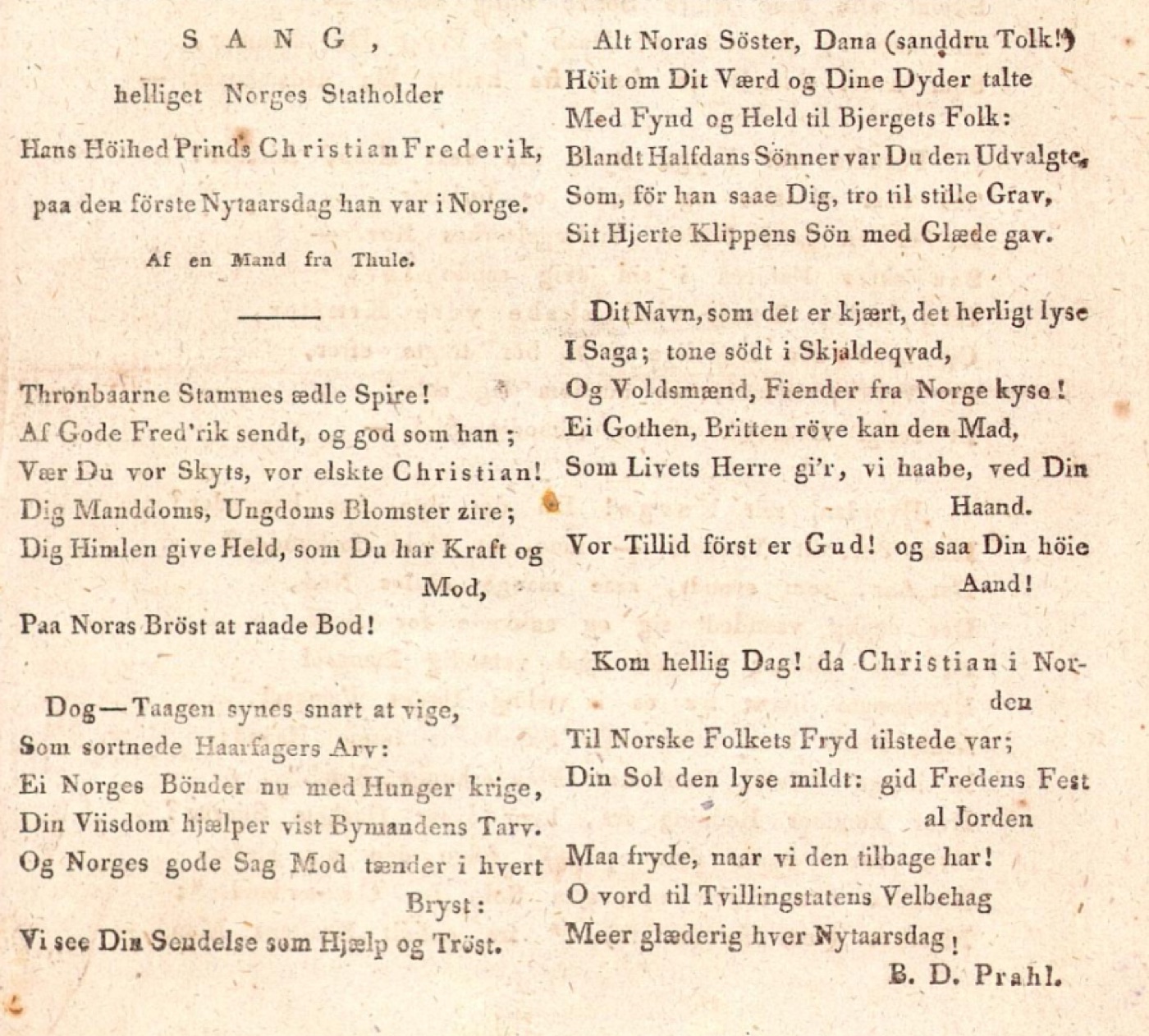
I quickly scan through the other newspapers to see if there's anything interesting. A tribute to the Danish prince in “Tiden”.
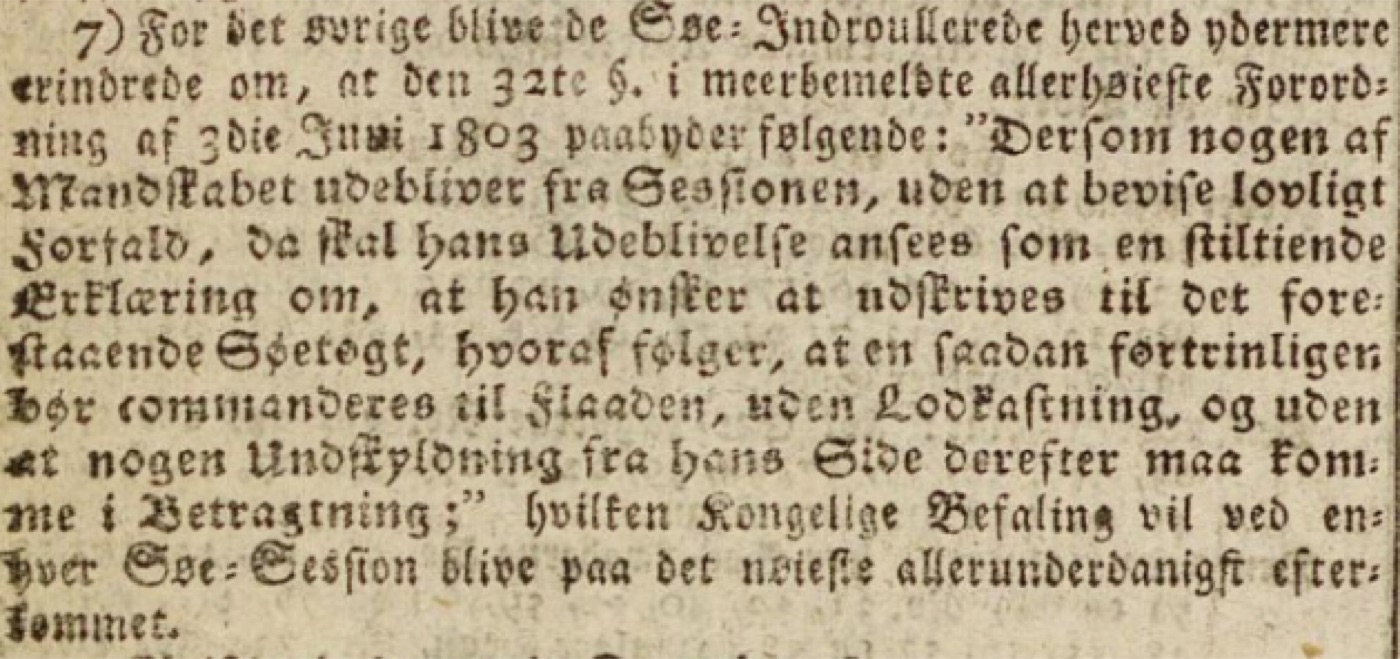
In Christiania Intelligentssedler they list dates and farm numbers where recruiting meetings for the navy are going to be held. It seems like they drew lots among the ones who showed up, but if you didn't show up, you were automatically enrolled.
Kristiansands Adresse-Contors Efterretninger has a notice about how to exchange money - which is apparently related to the monetary reform of 1813, which I'd never heard of before either.
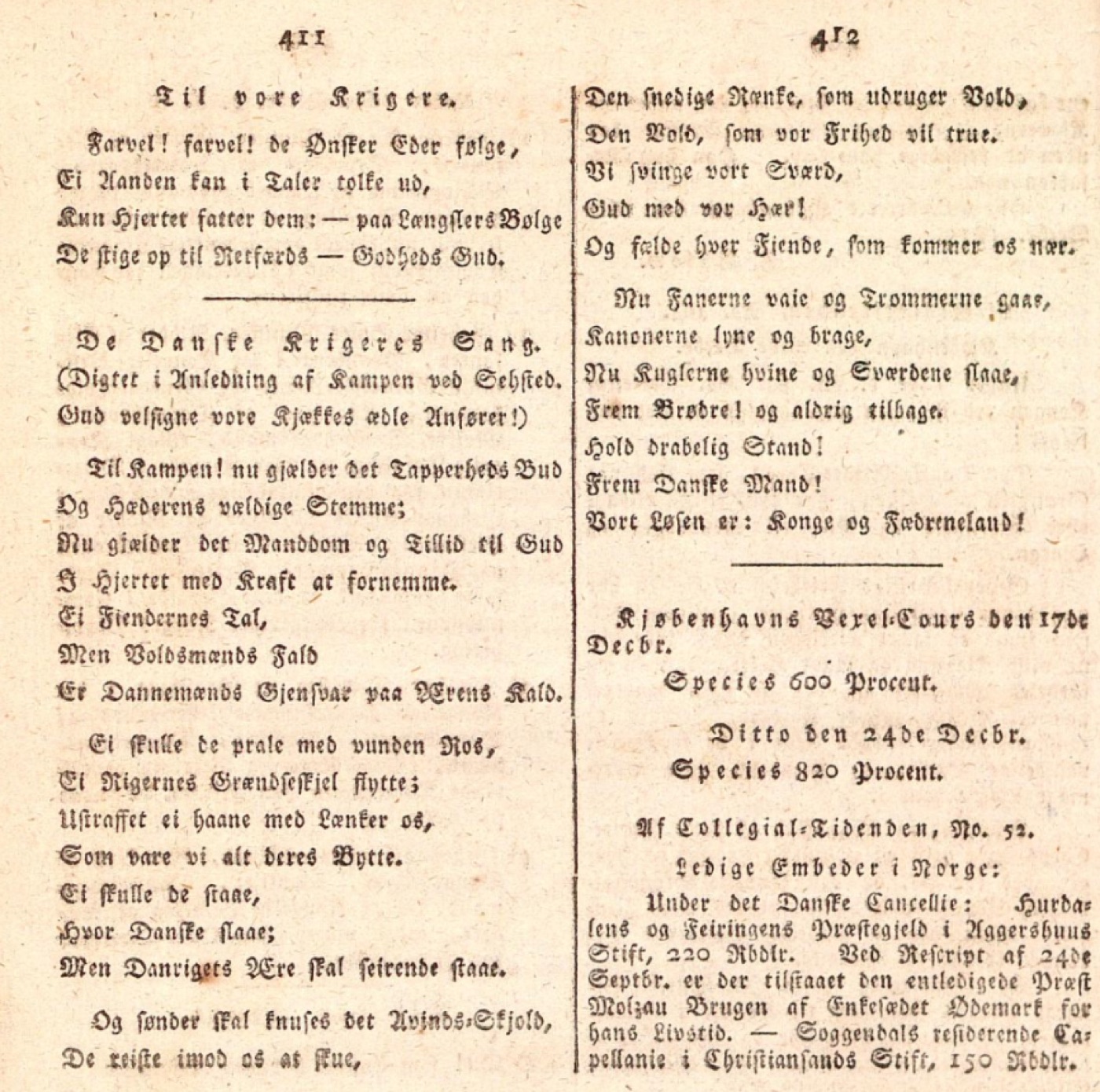
In “Tiden” there's a long report on battles around Kiel, which led to a retreat, and some encouraging poetry.
And that's where I end the first, way too long, but very fun post. I'm curious anyway about what happens next week! And I've learned a whole lot already.