Rabbit Holes · 6 June 2025
The Great Northern War
Peter the Great incognito as a shipbuilder, a fox-tossing Polish king, a Swedish army in Ukraine, Charles XII's vacation in the Ottoman Empire...
Learning history absolutely works according to the Matthew principle - the more you know, the more exciting and interesting it is to learn new things (and the easier it is to remember them). In the first Rabbit Holes post I wrote about a Norwegian historical novel, which led me to the exciting life of Jens Munk, polar sea explorer who tried to find both the Northeast Passage and the Northwest Passage. He also spent a lot of time in the area around Arkhangelsk whaling, and this is what got me to start looking at the world map, and realize that for most of history Russia had actually been “landlocked”, that is, without access to the sea.
For someone who has read “The Hunt for Red October” and thinks of the Soviet Union and Russia as a great power at sea, this was pretty surprising! But up until the 1700s Russia's only access in the west was the port at Arkhangelsk, which was covered in ice half the year, and not exactly the most direct route to Europe or further west.
The Rest is History (podcast)
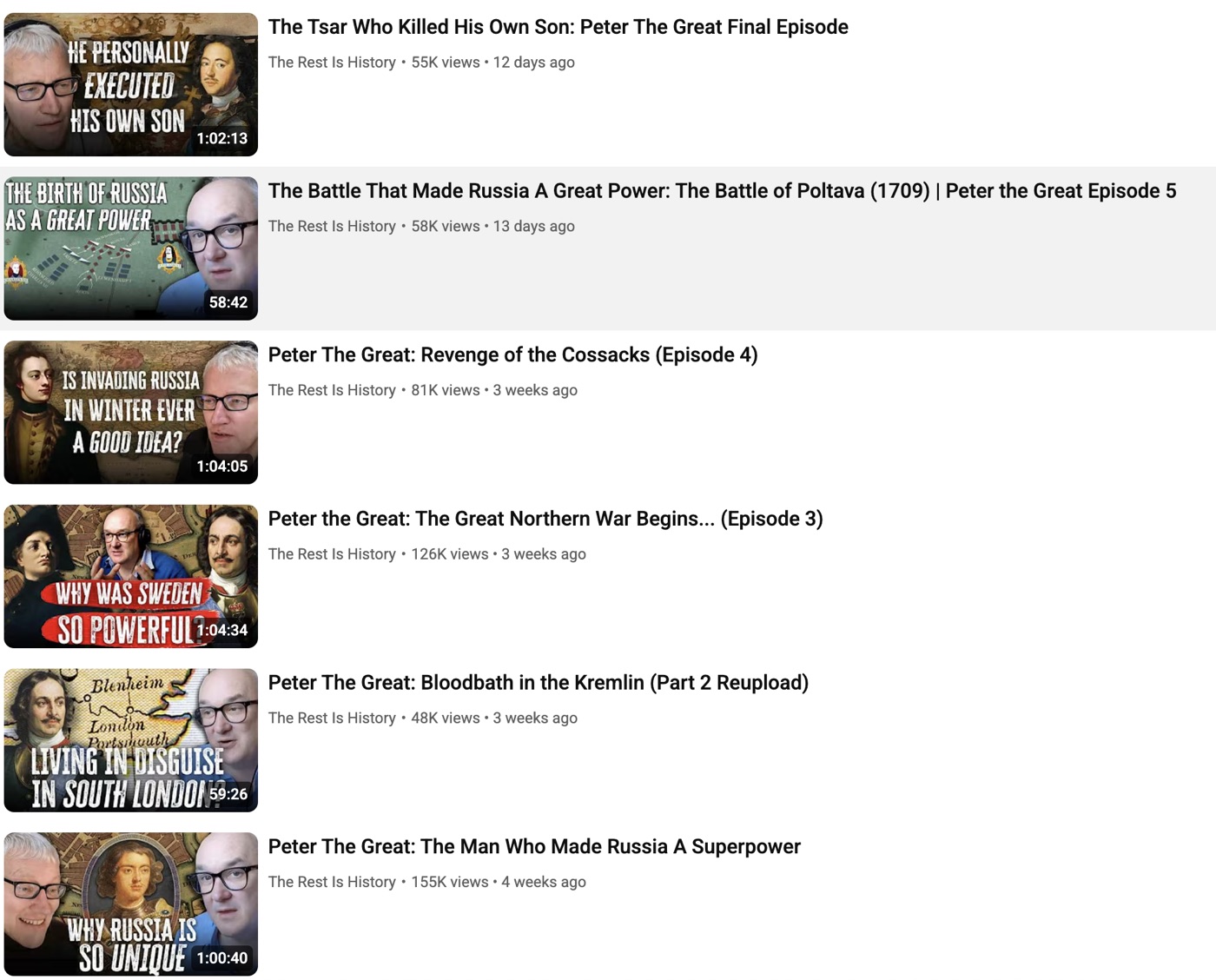
If I had seen the podcast series about Peter the Great on “The Rest is History” a month ago, I would have just moved on. But now that my curiosity had been awakened about the guy who founded St. Petersburg, I clicked in and listened. I've known about the podcast for a long time, but this was the first series I've listened to. And what a ride! Everybody should absolutely listen to this series, you'll find video here, and the podcast in all podcast apps.
Charles XII and the Great Northern War
I can say hand on heart that I had never heard of the Great Northern War before, and even though Charles XII and Peter the Great sound familiar, I couldn't have told you when they lived or a single thing about them. But what fantastically exciting stories (and the format of The Rest is History fits this material perfectly)!
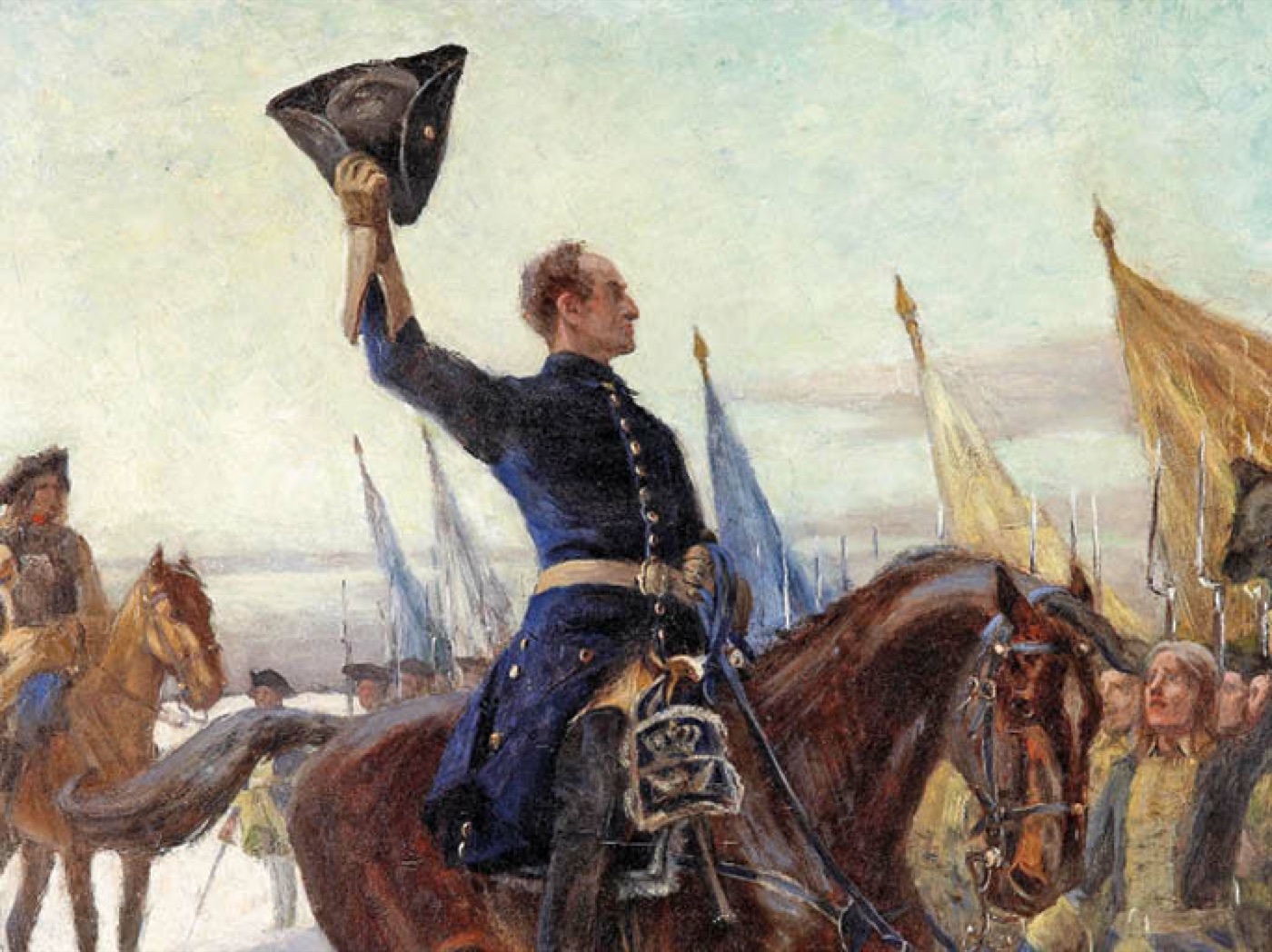
I would have imagined Charles XII as an aging statesman who sat in his castle and made decisions, but he was a kind of modern Alexander the Great, trained for war from a very young age, with an image as incredibly tough and stoic, used a pitchfork to fight bears, slept outside in a tent in the winter to harden himself. When he becomes king as a young man he leads one of the most effective and well-trained armies in Europe, and oversees an empire that includes Finland and much of the Baltics (and that blocks Russia's access to the Baltic Sea). Only 18 years old, Charles leads his forces in the war, after both of his cousins (of Denmark and Poland) have declared war, together with Peter of Russia. He will spend 15 years at war outside Sweden, before he comes back right before he gets shot and dies (in Norway).
Peter the Great
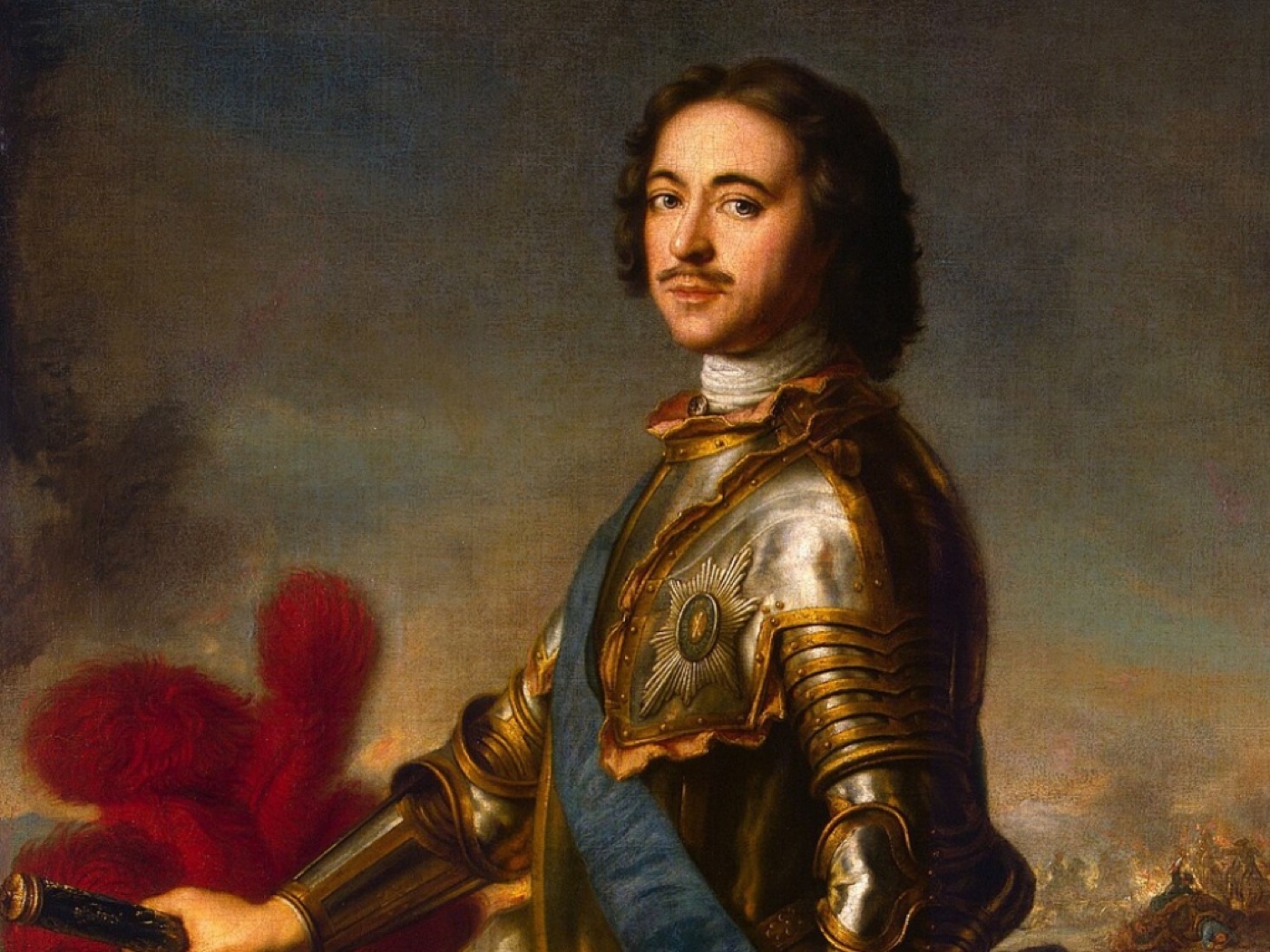
At the end of the 1600s Russia is a very weakly organized realm, with a traditional Orthodox culture that has felt little of the modernization in technology and ideas that has happened in Europe. Peter grows up in a chaotic situation with succession conflicts between siblings, palace coups and massacres. He can be violent and ruthless, but is incredibly interested in practical crafts, and the logistics of war. At his country estate he “plays war” with many hundreds of men, where he himself takes part as a “private”.
He also makes friends from the area of Moscow where foreigners are allowed to live, and gets very interested in shipbuilding. This leads to a Grand Tour of Europe, where he spends more than a year visiting among others the Netherlands and England, where he spends a lot of time at factories and shipyards, and among other things takes a job under a false name.
On the way back to Russia he stops by Augustus the Strong, Charles XII's cousin and king of Poland. Augustus is known for the very strange tradition of throwing foxes up in the air (this was apparently a favorite sport at the time). They became good friends, and eventually decided to attack Sweden, together with Denmark. After Peter came back to Russia he pushed through a good number of reforms, forced all the nobles to change into European clothes, imported shipbuilders and other craftsmen from Europe, and began building St. Petersburg in what was then a horrible swamp.
The Great Northern War
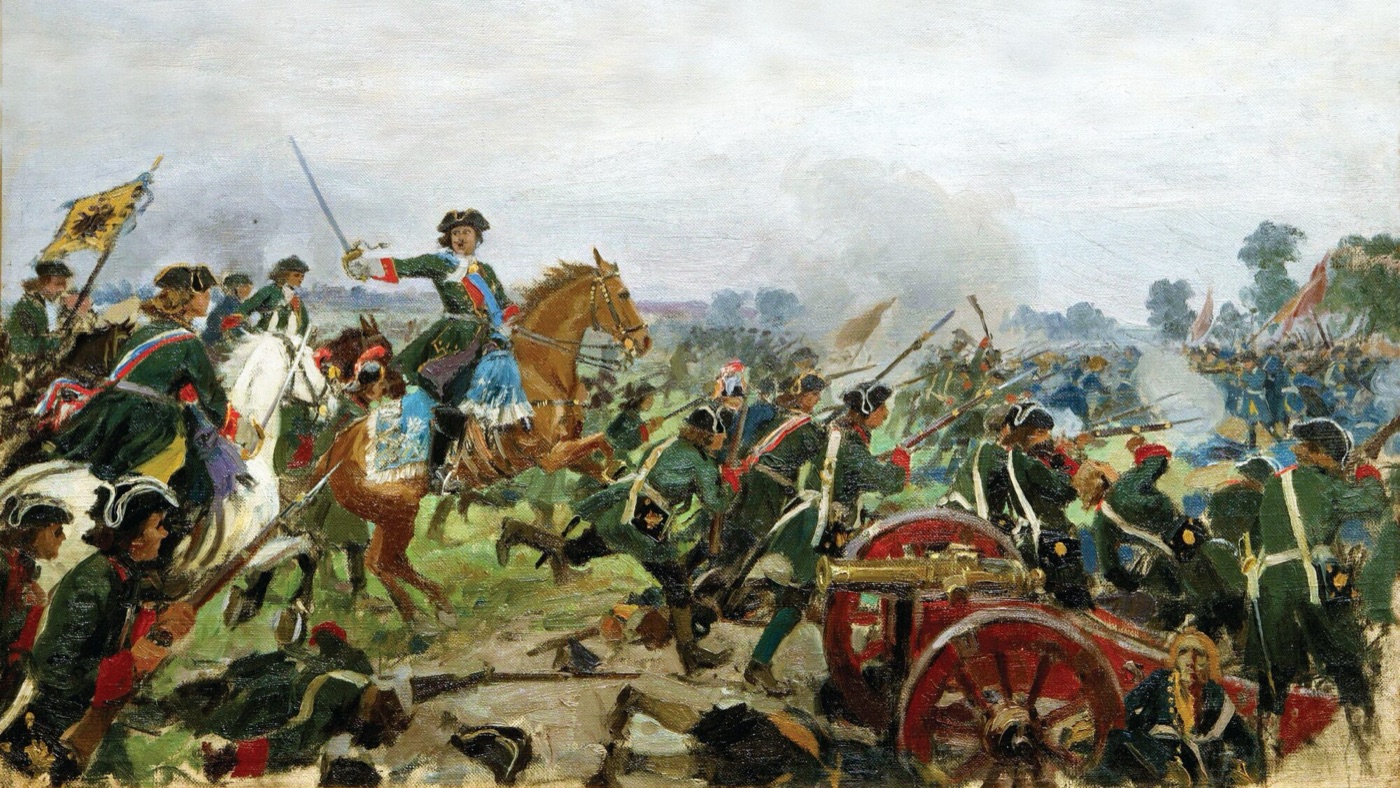
I won't try to retell the details from the podcast here, but in short it all starts out very well for Charles XII, Denmark is quickly put in its place and forced out of the war. Then early on he wins an easy victory against Peter, who runs away (this probably gives Charles a false confidence that will turn out to be devastating later). Instead of chasing Peter to Moscow, he spends a long time chasing Augustus the Strong around Poland, and then the long march toward Moscow begins. He won't be the last in history to try this, and learn how hard it is – but he was one of the first, and didn't have Napoleon and Hitler as warnings.
It goes slowly, the weather is against them, allies don't show up, a supply train from Sweden arrives too late and gets attacked, in the end the army ends up moving further south to Ukraine to spend the winter there, and gets torn to shreds by the coldest winter in living memory. And with the remains of the once so splendid army the stage is then set for a big battle at Poltava. Charles XII, who gets wounded in the foot, has to command the army lying on a stretcher, and it all ends in a big defeat for the Swedes.
Charles XII escapes with maybe 500-1000 men across a river and into the Ottoman Empire, while 20,000 were taken prisoner by the Russians. 8000 of these later became part of the Russian army, many were sent to St. Petersburg and Moscow for forced labor, and others to Siberia. Almost none of these would ever get to see Sweden again, and there were apparently small villages in Siberia where they spoke Swedish for several hundred years!
But Charles didn't give up, he stayed in the Ottoman Empire as a guest for five years! He tried to get the Ottoman emperor to fight Russia (Christian and Muslim against other Christians, why not?), and his camp was eventually attacked by Ottoman soldiers who were sick of their guest. But he ended up getting safe passage back to Germany, where for six months he led the defense of the besieged city of Stralsund, before he escaped to Sweden just before it fell. Also coming to Sweden were 60 Turkish creditors who were going to make sure the king paid the big debts he had run up! And possibly the king also brought back the recipe for svenska köttbullor from Turkey! He also developed a taste for coffee in Turkey. Then he went straight to Norway to fight Denmark, and was shot by a Norwegian bullet at Fredriksten fortress.
Why study war and great men
This is of course a fantastically exciting story, with two “greater than life” characters, tons of interesting anecdotes that bring names and dates to life, but this was also an event that reshaped all of Europe – it was the beginning of the end for Sweden as a great power, and the beginning of the Russian empire. Depending on what view of history you have, you can imagine that it would have gone that way anyway, or that if a few fateful choices had been made differently, Europe would have looked completely different today.
One thing that has dawned on me in my attempt to get an overview of European history, something I never got in school, is that big wars, kings and dates actually are important! That might seem obvious, but it's also easy to sniff at it as old-fashioned. But not only do you sometimes get incredibly exciting stories, but big wars are often a crossing point where the histories of different countries get “interwoven”. If you follow the podcast mentioned above, you suddenly have a pretty good starting point for saying something about what Europe looked like at the start of the 1700s. You know something about Sweden, Finland, Norway/Denmark, Germany, Poland, Russia, the Ottoman Empire…
It's also fascinating what a cultural influence these two people had in Europe. Voltaire wrote biographies of Charles XII and Peter the Great that were very popular at the time, Samuel Johnson and Byron wrote poems about the heroism of the war.
And it wouldn't really be Rabbit Holes without opera, would it? “Pierre le Grande”, by André Grétry (video), or “Zar und Zimmermann” (tsar and carpenter) by Albert Lortzing in a great film version. Or maybe Mazeppa by Tchaikovsky (the Ukrainian leader who supported Charles XII and is now a national symbol in Ukraine and hated in Russia). (If heavy metal is more your thing, Sabaton made a whole album about Rex Carolus)
What the history books say
As I mentioned, I had never heard of any of this (but there is a lot of European history that has passed me by, something I'm very aware of, and am now working deliberately to fix). But as I hope I've shown above, I think this is an incredibly important event in European and Nordic history, and something you should know something about. I find it terribly hard to form a picture of which historical events are known by “most people”. People talk a lot about how little people know, but I'm often surprised by people who have no academic background but are interested in history and know tons. I would have loved to do a survey of how many people have heard of the Great Northern War, but that also feels very rude.
Instead I got curious about how history books have described this. Over time I've collected a bunch of older history series from our fantastic Resirkula in Hamar and other sources, which I haven't read much of yet, so I thought that seeing how they wrote about this thing that I now knew something about would be an interesting “test”. How much detail, how engaging, is there anything surprising in the focus or conclusion?
Bugges illustrerte verdenshistorie in 9 volumes (online) and Carl Grimberg's Menneskens liv og historie, 22 volumes (online)
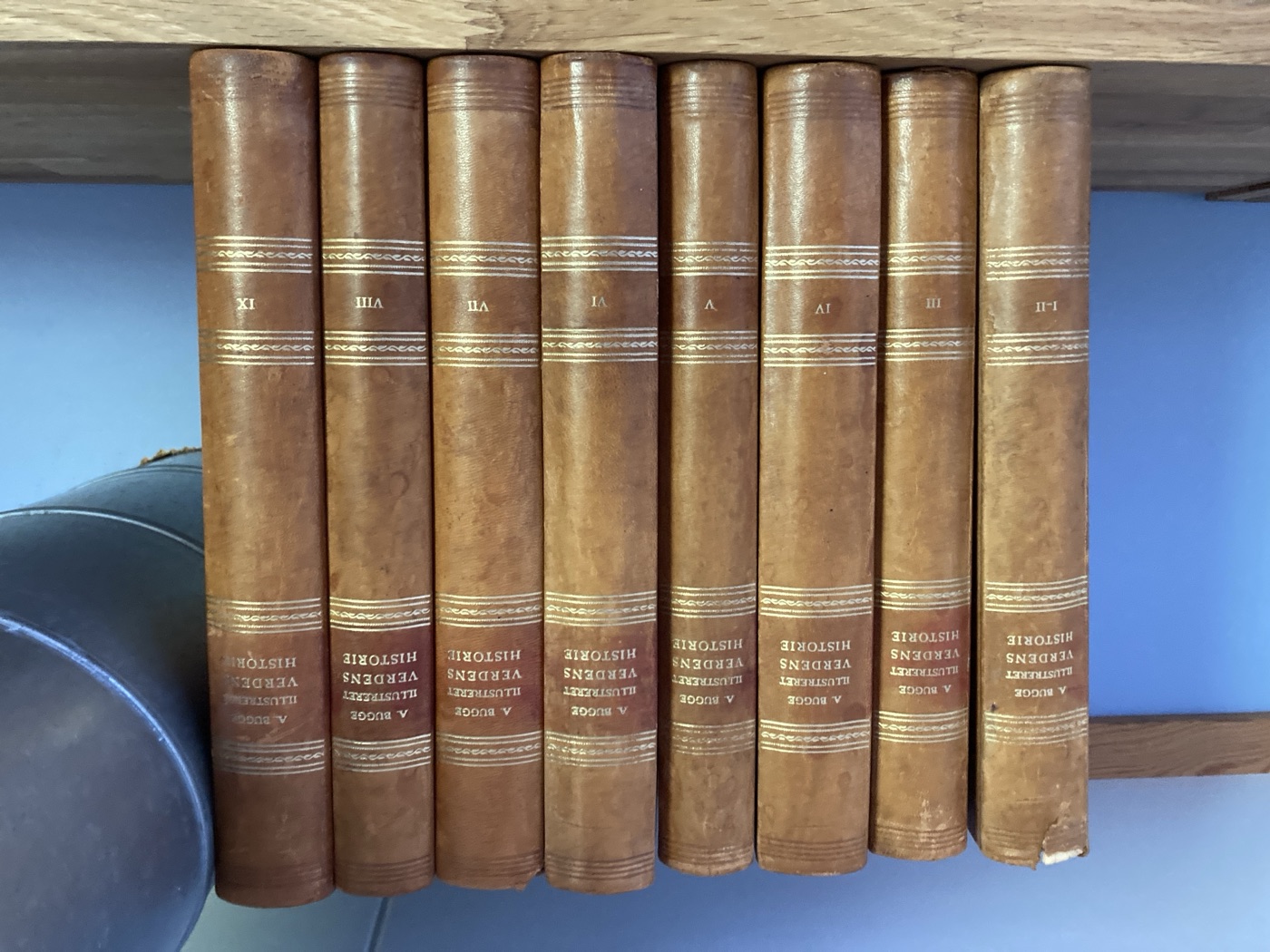
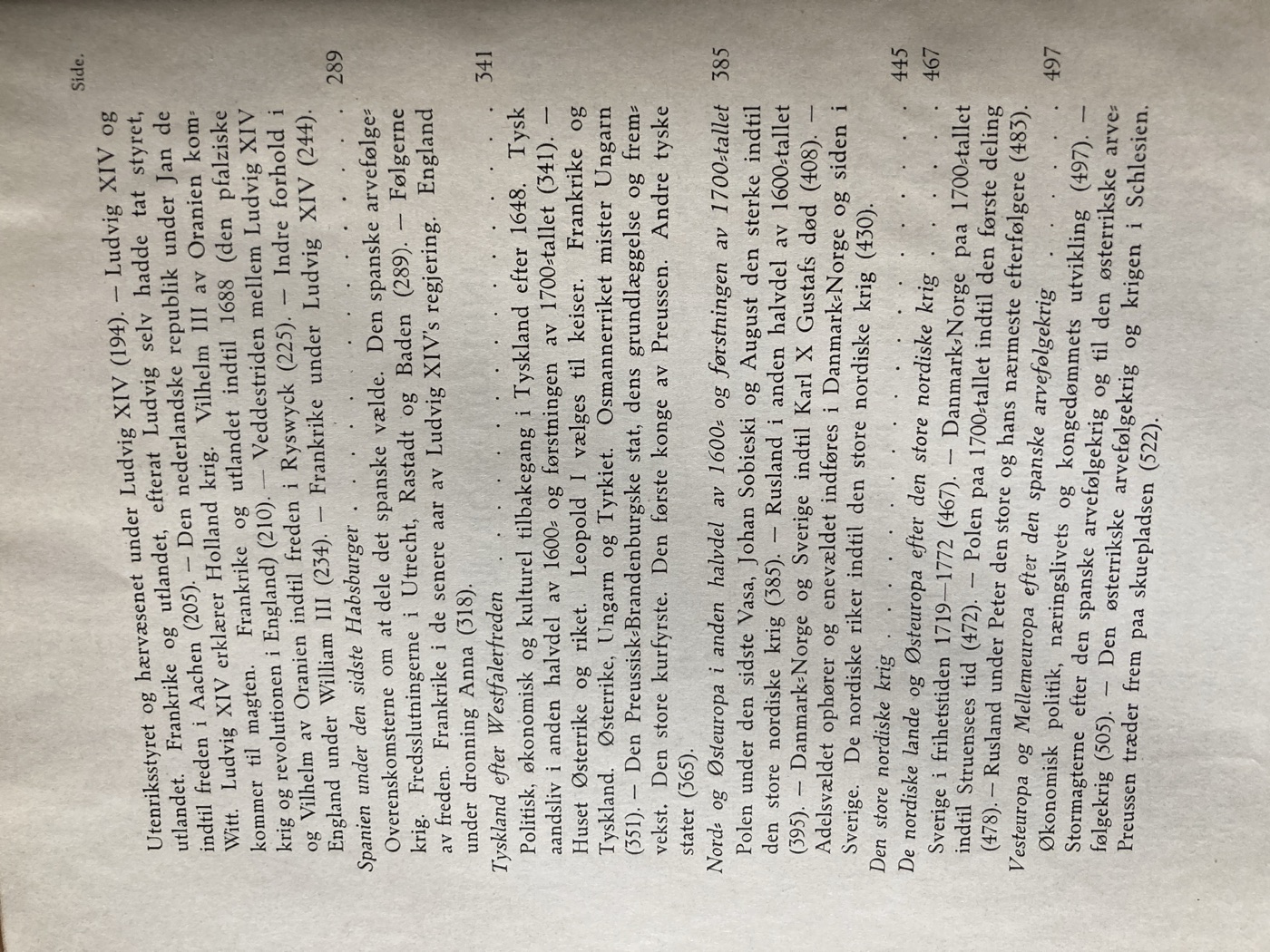
Something I mentioned above is that a war brings together the histories of several different countries, and this is of course an obvious challenge for someone writing a history book, because you can't understand the Great Northern War without understanding the history of both Sweden, Russia and maybe other countries. We see that different books choose different strategies around how they structure the history and what they group together.
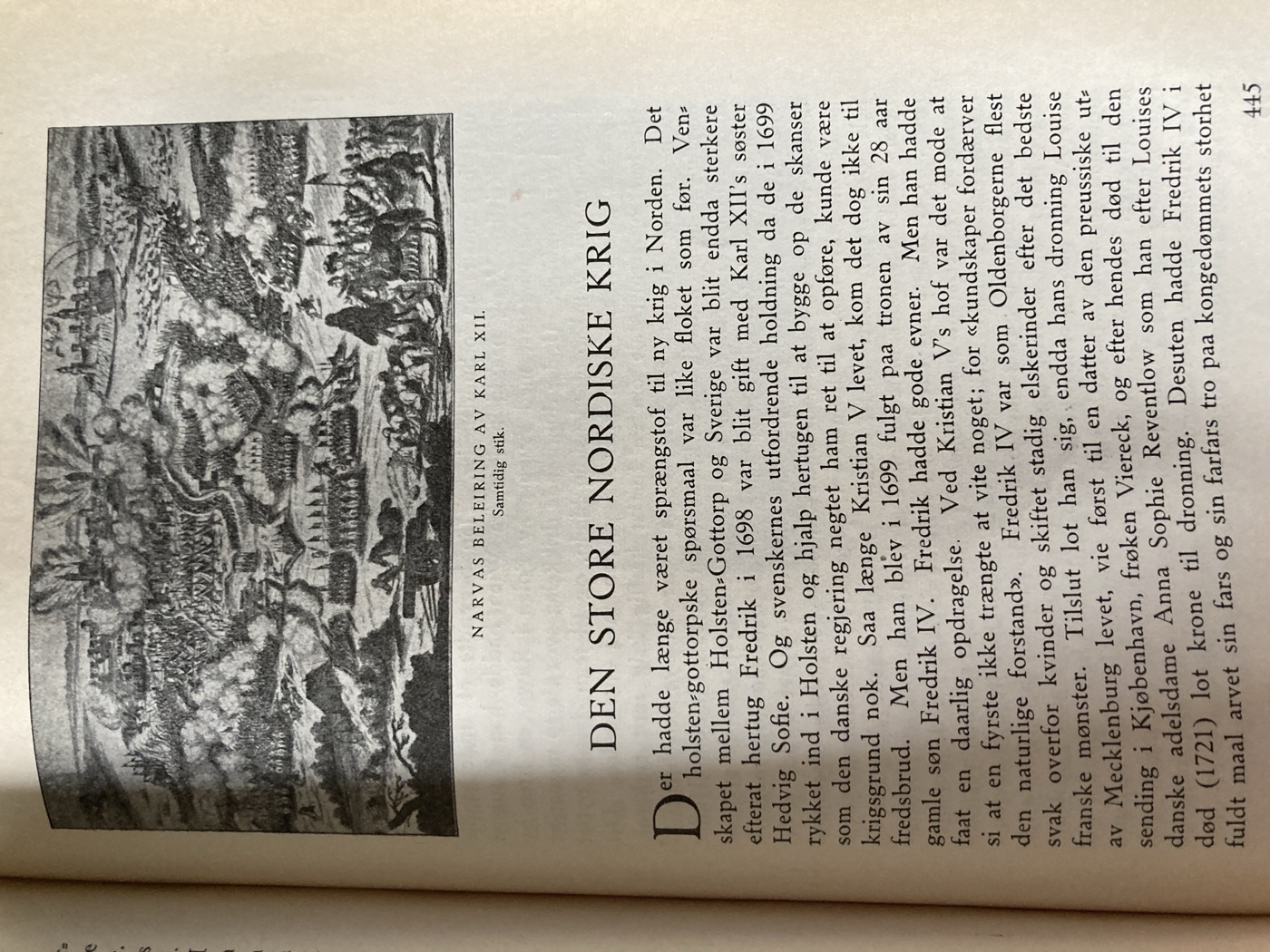
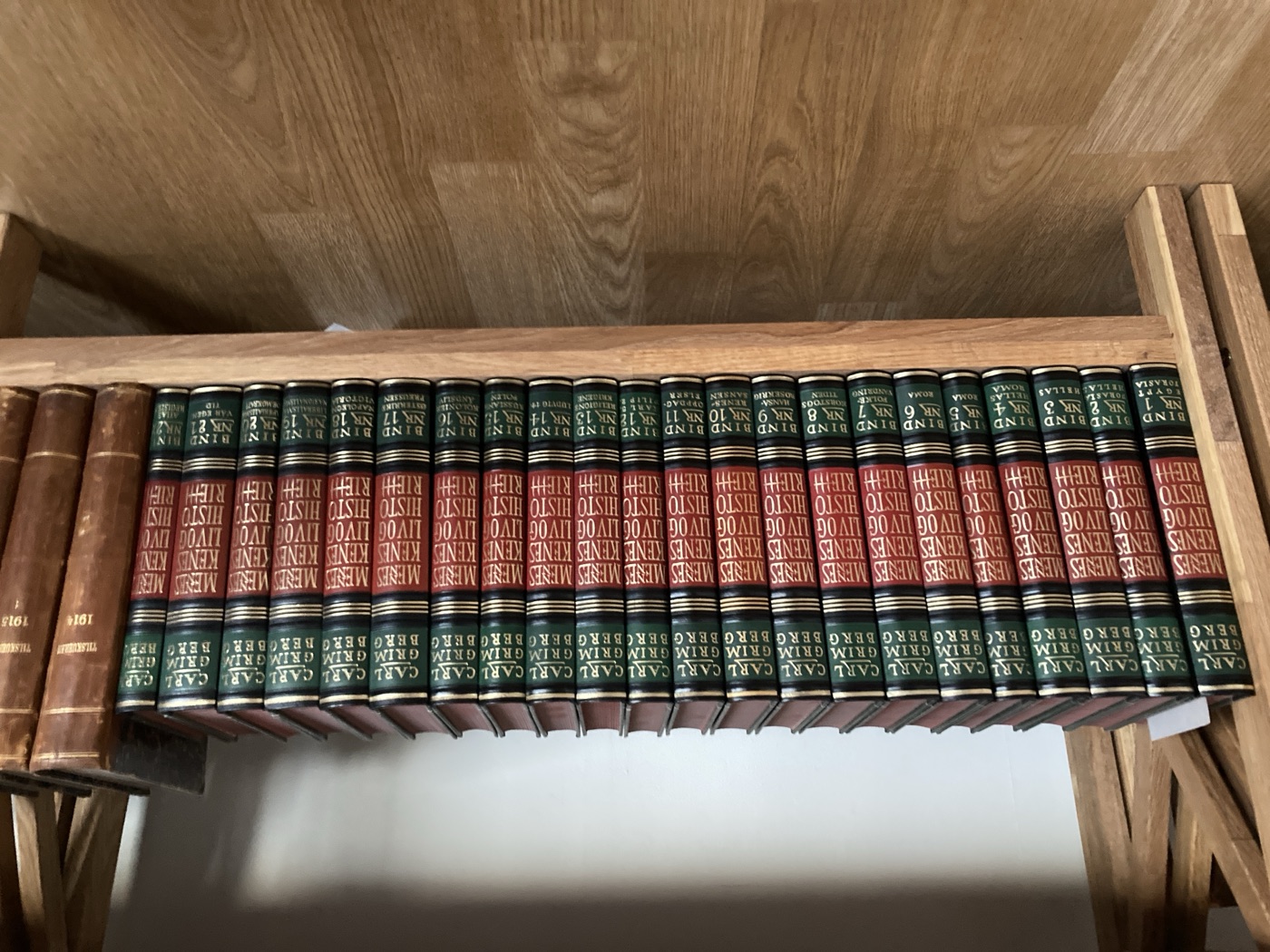
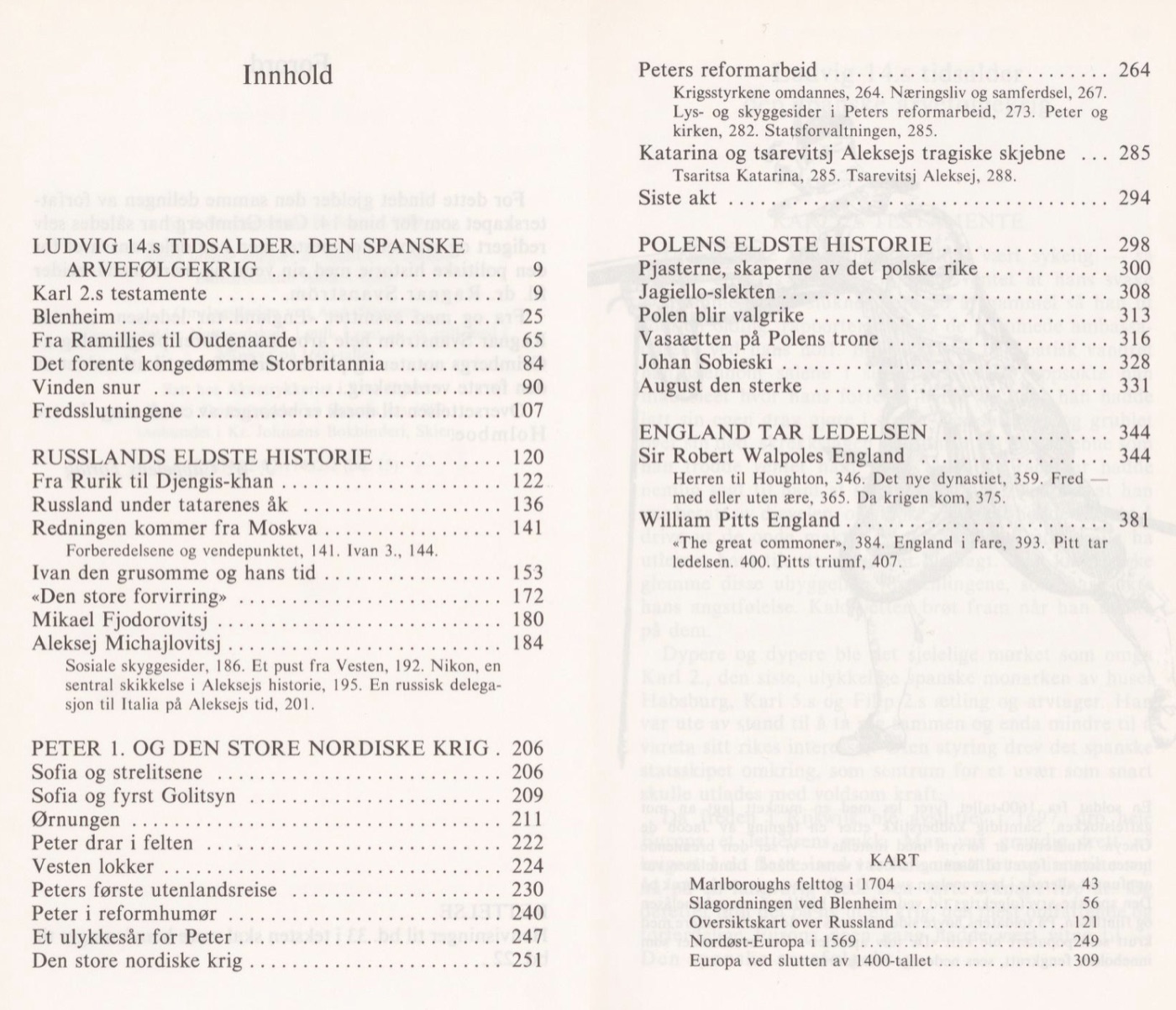
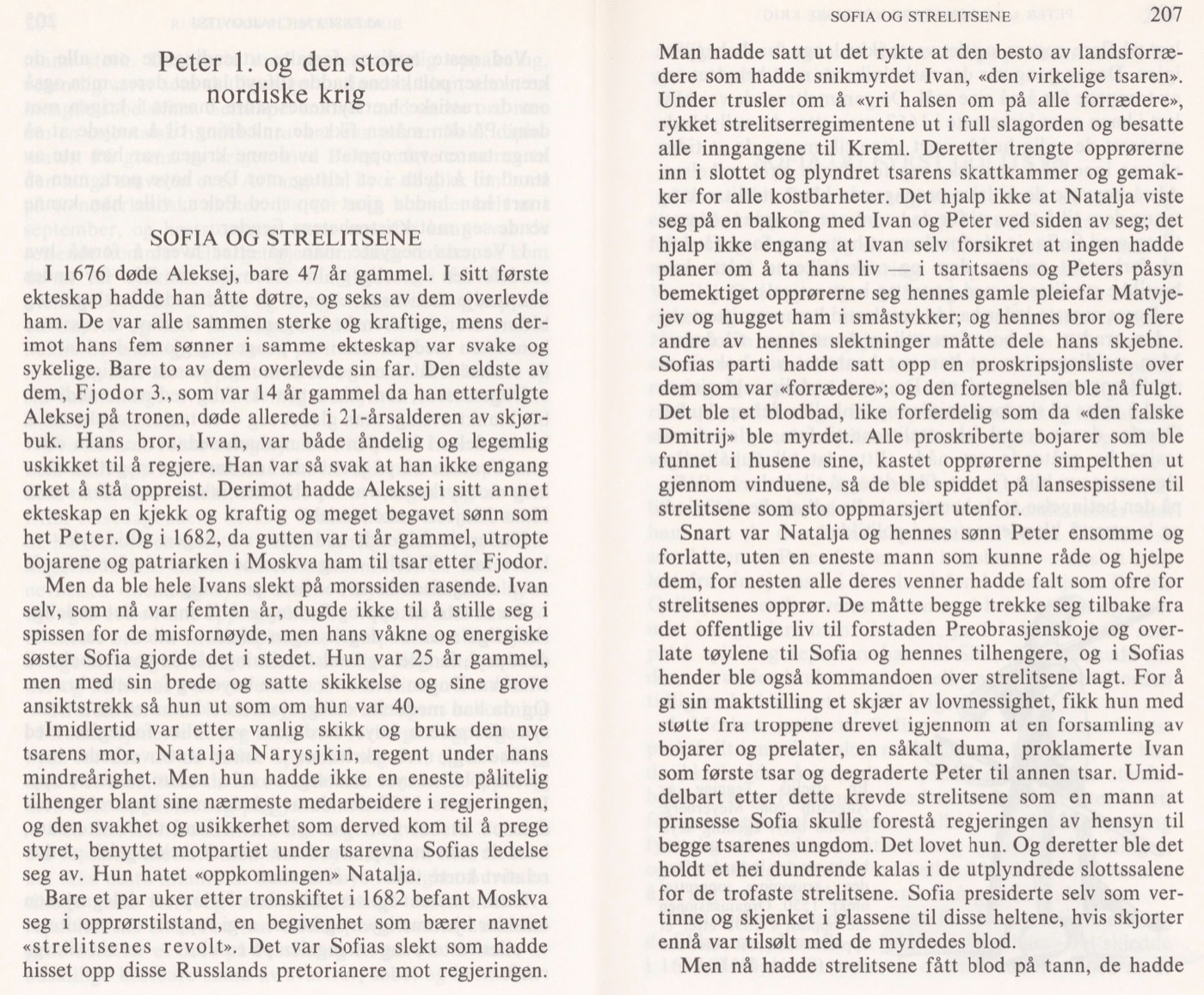
Both books gave good and reasonably detailed overviews of the Great Northern War, and the context around it, with more detail in Grimberg (naturally), but nothing surprising compared to what I heard on the podcast.
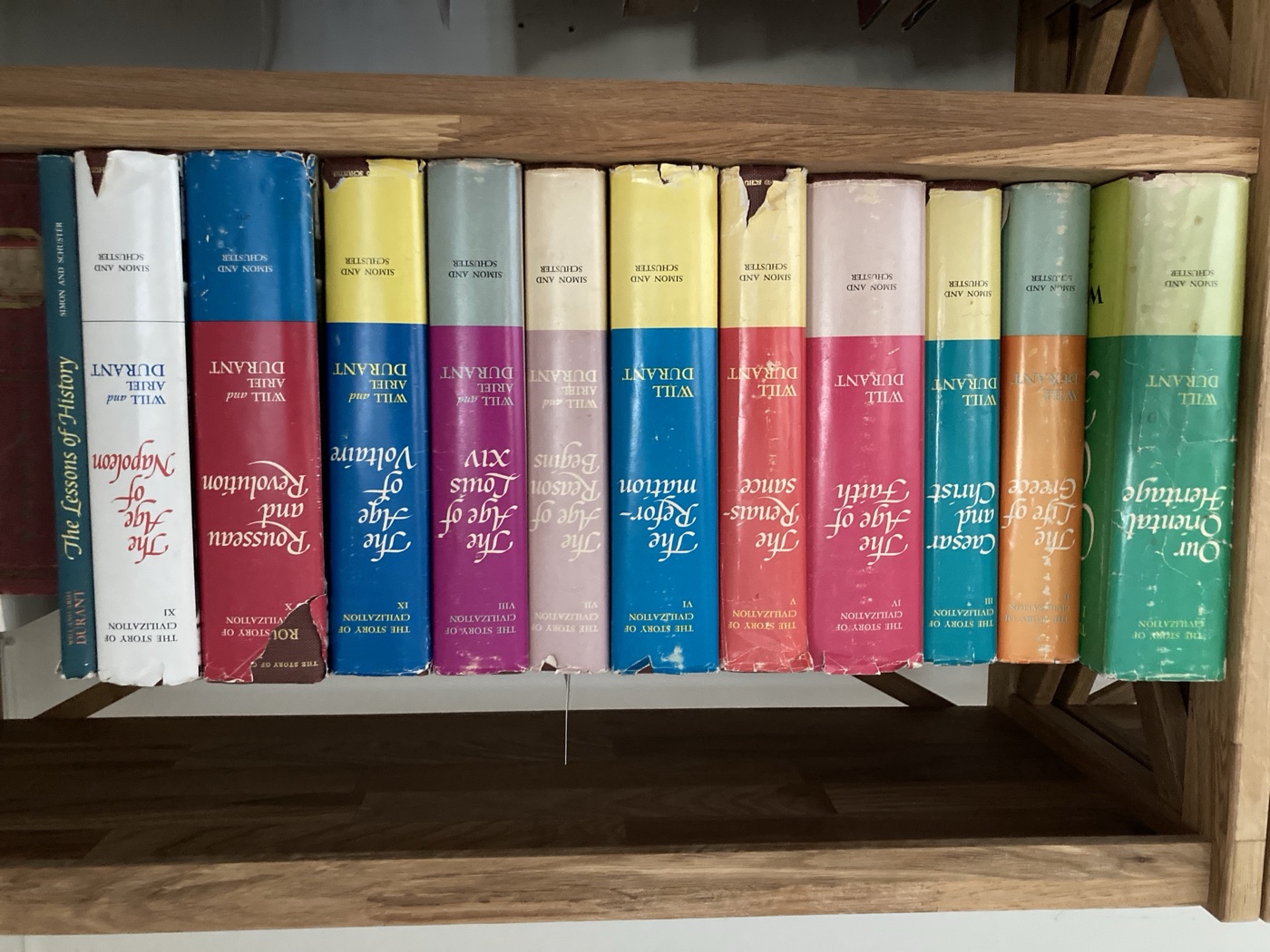
Will and Ariel Durant's series of world history and cultural history (11 volumes)
This is a fantastic series that focuses much more on philosophy, culture and the history of ideas in parallel with the political history. The sections on Peter the Great and the Great Northern War are very well written, and detailed, but no big surprises here either (read the whole thing here).
School textbooks
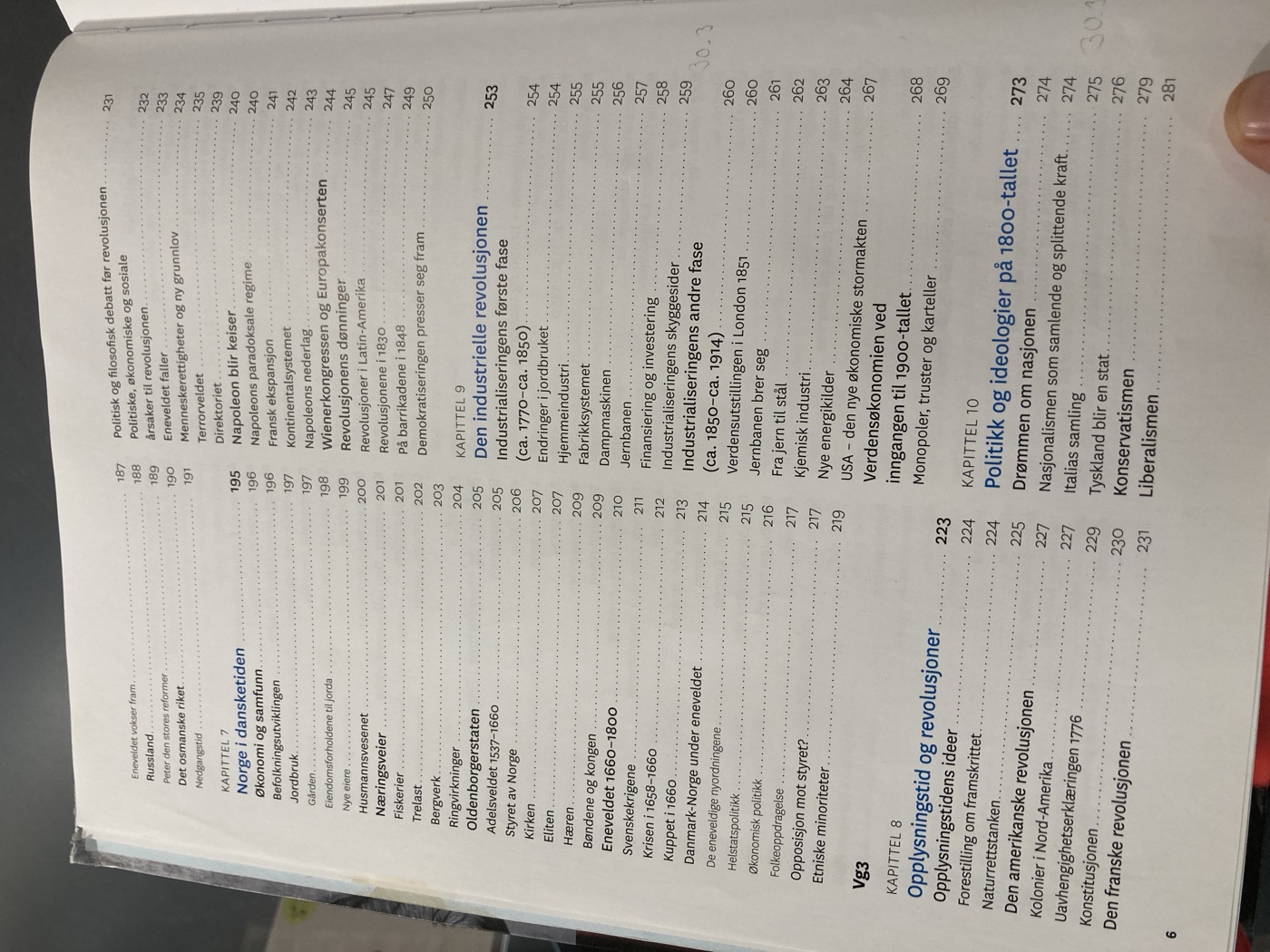
Then I got curious about what kids learn in school about this. I visited the local teachers college library, and there I found two different books that both cover all of world history for VKII/VKIII (the last two years of high school). It was interesting to compare the two, because one was clearly written with a real focus on big themes and issues, and had much less focus on timeline, while the other was a bit more recognizable.
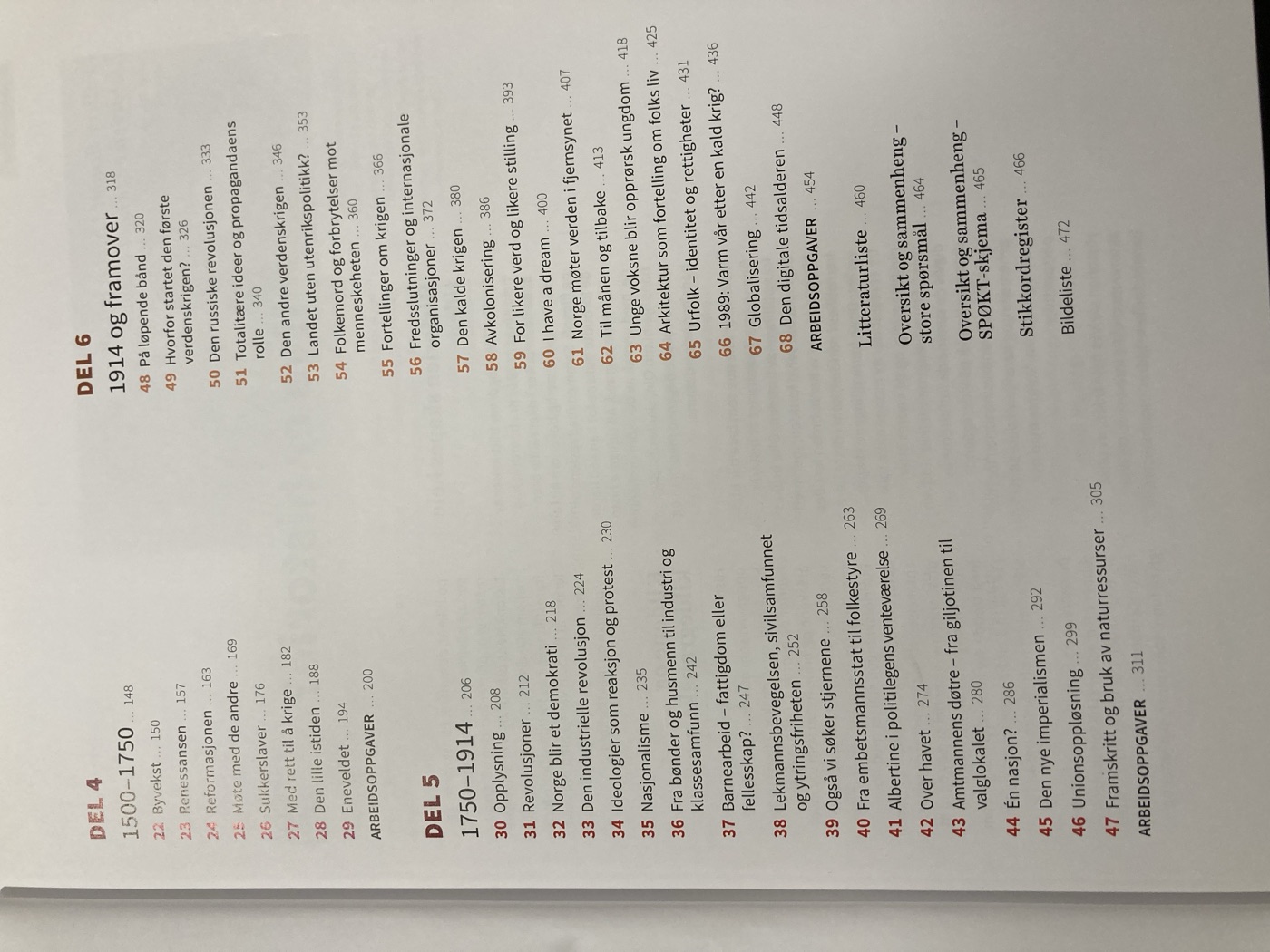
This book surely has a lot of exciting stuff about political reforms, the women's movement and climate change. But I was pretty shocked when I found Russia mentioned only twice in the whole book - once in a subordinate clause about the Vikings, and then two pages right at the end about fake news and digital influence campaigns. I think everyone can agree that it might be a little relevant for Norwegian teenagers to understand a little about Russia's history, especially these days?
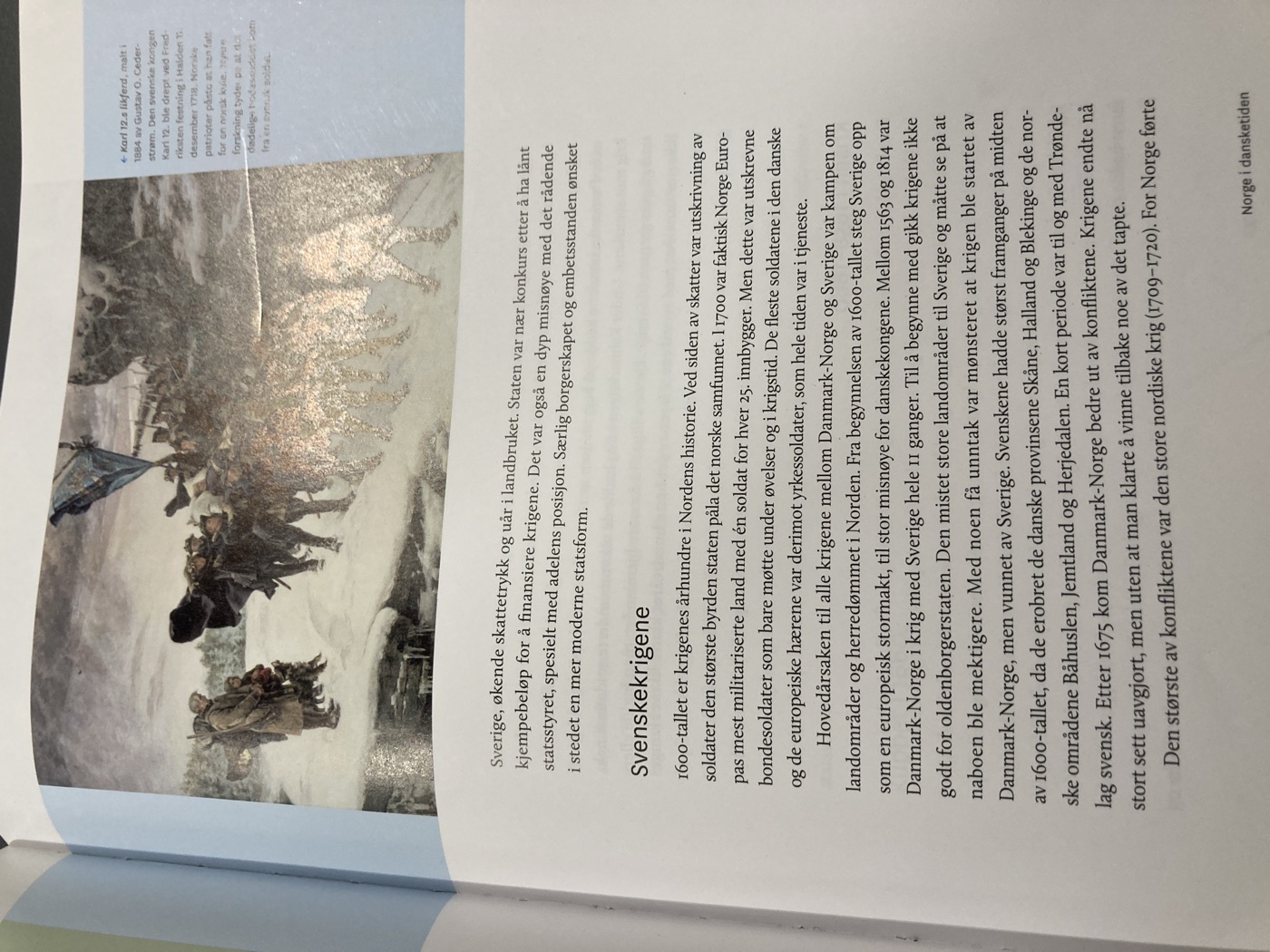
The other book had a bit more practical info, a bit about Peter the Great and a page on the Swedish Wars (including the Great Northern War). Still pretty short, and they mention neither Turkish meatballs nor fox tossing.
So much for today's textbooks, but what did people learn in the old days? For that we can for example look at a world history for elementary school, for grades 4-6, from 1968 (online). I must say I'm impressed by the breadth (how much the kids actually learned is of course a whole different question).
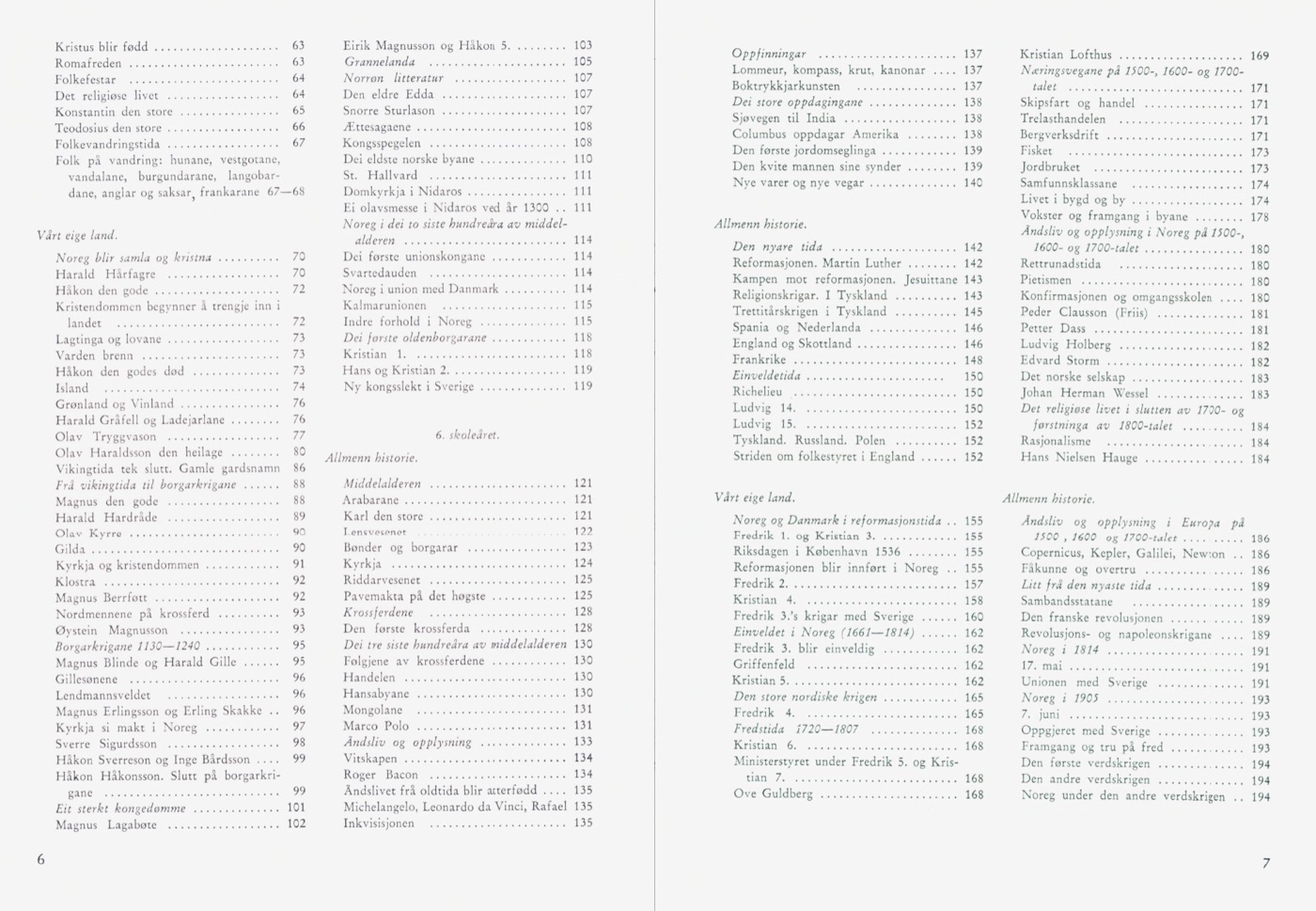
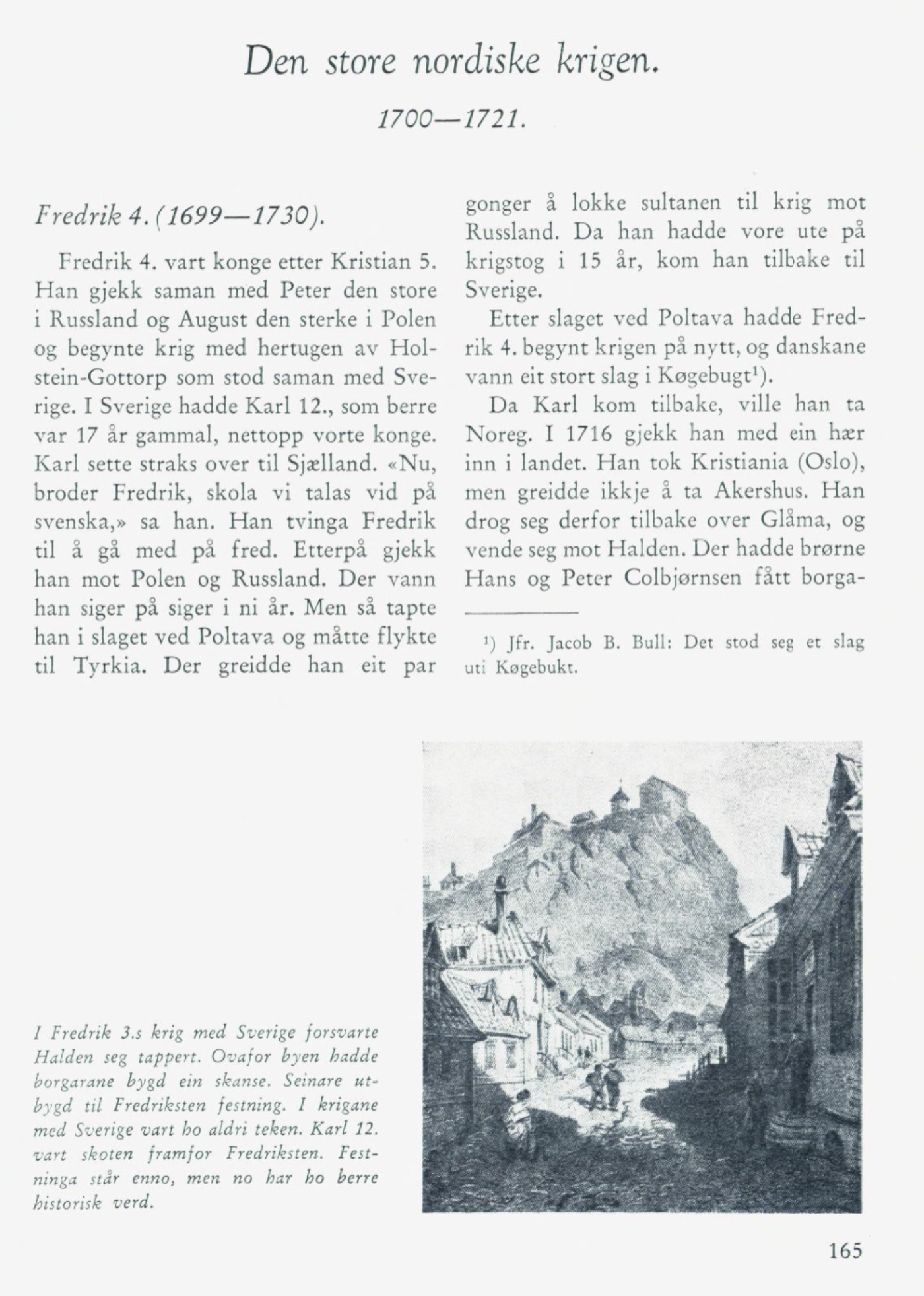
Here at least there are a couple of pages about the Great Northern War, more than in today's high school textbook! Of course much less about “themes” like democracy, destruction of nature etc, but impressed by how much culture there is - from Homer to Landstingsloven to Det norske selskap in Copenhagen. If you actually took in all of this, you'd have a solid general education!
That'll have to do for now, I have to run off and see a German opera about Peter the Great as a carpenter! If you don't do anything else, at least listen to the podcast I linked at the beginning. And think of Charles XII in the Ottoman Empire next time you eat meatballs at IKEA!