Rabbit Holes · 19 May 2025
Rette baker for smed, rhyme and rhythm
From André Bjerke to French tragedies, Wessel and pantomime
Performing texts
Last week I was at the launch of Teater Innlandet's 25-26 season, where one of the projects is about Alf Prøysen. Terje Strømdahl performed a short tale by Prøysen in such a fantastic way that I got chills. (Here Terje sings a great song by Prøysen). Most people know some of Prøysen's songs of course, but he also wrote a lot of short stories that dealt with the same themes – as luck would have it I was at Resirkula the next day, and found Prøysen's collected works for 5 kroner a book, so now I'm enjoying reading these tales, and looking forward to the fall show.
But after hearing Strømdahl perform that short tale, I thought “How great it is to hear someone who really knows how to do it, perform a text or a poem - I want more of that”. I read a lot of strange and old stuff, but there's something special about having it performed, and there are people who have a voice and a way of reading/performing, that gets the text across in a completely different way.
Andre Bjerke and formal verse
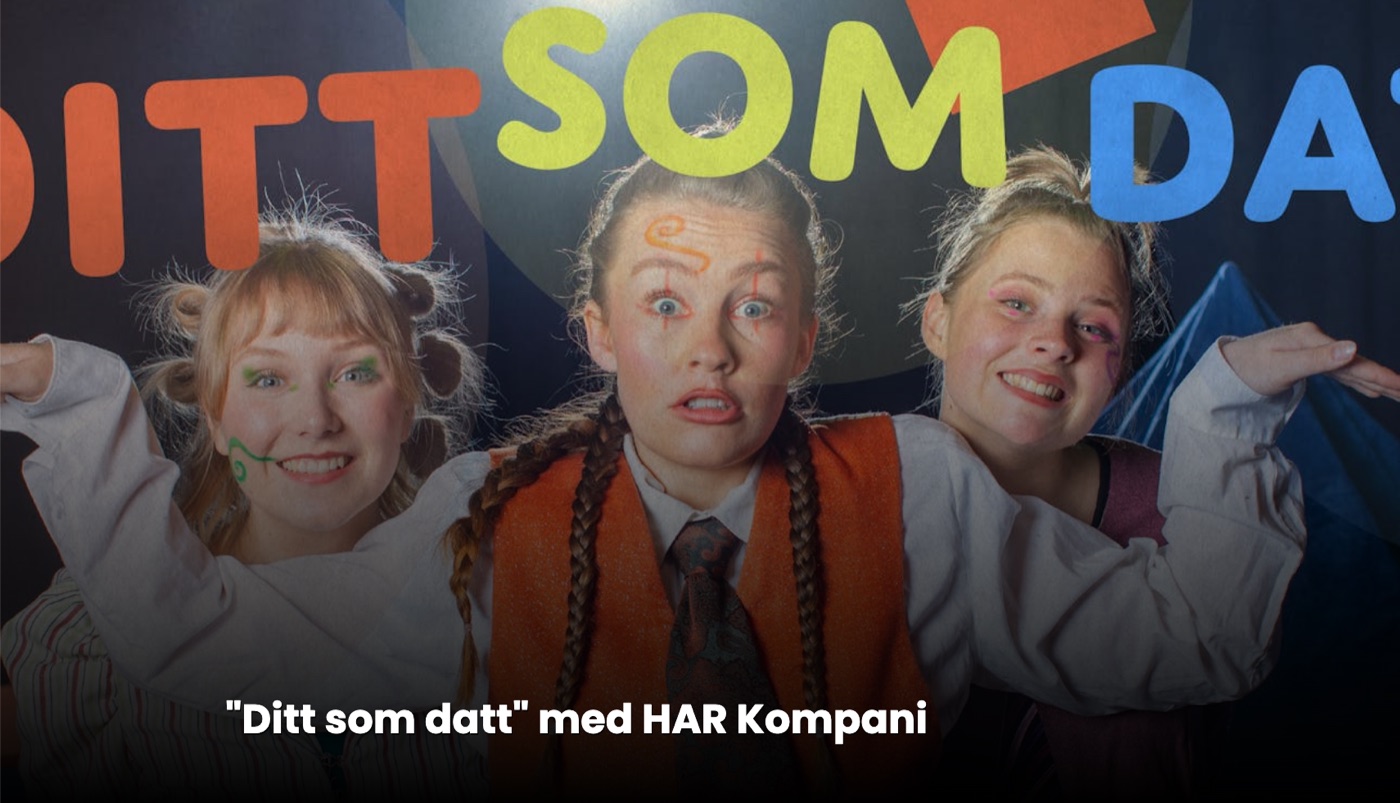
Today I went with my son to cozy Hamar Teater, to a great children's show based on poems by André Bjerke. I'm a big fan of Bjerke, and knew many of the poems, but it was really fun to see how the actors brought the stories to life, with fantastic facial expressions and characters.
One day when I was walking around Brummundal library, while my wife was at the garden center right next door, I came across a book by André Bjerke called “Versekunsten: rytme og rim”, a fantastic little book (you can read it here). I've gradually picked up that there are lots of rhyme schemes, both trochees and iambs and identical-twin pentadactyls and other dinosaurs. But I can't remember learning anything about this at school, and I guess I maybe never quite understood why it's so important.
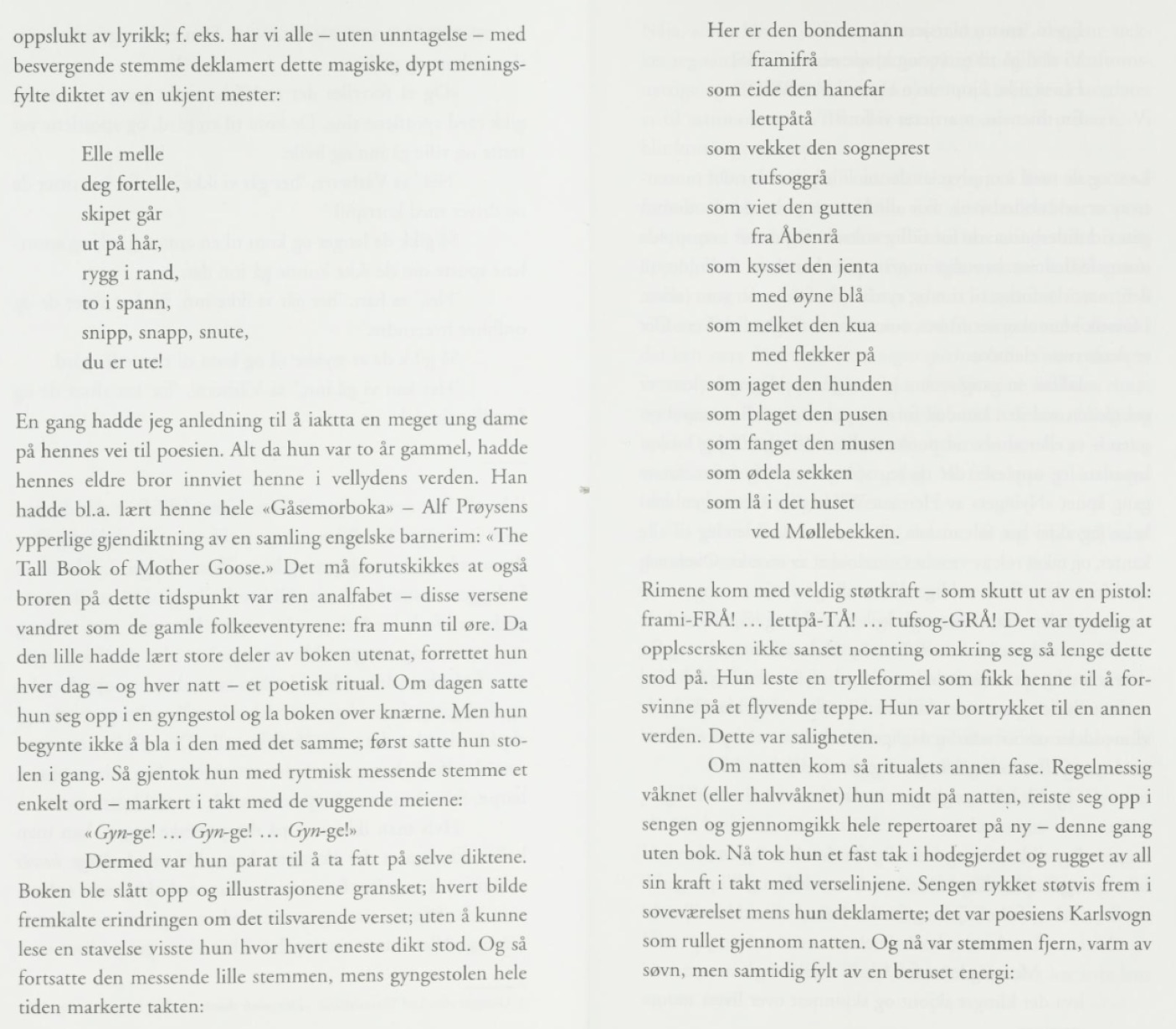
This book, which should be required reading in all schools, starts with a great introduction that's a powerful defense of “formal verse”, where he argues that there's something deeply natural about formal verse, it's musicality, it's heartbeat, and rhythm is something kids intuitively feel and long for. He has an incredibly charming story about a little girl and her special poetic ritual:
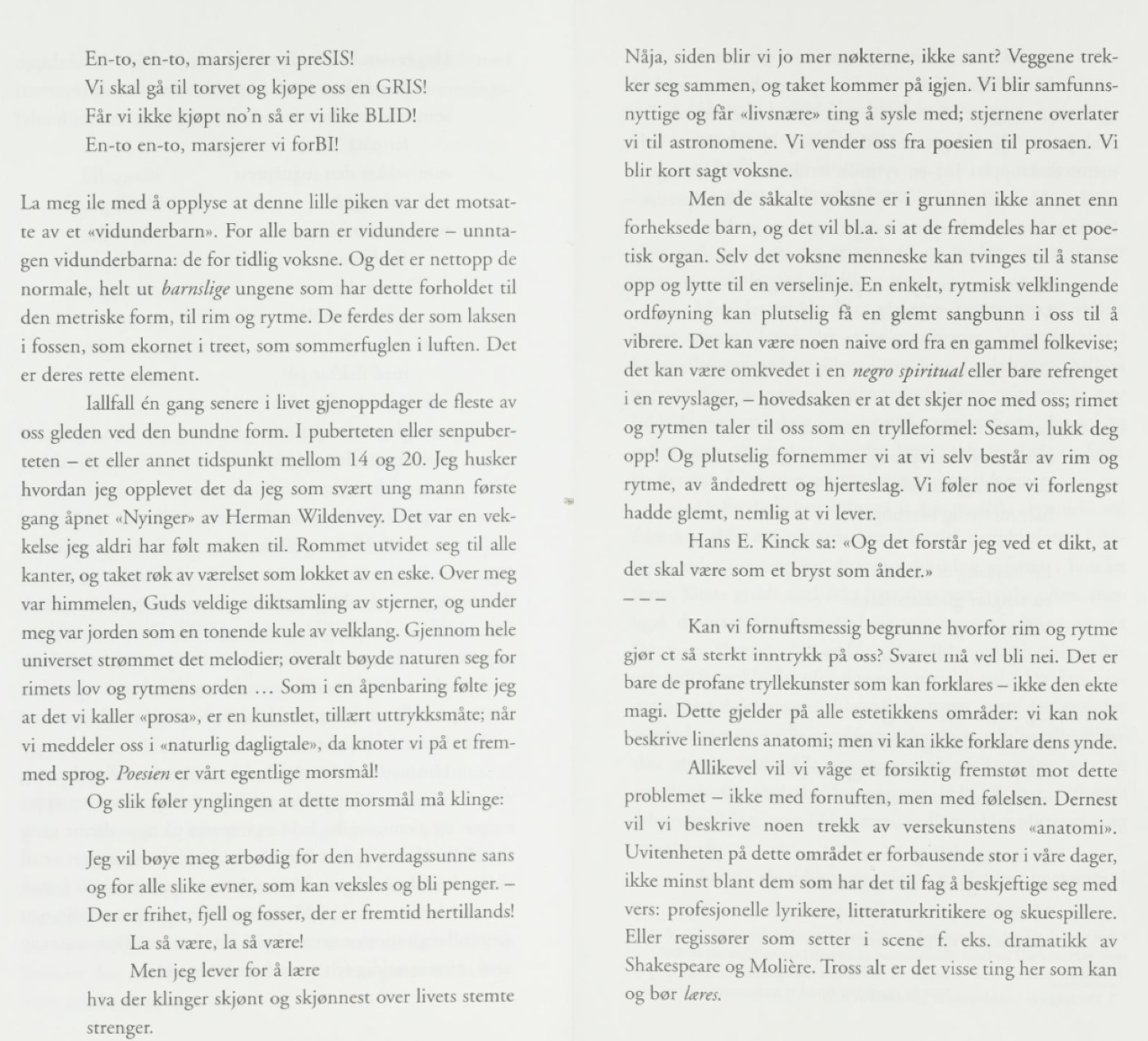
In the book he then goes through different verse forms, and has an interesting comparison between Peer Gynt and Brand. Both of these plays by Ibsen are in formal verse, and represent a kind of complementary yin-yang. Peer Gynt is the onion with no core, the boy who plays his way through life with stories, lies and dreams – while Brand is the man who is “only” core, who is so firm and bound and inflexible that he's willing to sacrifice everything. And Bjerke shows how the rhythm schemes in the two poems actually reflect the personality of the poems. Super fun!
By the way, I was lucky enough earlier this year to take part in a read-aloud of all of Brand, at Fredheim, the old home of Ingeborg Refling Hagen. For eight hours we sat together and read in turns, both the epic Brand and Brand. An incredible experience, and actually my first encounter with Ingeborg Refling Hagen – who will probably be enough material for several future posts.
Partly inspired by this, I've organized a series of read-alouds of plays this spring, together with Anders Kippersund at Hamar Teater. And we had a great time reading “A Midsummer Night's Dream”, masterfully translated by Bjerke. (And later got to enjoy a very imaginative staging by the youth group at Hamar Teater).
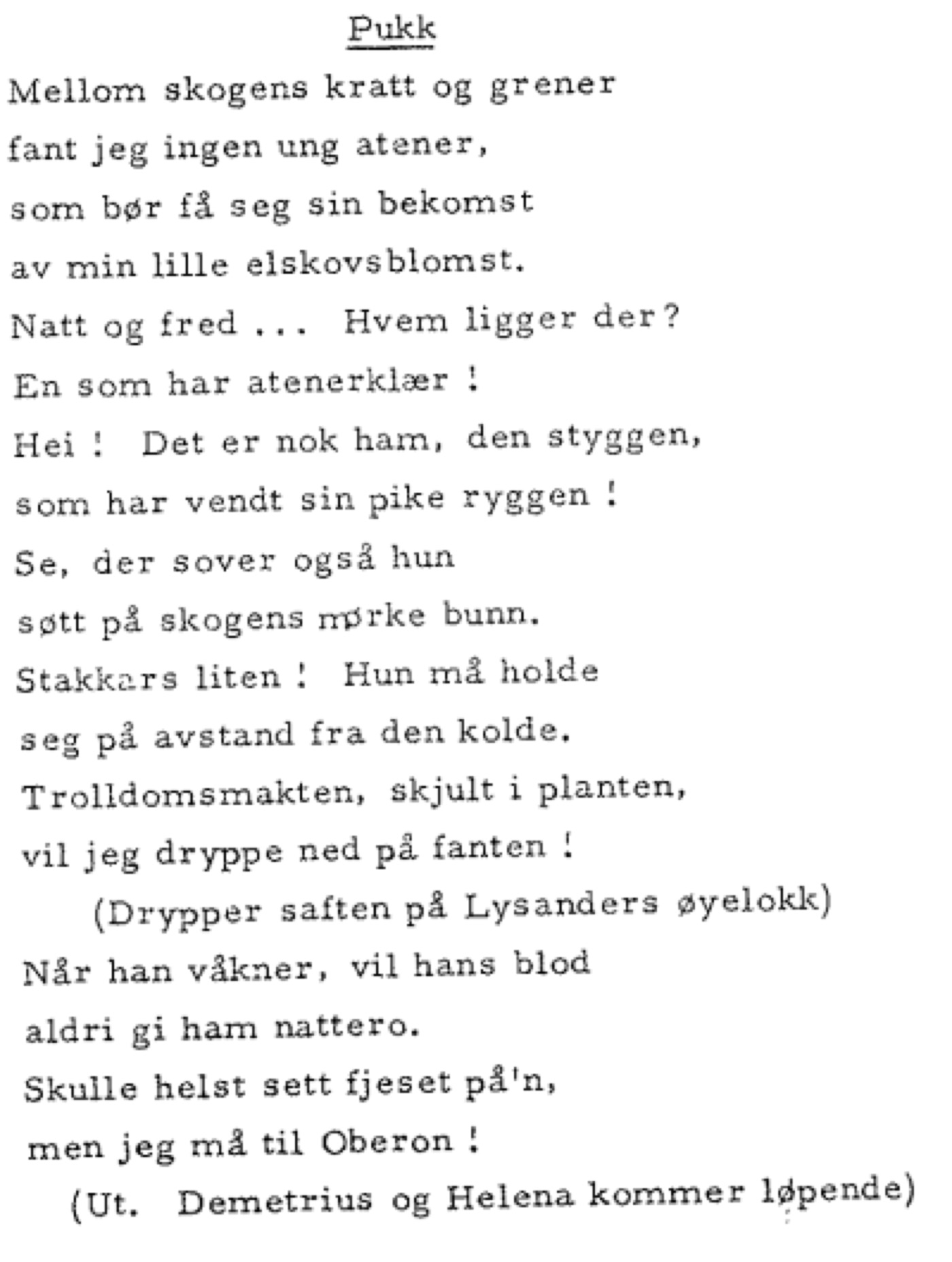
(And I can't move on without sharing this fantastic TikTok: @reba.buhr, «A Midsummer Night's Dream» →)
The shared literature and poets in Copenhagen
I was sitting one day surfing around the National Library's digital pages, as I often do, and came across a fascinating book - “Den norske litteratur fra 1814 til våre dager” - but “våre dager” (our days) is 1862! I always think it's fun to read about how people in the old days saw even older days, and I was very curious about what was seen as important then, and has maybe been forgotten now.
The book begins with the period before 1814, when most of Norwegian literary production happened in Copenhagen. I hadn't read much about Norwegian literary history, so this was my first encounter with Det norske selskap, French classical tragedy, theater fights and much more. The book certainly doesn't hold back - in 1862 when it was written French tragedy was totally “out”, and the Norwegian-Danish imitations get an earful.
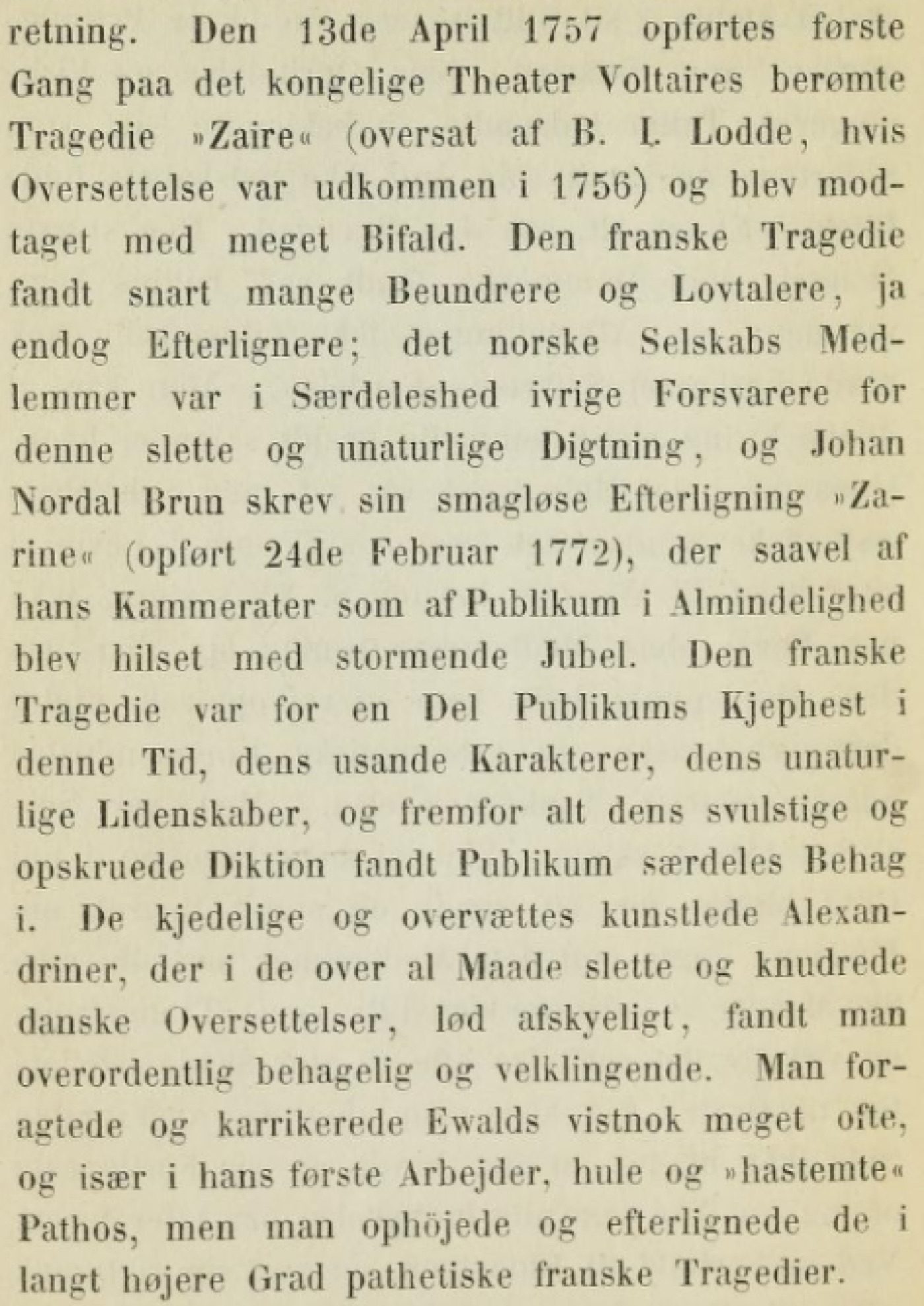
“Tell me what you really think?” ;) But I thought this was exciting, and decided that I had to read both Voltaire's “Zaire”, and the “smagløse Efterligning” (tasteless imitation) “Zarine”. I had heard of Voltaire of course, but I had no idea that he wrote plays (and lots of them!) that were huge hits while he was alive.
I'll probably come back to French tragedy, because I've dug pretty deep into it, but in short, at that time there were very strict rules for what a play should look like, covering format, plot, portrayal of characters etc. It had to be in formal verse (Alexandrines), with elevated characters, preferably a plot taken from ancient Greece, and lots of “pain and suffering”. Some of these plays are actually great, with fantastically beautiful language and with good acting it can be a pleasure. But it's obvious that this can also produce a lot of stuff that's easy to parody.
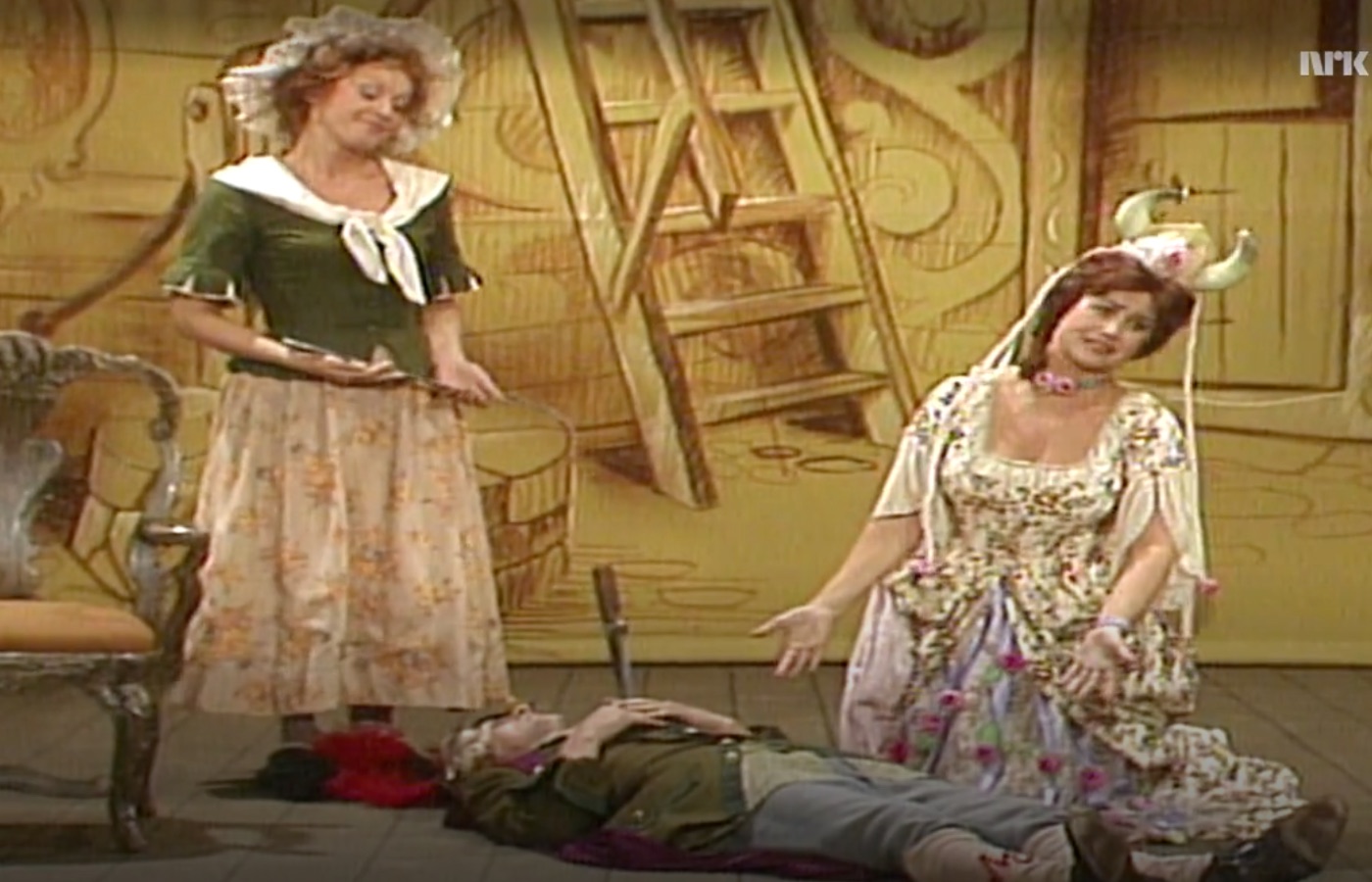
“Zarine” by Nordahl Brun, the first tragedy in Danish or Norwegian, was written by a Norwegian then, and was about a Scythian queen a few thousand years ago (the Vikings weren't exciting enough, that came later). Johan Herman Wessel, an important member of Det norske selskap in Copenhagen who wrote many funny and witty poems, then wrote a play that was meant to make fun of the whole genre – a satire, called “Love Without Stockings”. The play follows almost all the “rules”, except that it's not about distinguished people from antiquity, but a shoemaker, and the conflict that makes them all end up dead at the end of the play, is that he doesn't have any stockings he can get married in.
Both of these plays, Zarine and Love Without Stockings, can be read and downloaded as epub on the fantastic Bokselskap.no. I still remember sitting on the tram in Oslo reading Love Without Stockings on my Kindle, and chuckling. It's really funny. It was also a singspiel, with both an overture and a number of songs, which you don't get a good feel for when you only read it. But we're so incredibly lucky that NRK has a performance of the play, with fantastic costumes and a very dramatic delivery, and the music with the original instrumentation! This is worth seeing!
Biographies, bakers and blacksmiths
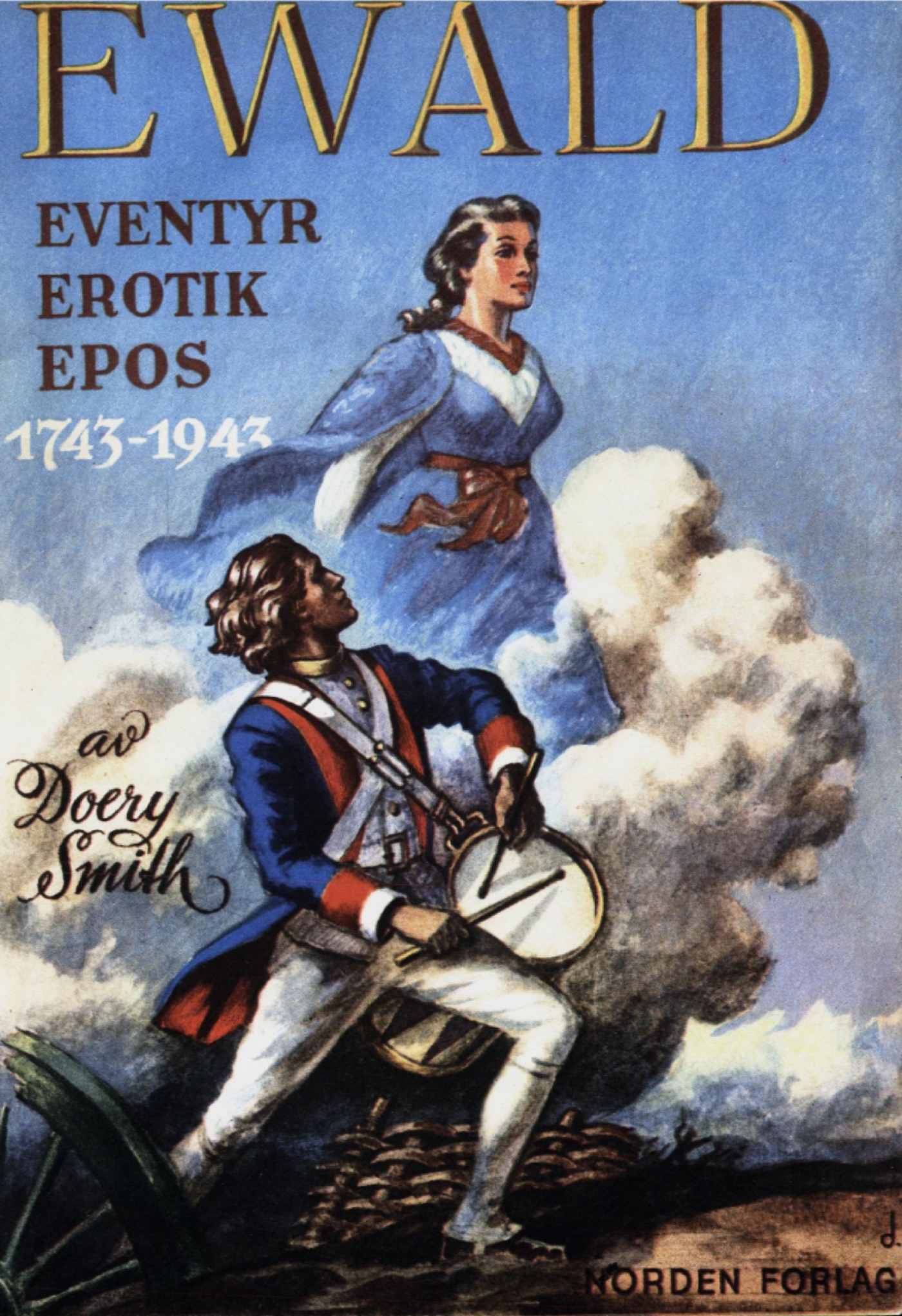
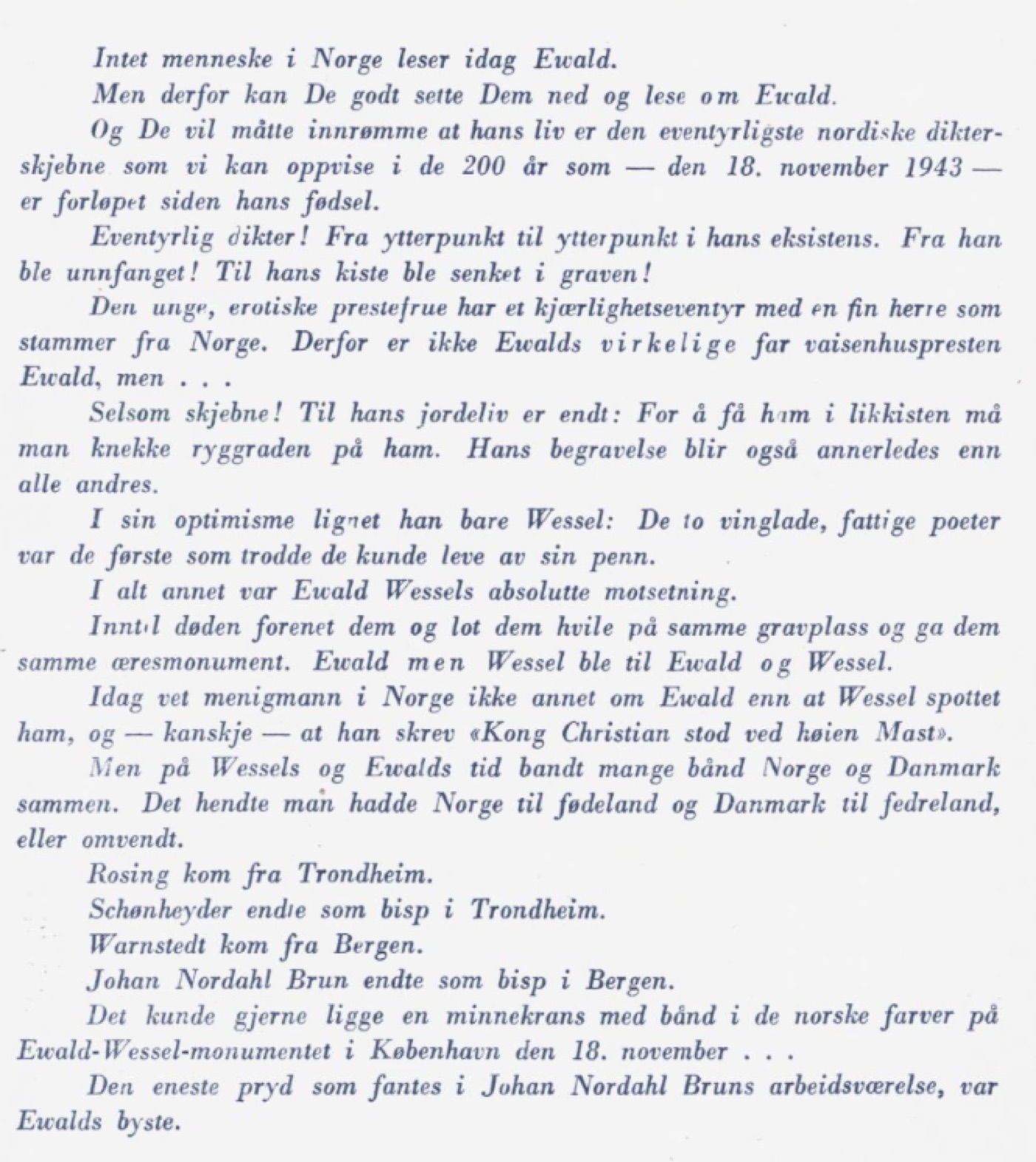
In the forties Doery Smith wrote biographies of the two competing kings of poetry at the end of the 1700s in Denmark: Johan Herman Wessel and Johannes Ewald. Wessel was Norwegian, in Det norske selskap, where they looked to France and England – both the tragedies, with their classical cut, and the Enlightenment and Wessel's socially critical and irreverent poems. Johannes Ewald was Danish, and inspired by German poets like Klopstock, who represented Romanticism and Sturm und Drang. The Norwegians thought Ewald's poems were way too pompous and “feeling” (Ah-tuned because they said “ahh—” so often).
Smith's books are fantastic reading experiences, he portrays the spirit of the time and the conditions in Copenhagen back then vividly and richly, tells the life stories with lots of anecdotes and interesting stories, and also includes quite a few poems, excerpts from plays etc from the two. And the books themselves are beautiful and make you want to read them - can be ordered through interlibrary loan.
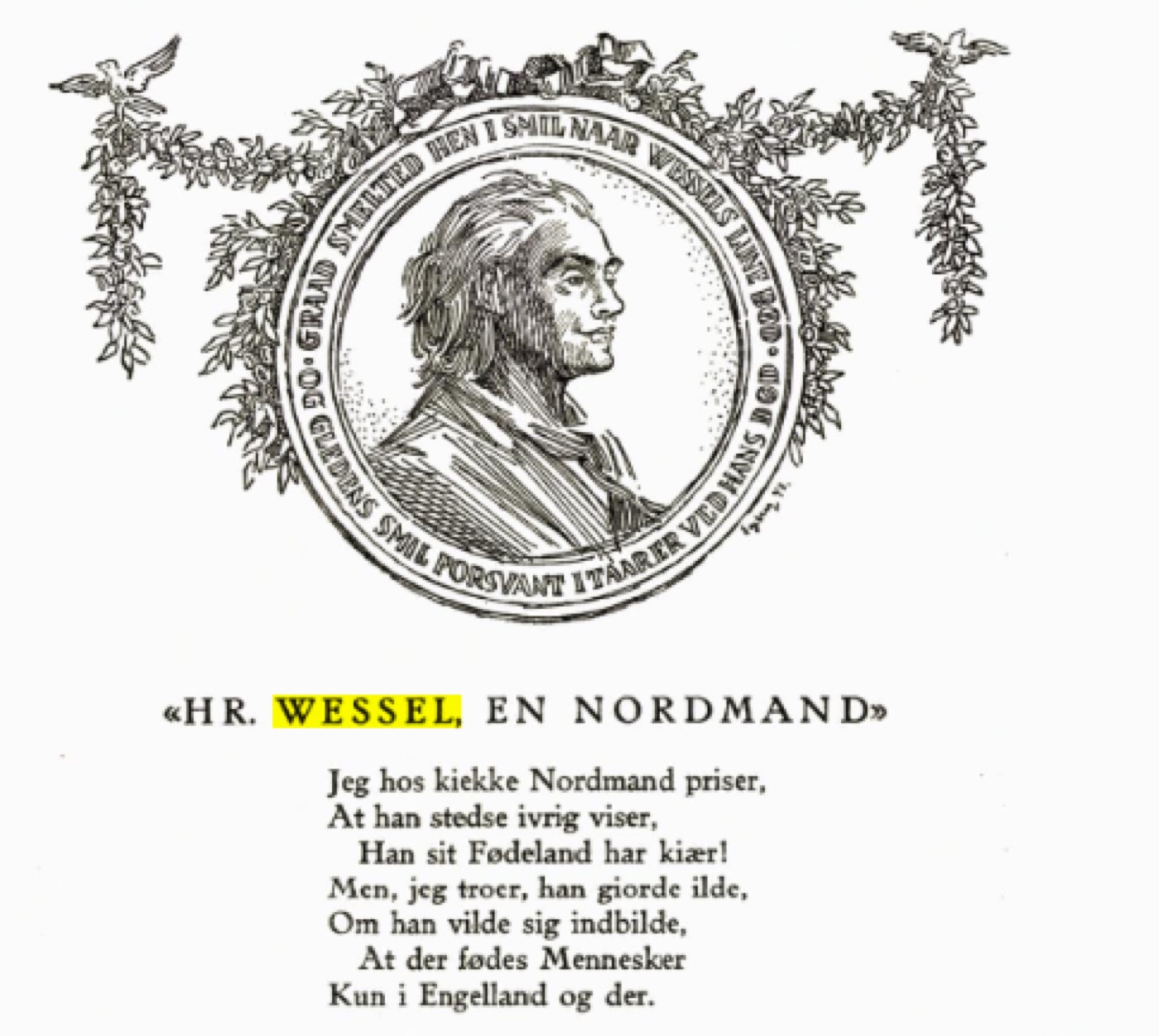
In addition to the play about the stockings, Wessel wrote a lot of poems, and one poem struck me in particular, because it gave rise to an expression that I knew, but didn't know where it came from: “Å rette baker for smed” (to execute the baker for the blacksmith). The poem is about a blacksmith who kills a baker in a pub fight, and someone has to pay with their life, but the town's wise men point out that they only have one blacksmith – so hanging him would hurt the innocent town. But they have two bakers, and one of them is old and “will soon go to the devil”. Surely it doesn't say anywhere in the law that a baker can't be executed for a blacksmith?
The poem is humorous, and written in a nice meter, and when I read it I thought that I wished I could hear it recited, declaimed. I actually searched a bit on Danmarks Radio among other places, but found nothing. So I got the idea to experiment a bit with an AI music generator, since the poem almost looks like song lyrics. And I have to say that the song turned out pretty good, at least it gave me a completely different perspective on the text, than just reading it myself.
But then it turns out that the NRK archive comes through again, I just hadn't used the right search term! There's a totally fantastic recording from 1978, where they got a famous Polish pantomime artist, together with a Norwegian composer, to direct a whole little music theater piece out of the poem. And they include a little mini-documentary before the performance.
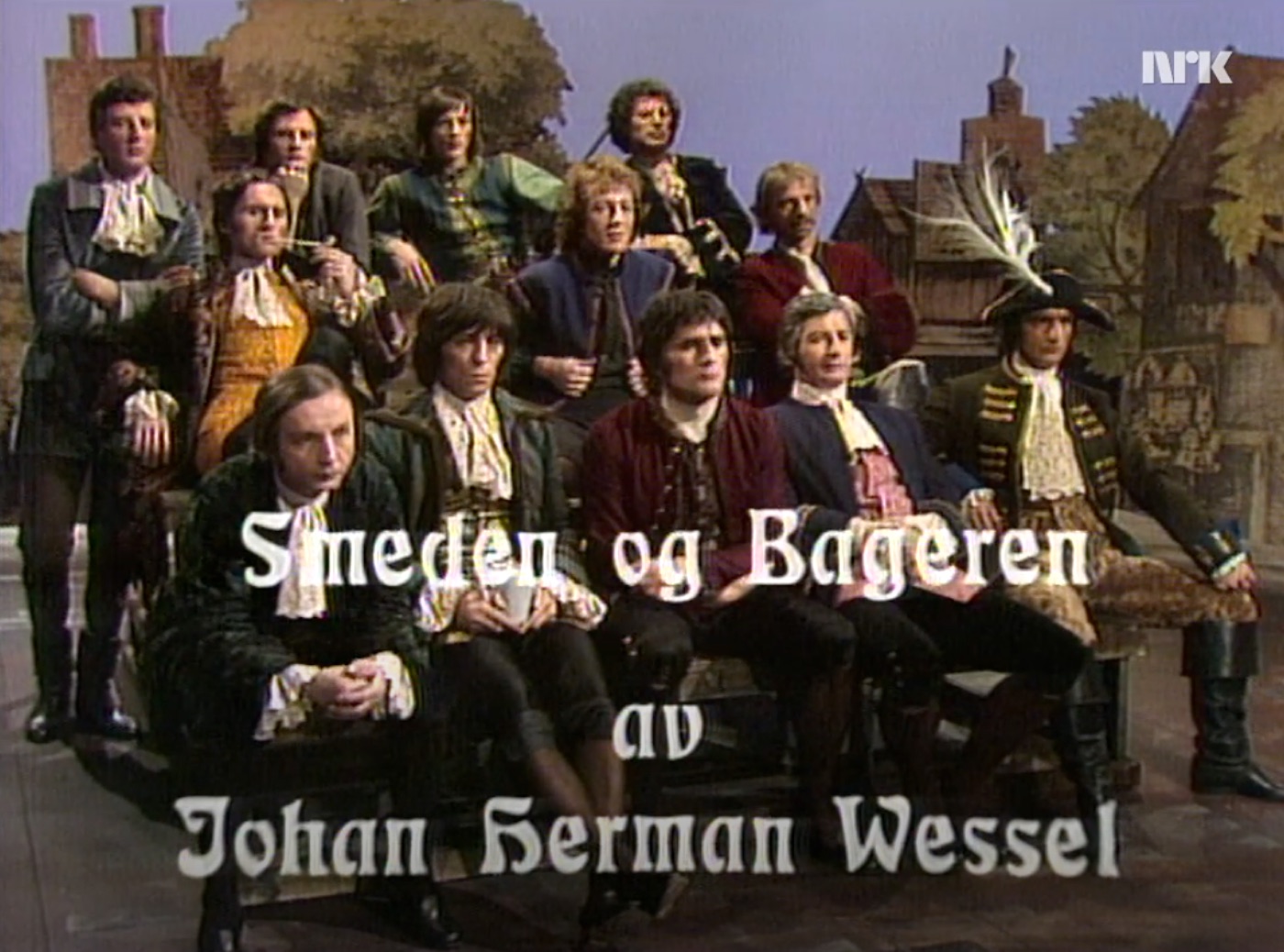
Again - you have to see this! I'm so glad that things like this got made (and wish so badly that NRK was still doing this kind of thing - is it possible that there isn't a single Norwegian recording of a Jon Fosse play, our Nobel Prize winner?)
Note, September 2026: the sentence above stands as it was written in May 2025. The NRK archive has two television productions of Fosse, Suzannah (2004) and Svevn (2005), five radio theater productions and the readings Jon Fosse ord for ord (2023). See Bring back Fjernsynsteateret.
The poem has also been set to music by Jacob Gade (recording). In addition we're lucky enough to have both a young and an older Per Aabel reading Wessel poems.
And that's the end of the road for tonight. Put a poetry book in the bathroom, and read a poem instead of scrolling on Twitter next time you need a little extra time. Read poems out loud, also to the kids! They can take it ;)