Rabbit Holes · 30 May 2025
The theater of fear, first Ugolino in the tower prison
A German theater of fear, inspired by Dante who was himself inspired by Greek myths...
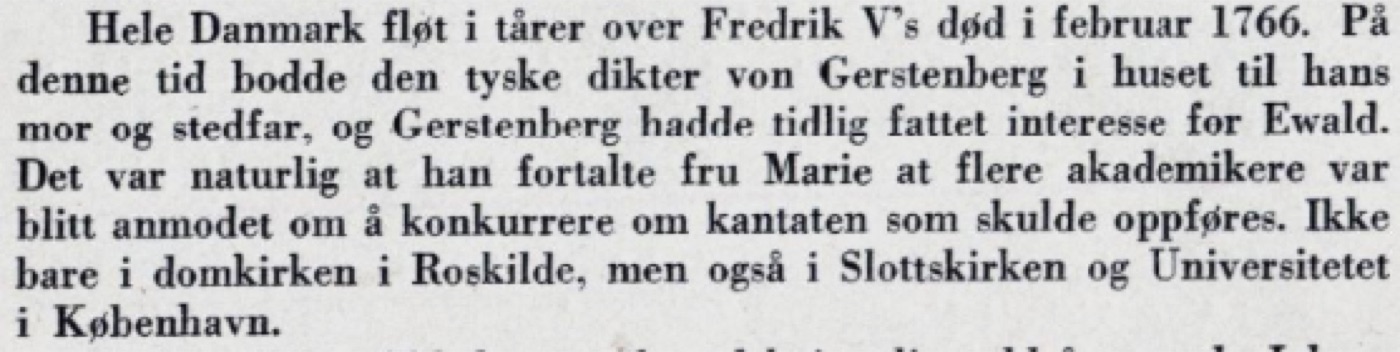
In an earlier post I talked about two great biographies of Johannes Ewald and Herman Wessel. Today we're going to follow a rabbit hole from the Ewald biography. Ewald was of course very inspired by German poets, and a paragraph mentions that he was advised by von Gerstenberg, who lived with his parents, to enter a competition.
The fear play Ugolino, Dante…
That name rang a bell, and when I looked him up, I saw that he's known among other things for having written a “fear play” called Ugolino. Because I remember reading an overview of different play genres back when I was trying to understand what “Sturm-und-Drang” actually meant, and coming across the “fear play”, without really getting clear on what that would involve.
It turns out then that this play is based on Count Ugolino from Dante's “The Divine Comedy”... So it had to come down off the shelf, both the Italian school edition with really good explanations, and the Norwegian translation. So this is a gruesome story about a count who gets locked up in a tower-chamber prison with his sons, with no food or drink, and the description of them starving to death – how the sons beg their father for help, and die one after another, until the father eventually goes mad. This is loosely based on the life of Ugolino della Gherardesca. (Fantastic reading of the text in Italian).
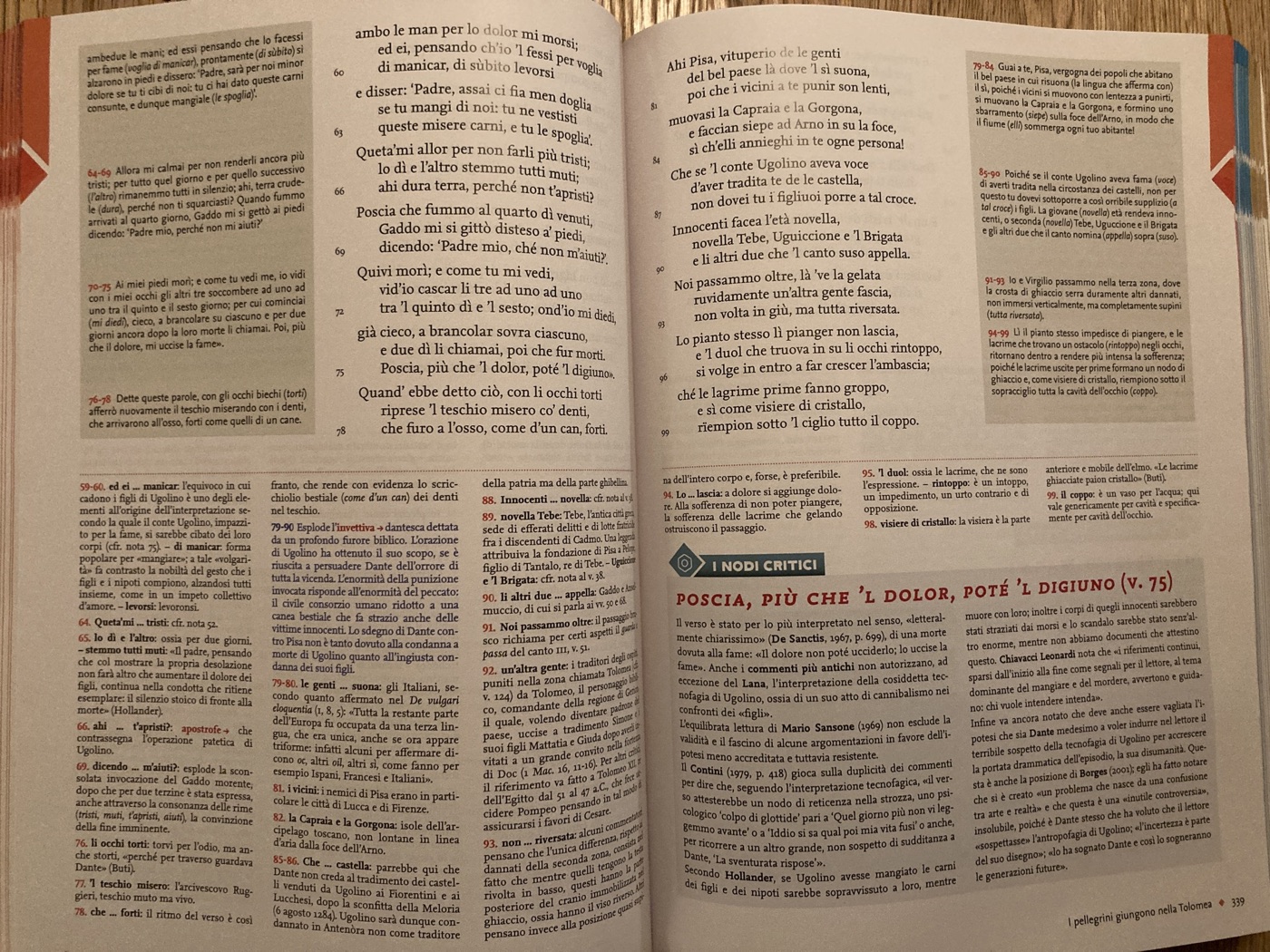
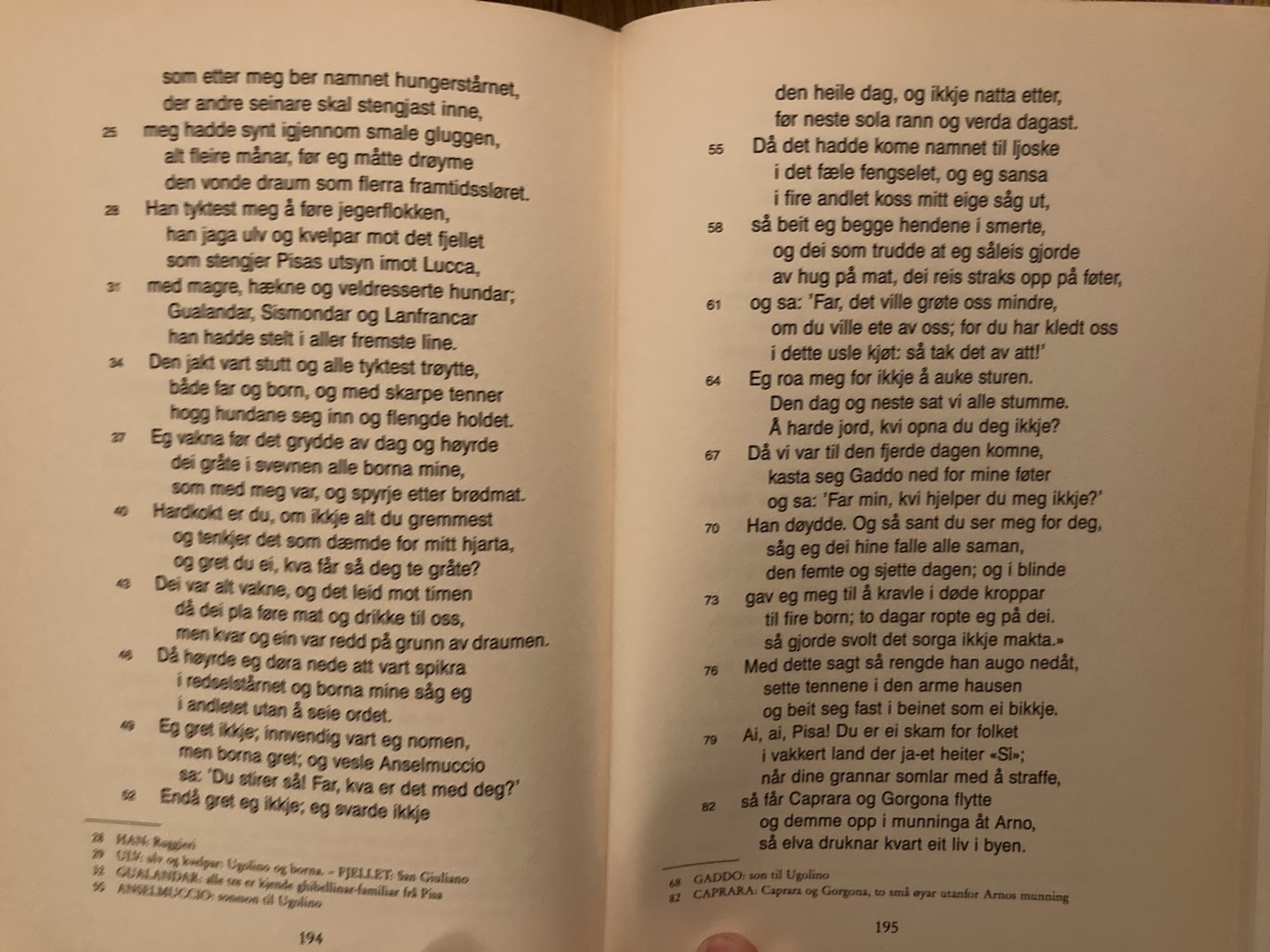
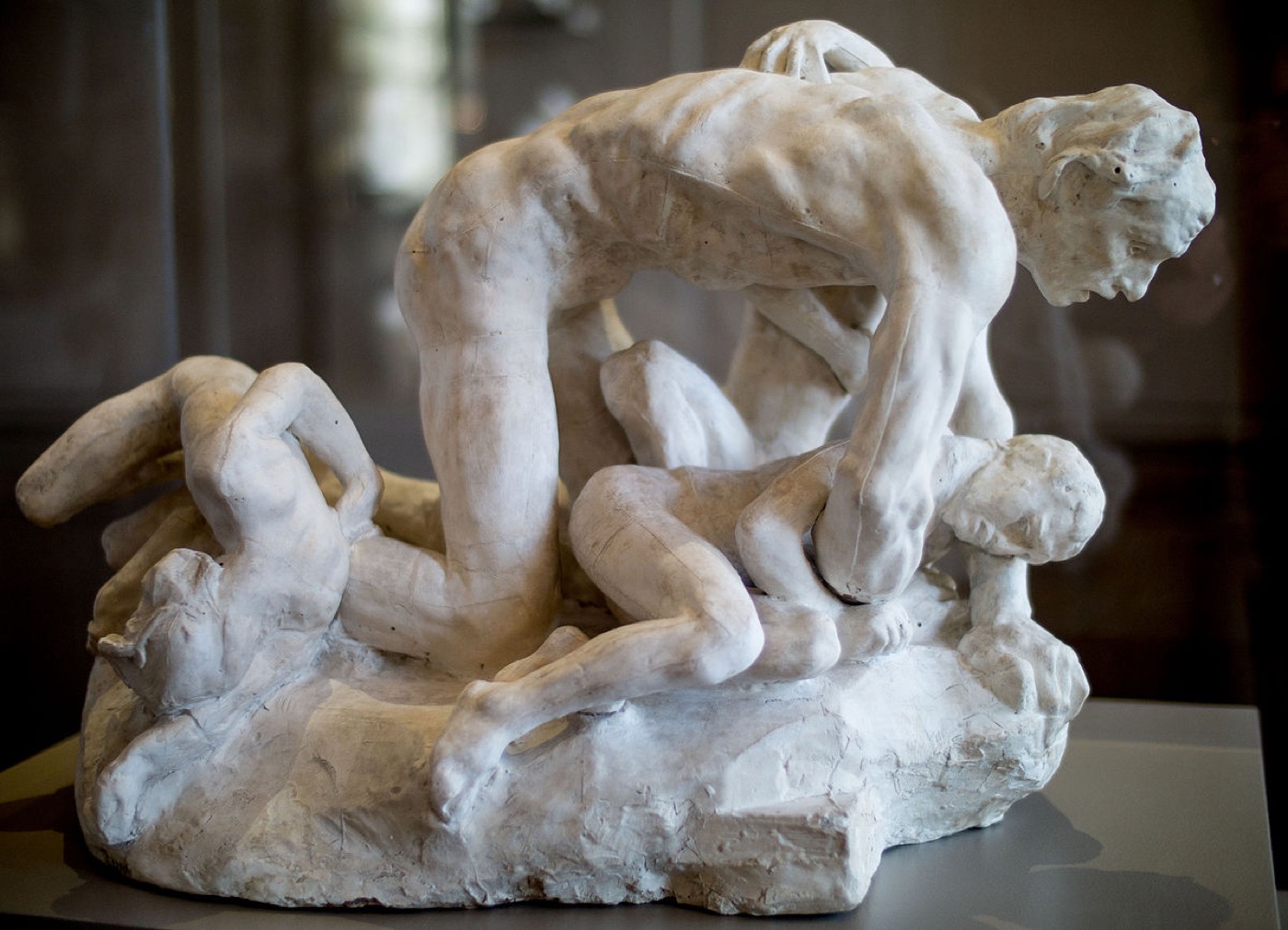
A not so long text, which has inspired many artists, among others a famous statue:
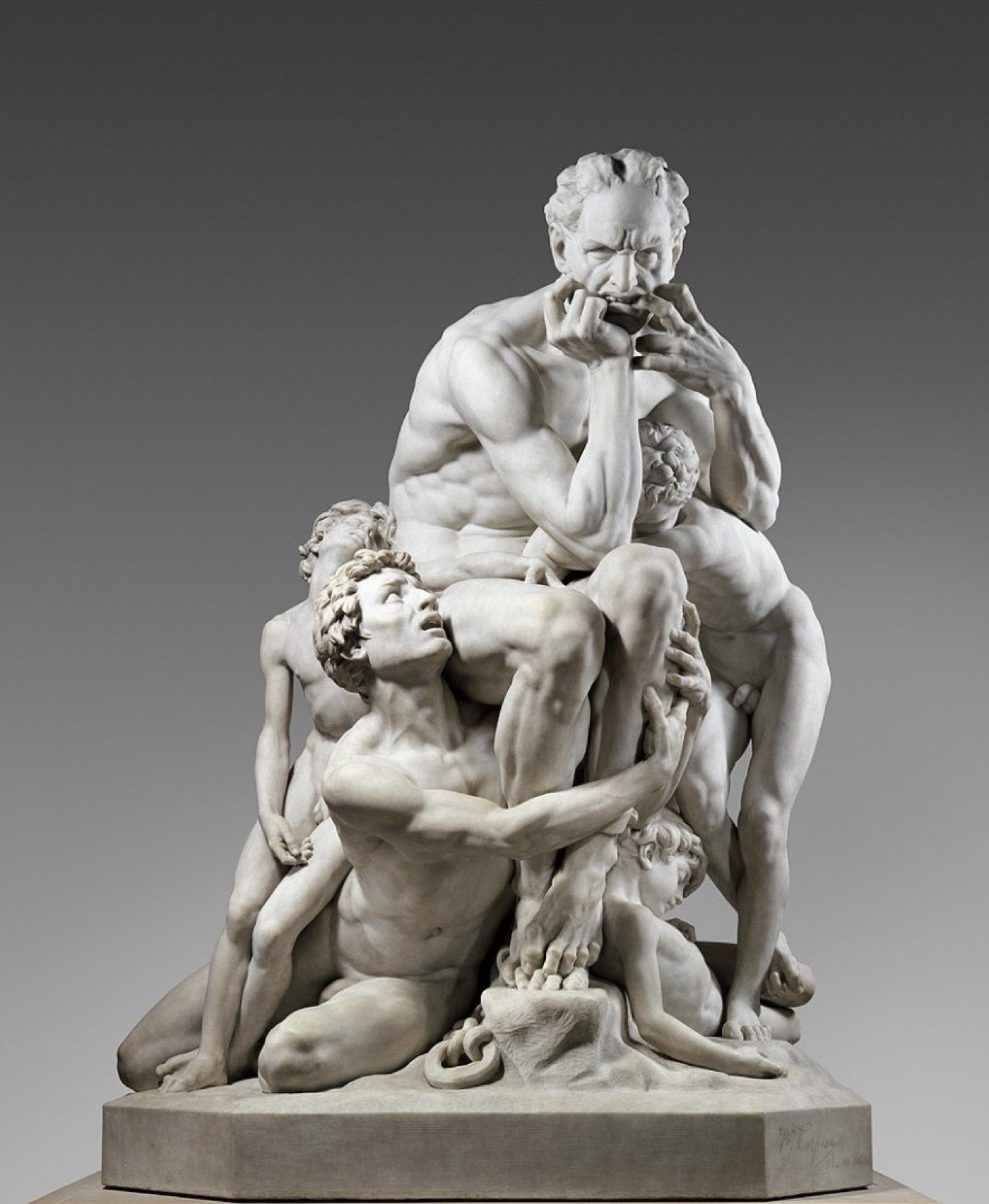
Tydeus and Melanippus, Antigone
When the narrator first meets the count in hell, he's in the middle of gnawing on a skull and it's compared to Tydeus and Melanippus, two Greek names I didn't know – here we have to go further back in history before we can go forward again.
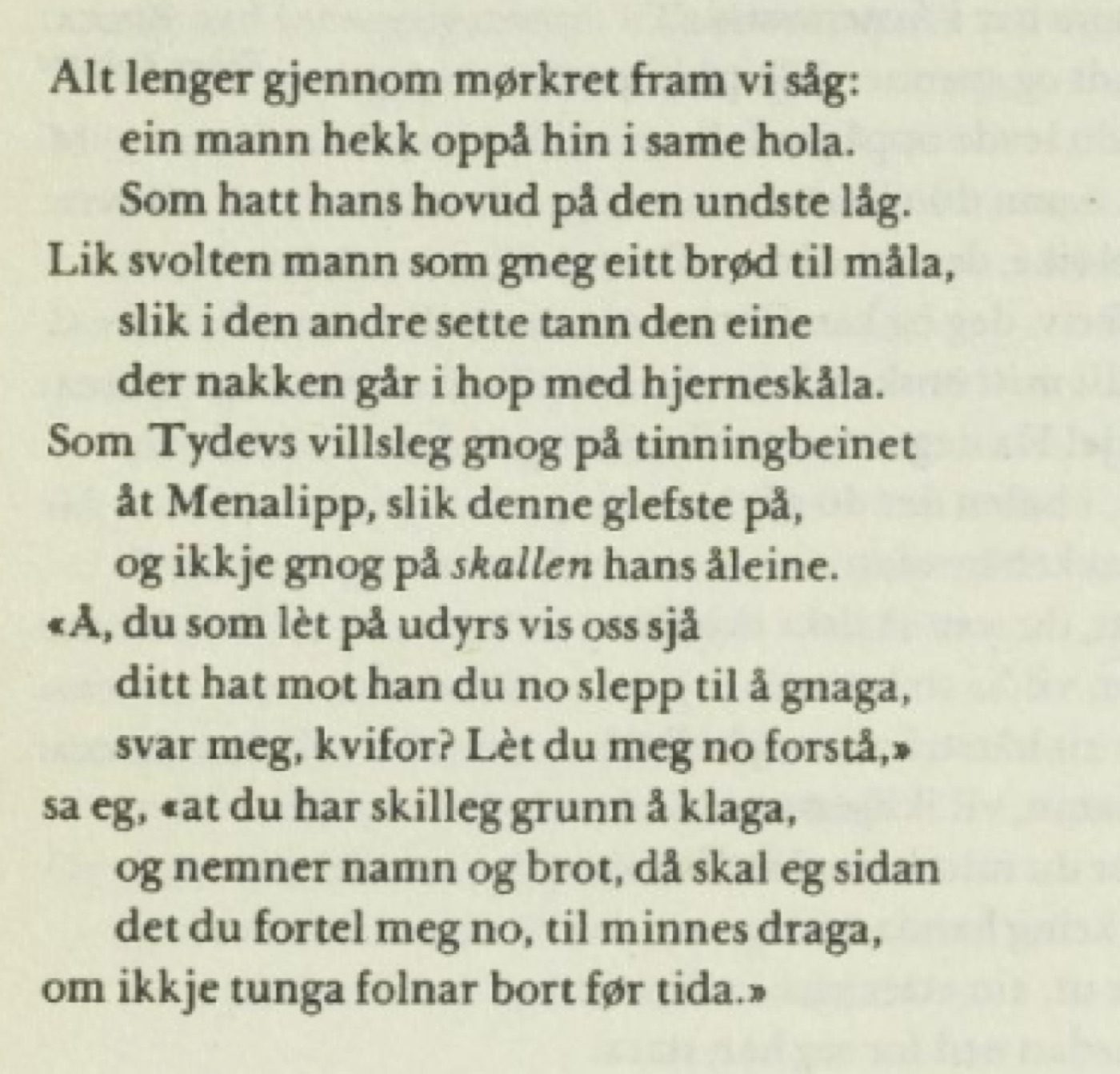
It turns out that Tydeus is a Greek hero from the time before the Trojan War (the story in the Iliad and the Odyssey), he was one of the seven warlords who attacked Thebes in the famous battle where Antigone's two brothers, Polynices and Eteocles were on opposite sides, and killed each other. Creon, as the new king, issued an order that Polynices was not to be buried or receive any rites, because he had betrayed the city, and that whoever broke this order would die. Antigone defied the order, and tried to bury Polynices, since she thinks that the god's law that everyone should get a burial is more important than society's rules (and that family comes first). She is then arrested by Creon, her uncle (she's also engaged to Creon's son).
Antigone is a fantastic play that sets the state, the family, and ethics (the gods) against each other. On NRK Fjernsynsteater there's a production from Hålogaland Teater, with music by Mari Boine. This was actually the first production I saw from NRK Fjernsynsteater, and in a way the beginning of my interest in theater.
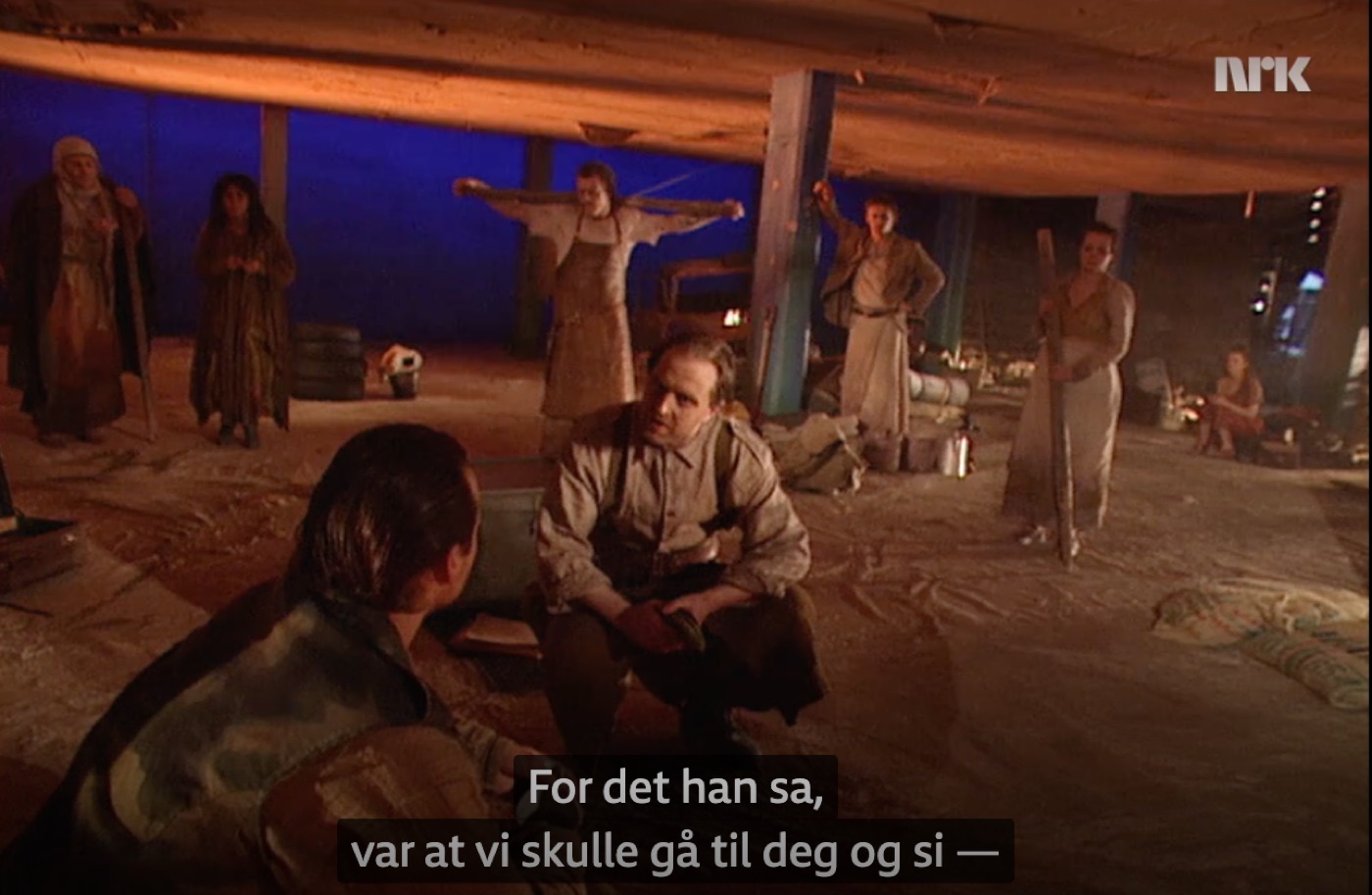
There's also a totally fantastic production at the National Theatre (requires a subscription). Usually I'm a bit skeptical of these kinds of modernized settings, but it works here – very strong acting performances, especially by Jodie Whittaker.
The fascinating thing about Greek mythological stories is that they're often spread across many different sources – these must have been stories that circulated by word of mouth and became common property, but they come down to us in fragments, a bit of the story gets told in one play, a bit in another play, some gets told by later historians in Roman times (who probably had access to other sources than the ones we have), and often there are variations in the details, alternative endings etc.
So the episode between Tydeus and Melanippus happens at the siege of Thebes. According to Wikipedia:
Capaneus impiously boasted that not even Zeus could keep him from burning the city. But, as he was scaling the walls, Zeus struck him down with a thunderbolt. Tydeus was mortally wounded by Melanippus, the son of Astacus. A favorite of Athena, the goddess intended to make Tydeus immortal, but the seer Amphiaraus, knowing this, and hating Tydeus, cut off Melanippus' head and gave it to Tydeus, who proceeded to eat the brains of his killer. As was Amphiaraus's intention, Athena was so appalled that she changed her mind and let Tydeus die.
As I said, stories about Tydeus, and the war against Thebes, are told in many versions, but it looks like the only document that contains exactly this story of the cannibalism is the Thebaid, an epic Latin poem by Statius from around 90 AD. And there we can read this very episode.
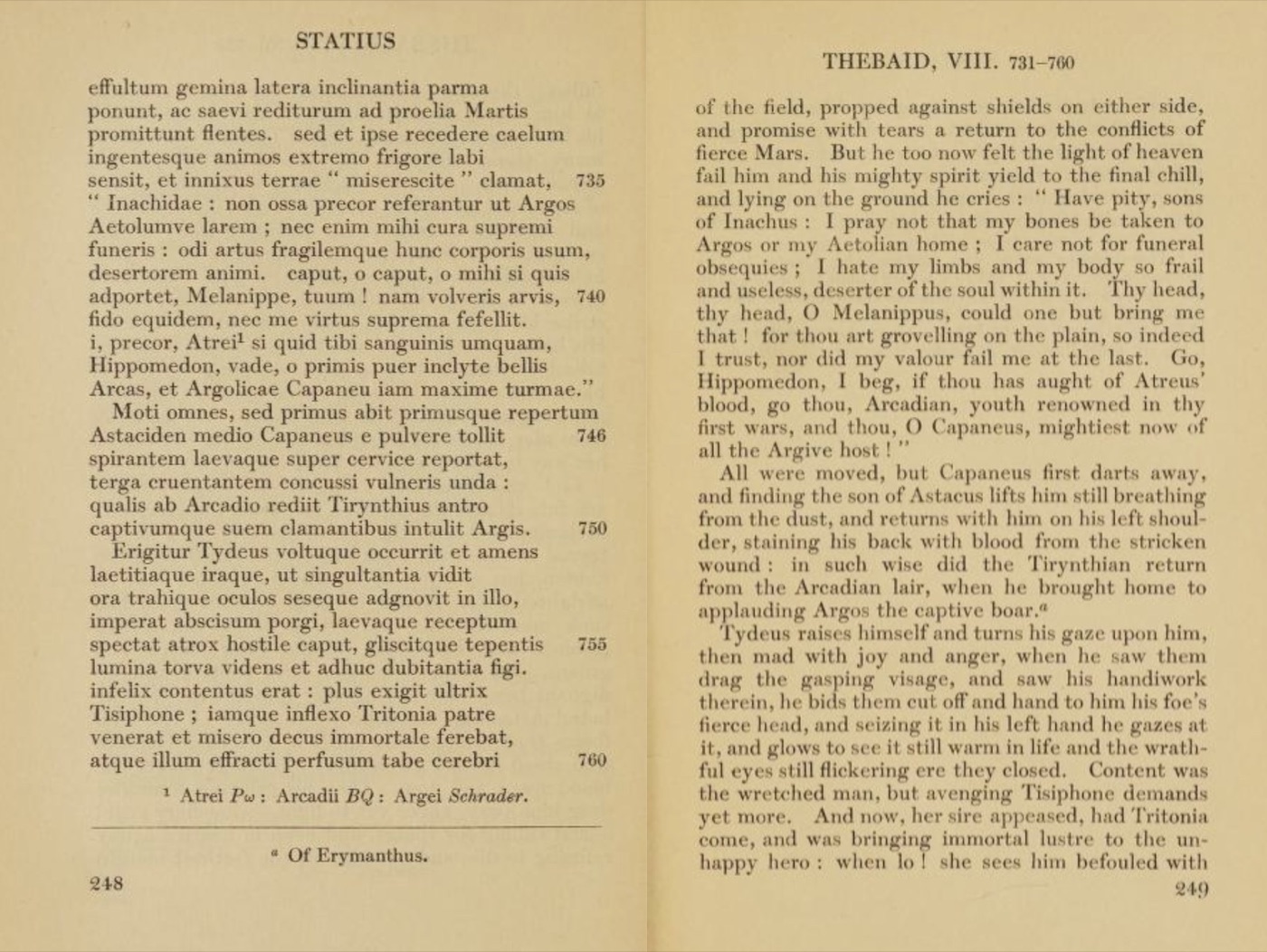
Dante's Ugolino in other literature and art
Now that we've figured out who Tydeus and Melanippus are, who Dante alluded to (and obviously expected readers in the 1300s to know about), we can look at other literature that was inspired by The Divine Comedy. In Chaucer's Canterbury Tales, written at the end of the 1300s, Ugolino's fate is described among 16 other unhappy fates in The Monk's Tale. By the way it's fascinating to see how relatively easy it is to read the Italian text from the 1300s, compared to Chaucer's Middle English:
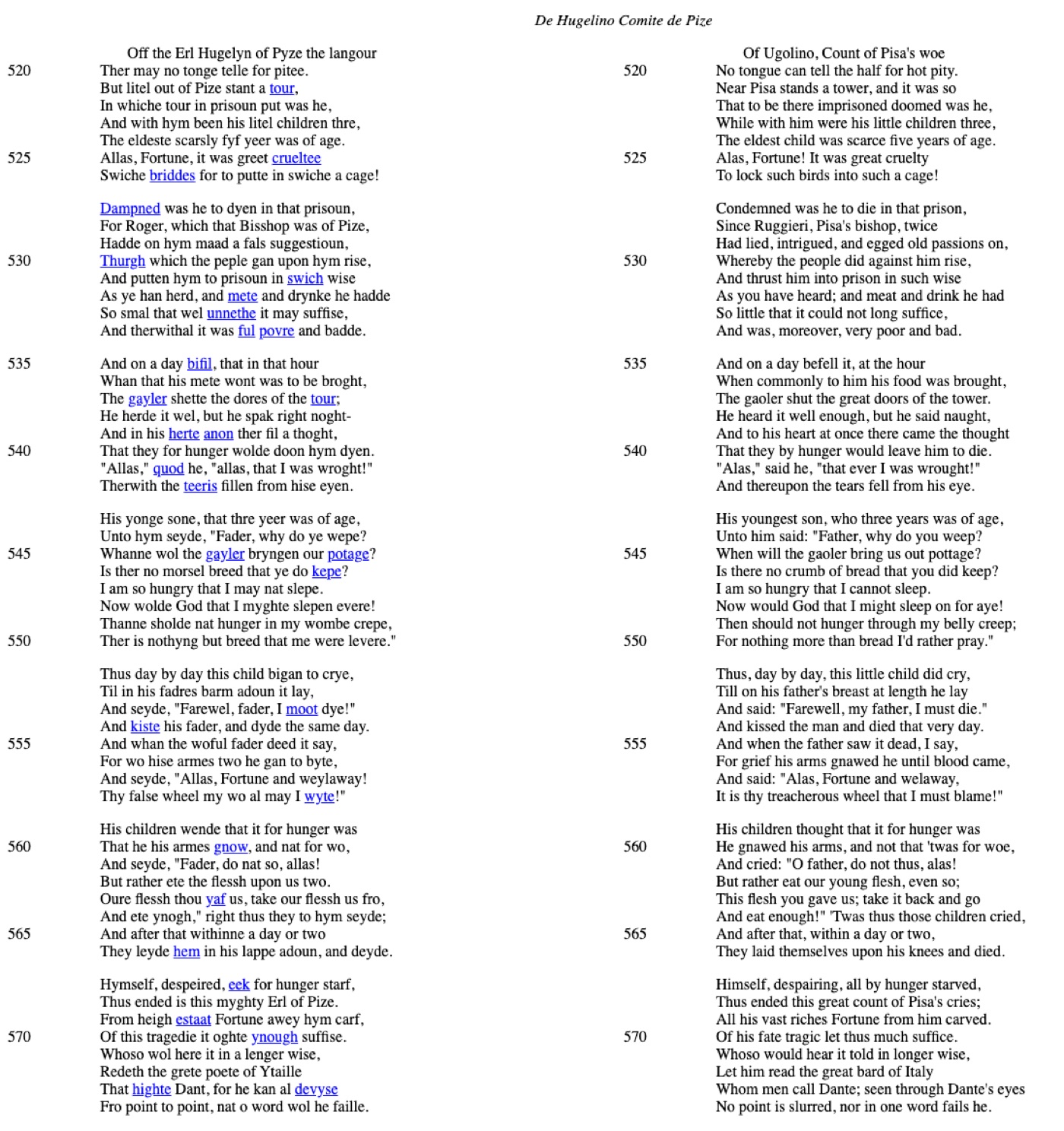
(Funny that Chaucer ends by saying that if you want to hear more, read Dante).
Percy Shelley published a translation of Dante's poem, and it's said that it inspired Byron to write The Prisoner of Chillon, about a famous prisoner in the castle that sits so picturesquely on Lake Geneva (I was down in the dungeon there with my son a couple of years ago), who saw two of his brothers die next to him, but actually was set free in the end.
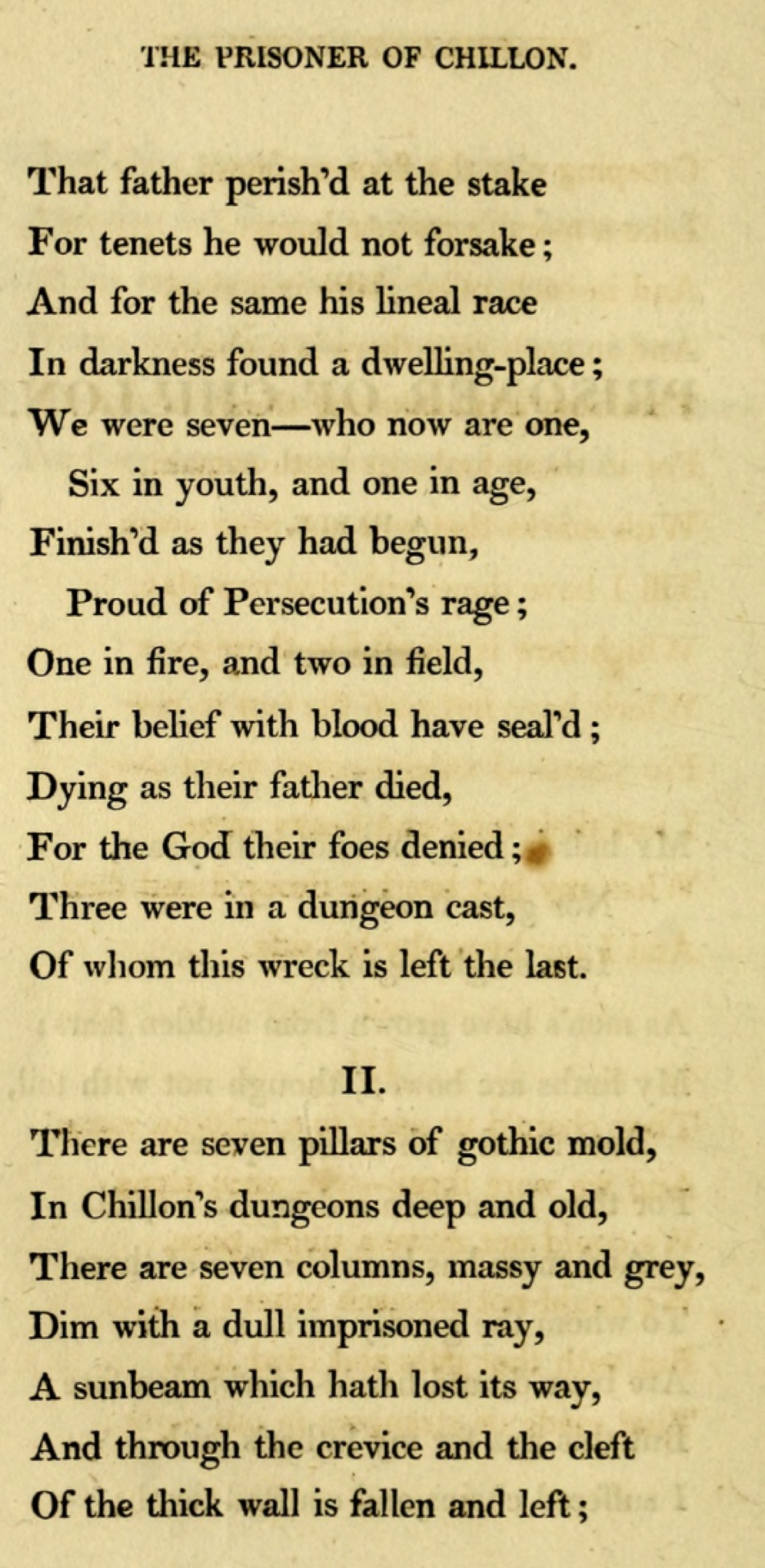
In addition to literature, Ugolino has inspired several statues, e.g. by Rodin:
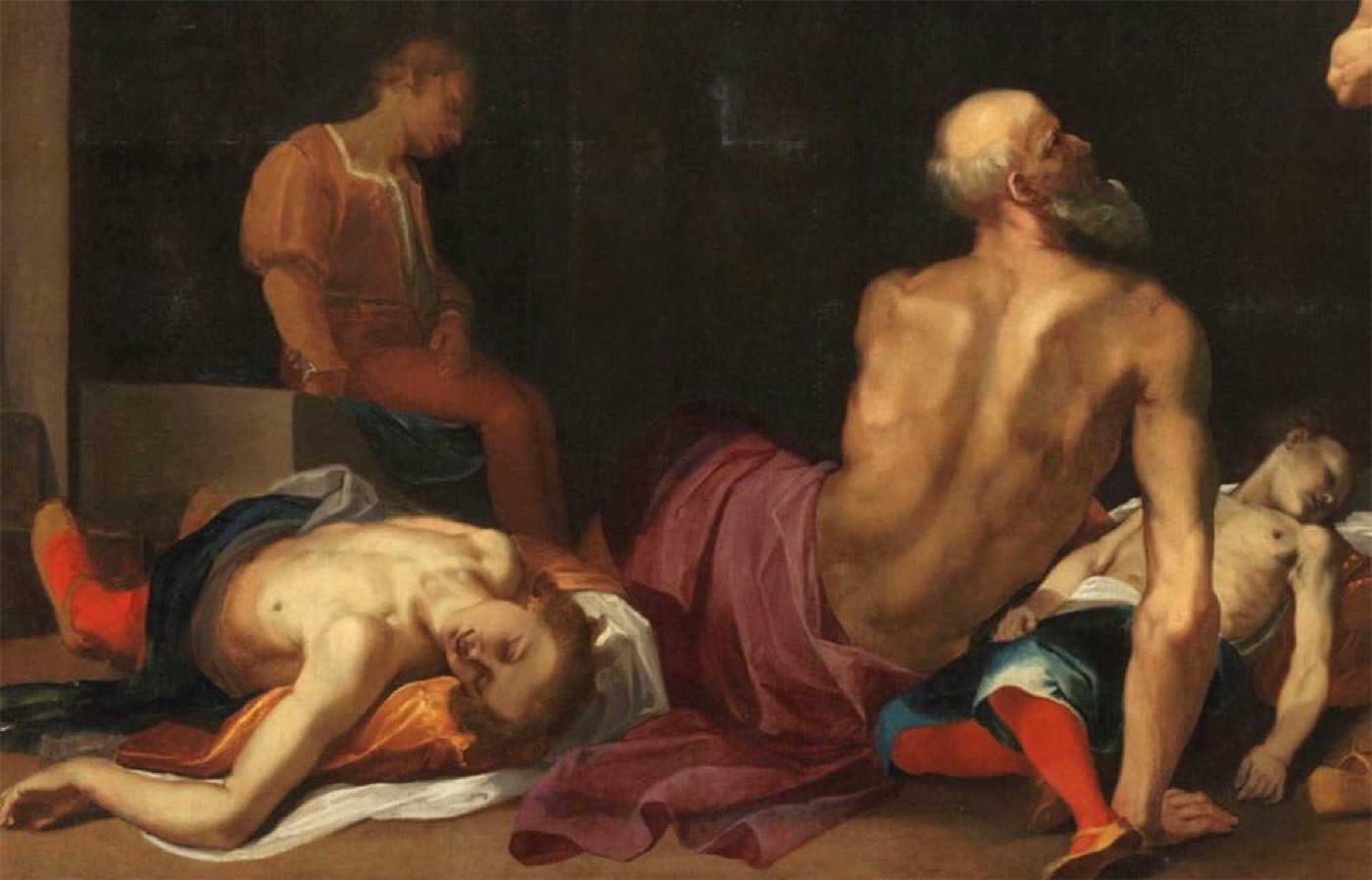
and paintings, like this one by D’Arsenio:
Or this relief where hunger is depicted as a flying monster (by Pierino da Vinci):
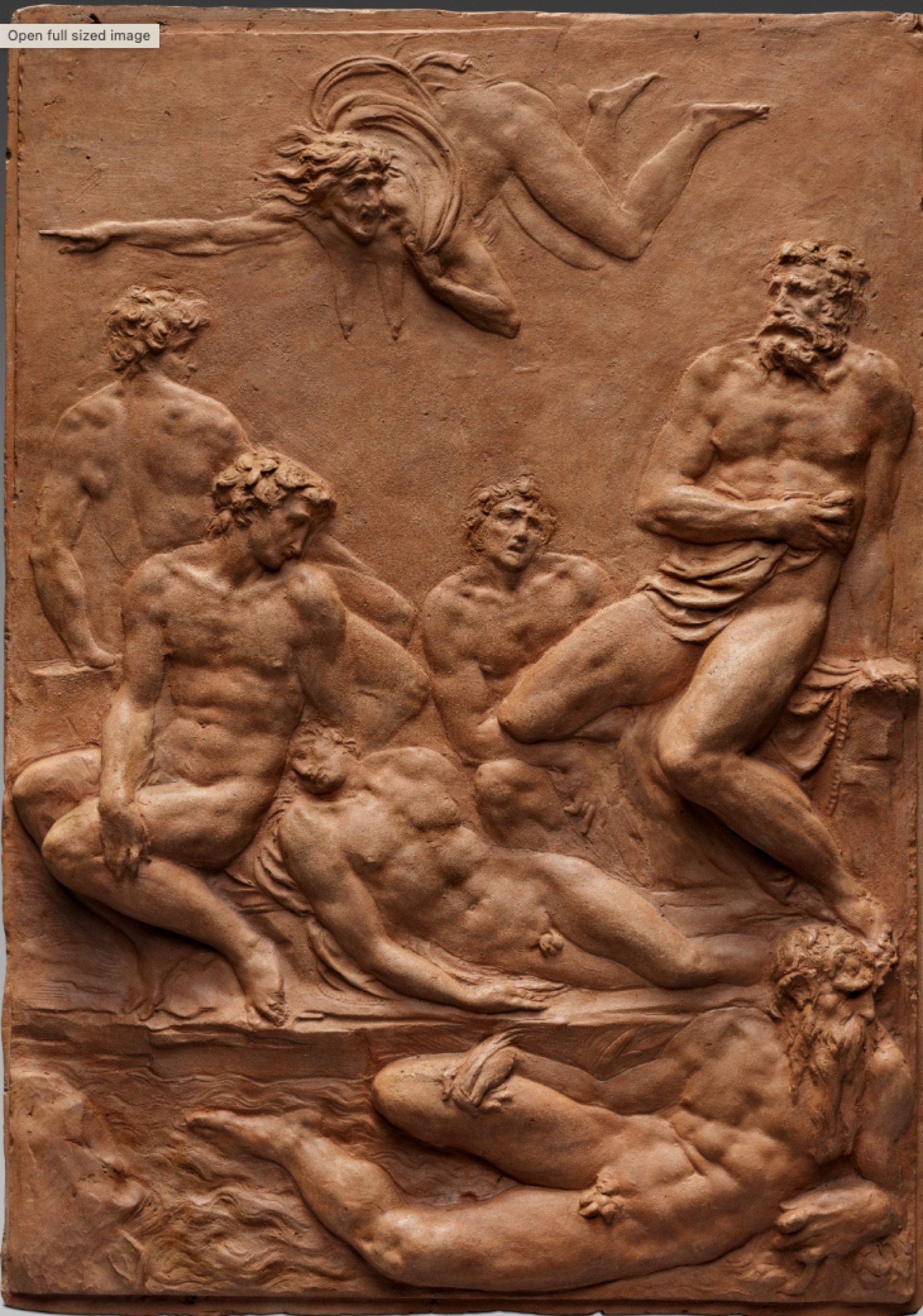
and this one, by Henry Fuseli:
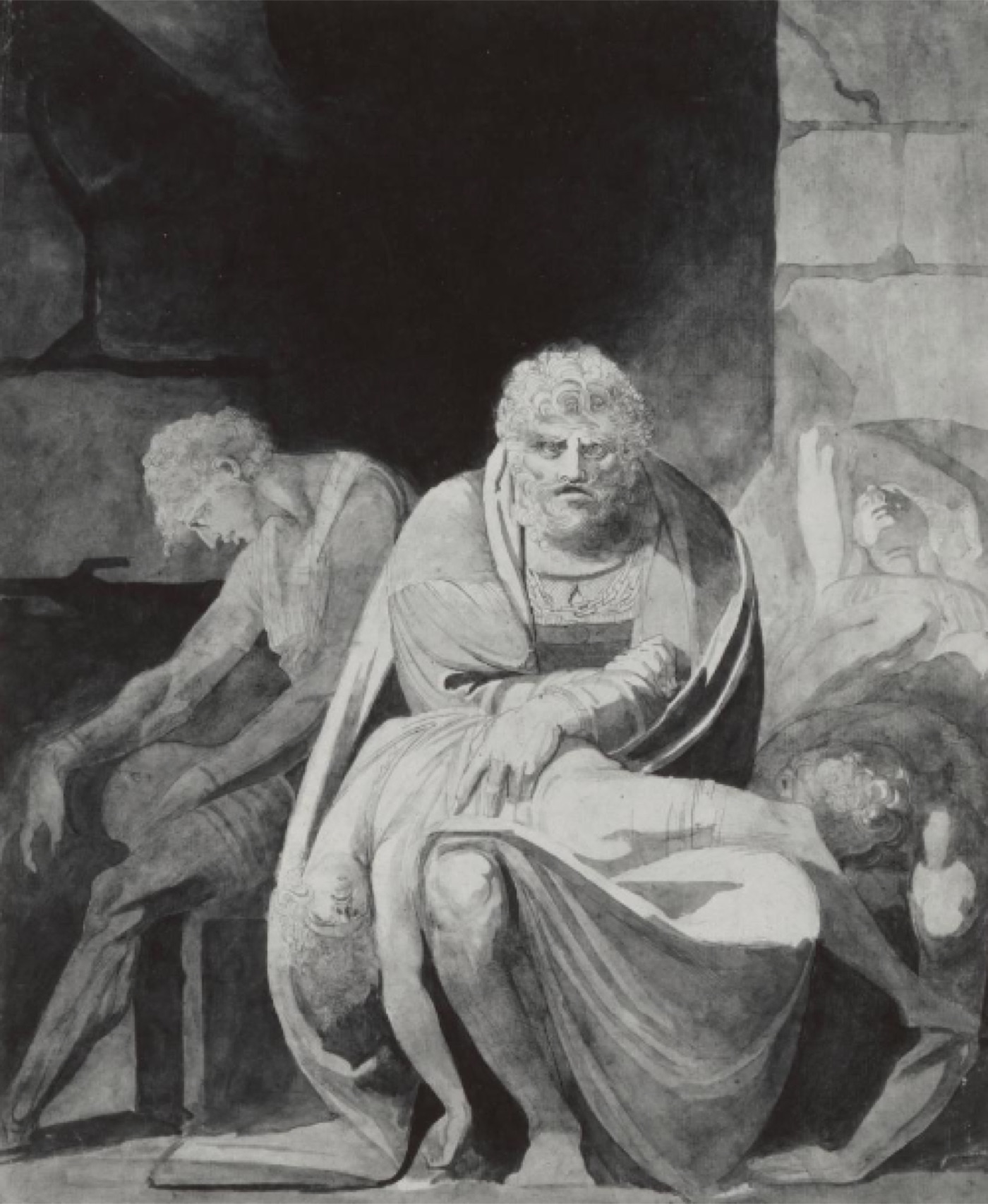
And finally Gaetano Donizetti set all of Dante's text to fantastic music.
Back to von Gerstenberg and the theater of fear
That was quite a journey, from 1768 back to the 1300s, and to pre-Homeric times, and back. But now we have context, and are ready to read the play.
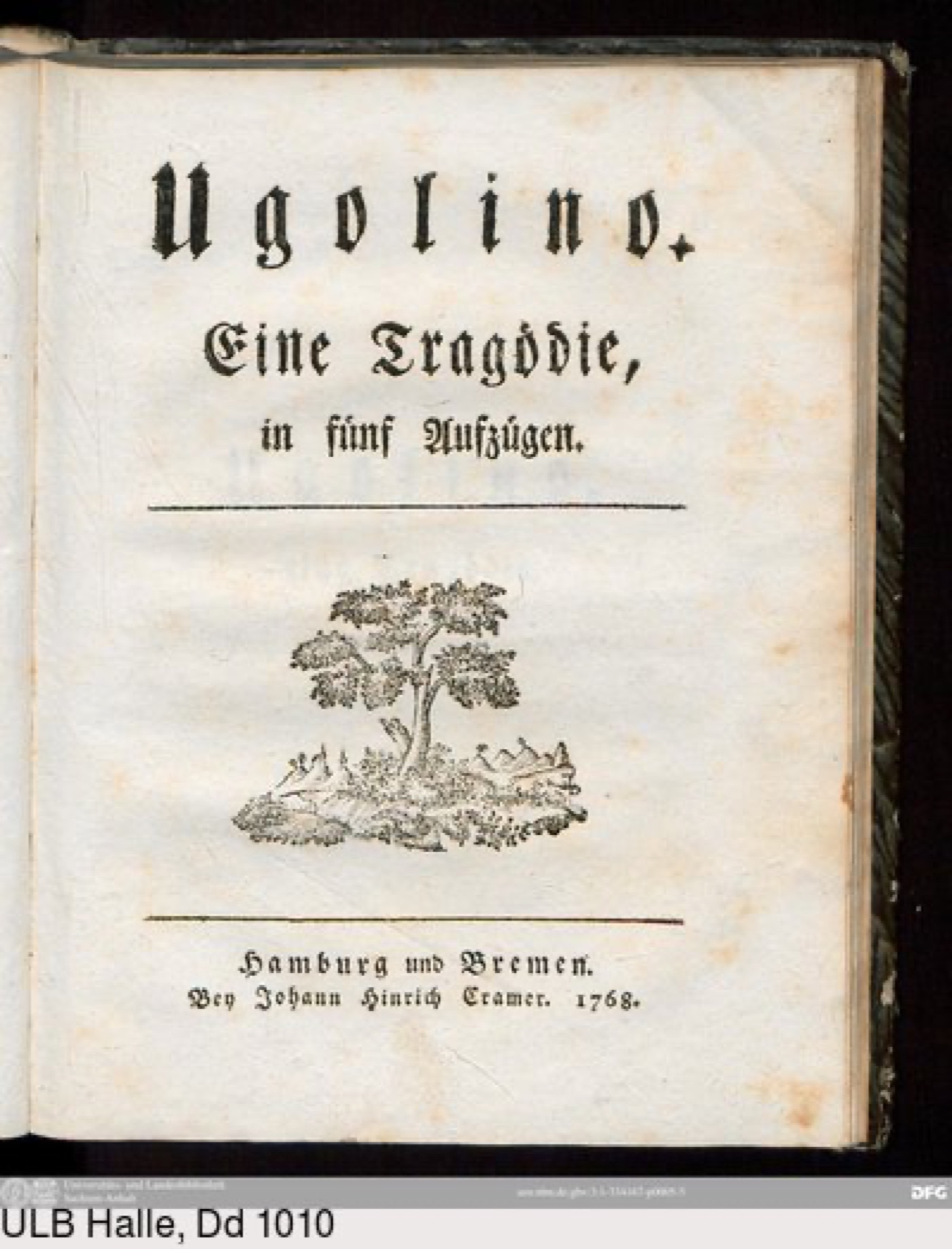
Luckily there's a Kindle version so we don't have to decipher Gothic script for once. The plot of the play has been changed and expanded a bit – one of the sons escapes, which gives hope for a short while, but he's caught and comes back.
Here's the end of the play:
Anselmo. (as the music dies down) Psalm of joy! Psalm of joy! Is not fulfillment reached at our goal? Is the psalm of joy not also in the valley of death?
Ugolino. I lift my eyes to God! My torn soul is healed. With this inheritance – with this vow – heaven and earth! a vow that burns! Slowly, so slowly, under the anguish of every conscience. What? Through days and nights, to be scarred with anguish by the wide-open, merciless eyes of those you killed and those you let starve? No! No! No! May all the shuddering horrors of the abyss never again force me to endure! By almighty God – I will not! (He rises, as if to run at the stone wall.) You in heaven! … (stopped abruptly) Ha! (with his gaze raised to heaven) My Lord and my Judge! O, Ugolino! You live still! You live – though small now, despised, unworthy to face the judgment of the trial! But I live! Did I swear it? By almighty God, did I swear it! An oath such as despair has never sworn! Three days in this twilight, Ugolino! Three nights in this twilight! This burden of rock on my heart – can it not be rolled away? Yes, it is heavy! Or millennia beyond, in the darkness behind the veil of darkness? Through millennia, crushing my forehead against every wall of rock? Woe is me! In every shameful memory in my immortal soul, to die? And live again? And die again? Alas! It is horrible! Through millennia in the black flames of Purgatory? And new millennia more? And perhaps an eternity, trembling before the terrible face of the Avenger? And how the fellow-damned Pisan would growl with his teeth! How the fellow-damned would growl with his teeth! Forgive me! Forgive me, O my Judge and Merciful One! Forgive me! Have not my poor, innocent children fallen? Poor Gaddo! There he writhed! There lie the corpses! Poor Francesco! And my Gianetta! My Gianetta! And – and – (in a choked voice) They did not complain! So devoted to decay! No complaint in their souls! Alas! What if the criminal himself rebelled!
(He weeps bitterly and hides his face. The music grows more mournful.)
An unmanly tear! (in a noble pose) Can you bind the bands of the Pleiades? Or loose Orion's belt? Can you bring forth the Morning Star in its time? Or guide the Wagon in the sky over its children? Do you know how the heavens are to be ruled? Or can you apply their laws on earth?
(The music ebbs away, exalted.)
I will gird up my loins like a man. I lift my gaze to God. My torn soul is healed. With you, hand in hand, you Soon-Transfigured One! (embraces Anselmo) And so be praised by me, you who gave this body over to decay! Very near am I to the goal!
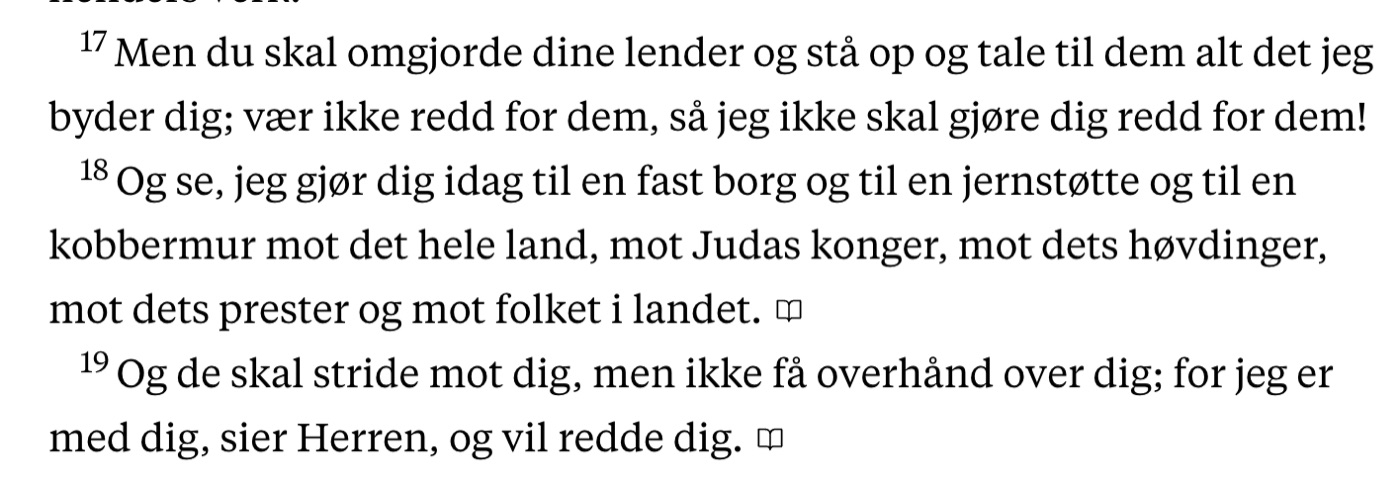
I didn't quite understand “gird up my loins”, but this is apparently a biblical expression where “strapping on your belt” becomes a symbol of “manning up” before a trial, the way Ugolino mans up to die with his head held high. E.g. in the Prophet Jeremiah: