Rabbit Holes · 11 May 2025
Kristofer Janson, historical novels, Jens Munk and the Northwest Passage
"and so this journey begins, ... with a journey"
Introduction to the new project
You can never have too many newsletters or blogs, right? I've always been a “bookworm”, and interested in nerdy stuff, but it was mostly technology-related, and society in the last 100 years, politics and sociology etc. But in the last few years I've gotten more and more interested in everything that's older – from ancient antiquity (or even further back), the Roman Empire, the Middle Ages, and lots of different cultural expressions – history, literature, plays, poetry, opera, classical music…
Even though I often kind of miss my time as an academic, moving into the private sector has given me a much longer time horizon. Now I can decide for myself to learn Ancient Greek, and even if it maybe takes ten years, so what? In ten years, I'll be ten years older anyway. If I start learning now, I'll be ten years older and know Ancient Greek! As long as the process is interesting, I don't need to stress about the goal. And following a thread to the point of absurdity is, for me, an incredible luxury and freedom.
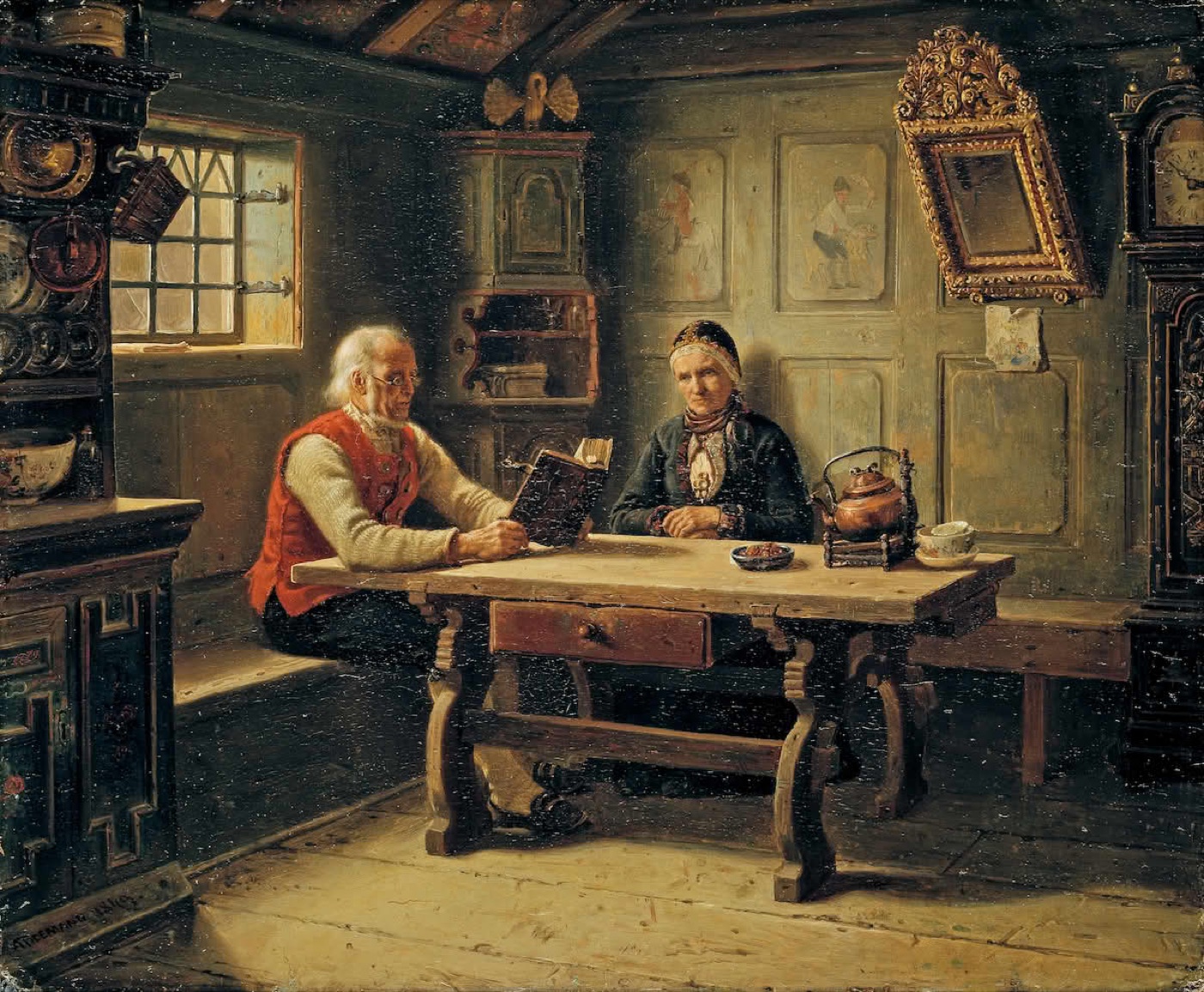
So the idea with this blog/newsletter is to document some of the “rabbit holes” I dive down, and all the fun stuff I find, maybe as inspiration and interest for others. I'm a proud amateur, and instead of being ashamed of what I don't know, I use it as inspiration – think how much exciting stuff there is to find out! And if I'm wrong, just let me know, I'm just happy to get feedback!
Let's jump in.
My path to Kristofer Janson
Actually my whole journey over the last four or five years, from a defining moment on Crete (which I might write about later), could be described as one long rabbit hole, or a rabbit warren with lots of side paths, dead ends, circles, widening out into an endless tree of exciting paths. Many of the little “adventures” I describe come from earlier coincidences and the order things happened in.
In this case it started when I posted a question on Twitter about studies showing some connection between how much classical culture you learn in school, and what effect that has on a nation's cultural and political life. Alexandra Wilson (who has a book coming out soon) replied that I should read “The Intellectual Life of the British Working Classes” by Jonathan Rose. This was a fantastic book that I have a lot to say about, and that opened up many new tunnels in the warren that I'm looking forward to going down…
But after I finished it, I wondered if there was anything similar in Norwegian, and I came across an MA thesis written by Robert Haugen, “Lesende håndverkere”, about lending at a trade union library in Christiania around the turn from the 1800s to the 1900s. A lot of interesting stuff there, but what I especially got stuck on was a table he reprinted of the most popular authors and books, based on a poll in the magazine Kringsjaa in 1894.
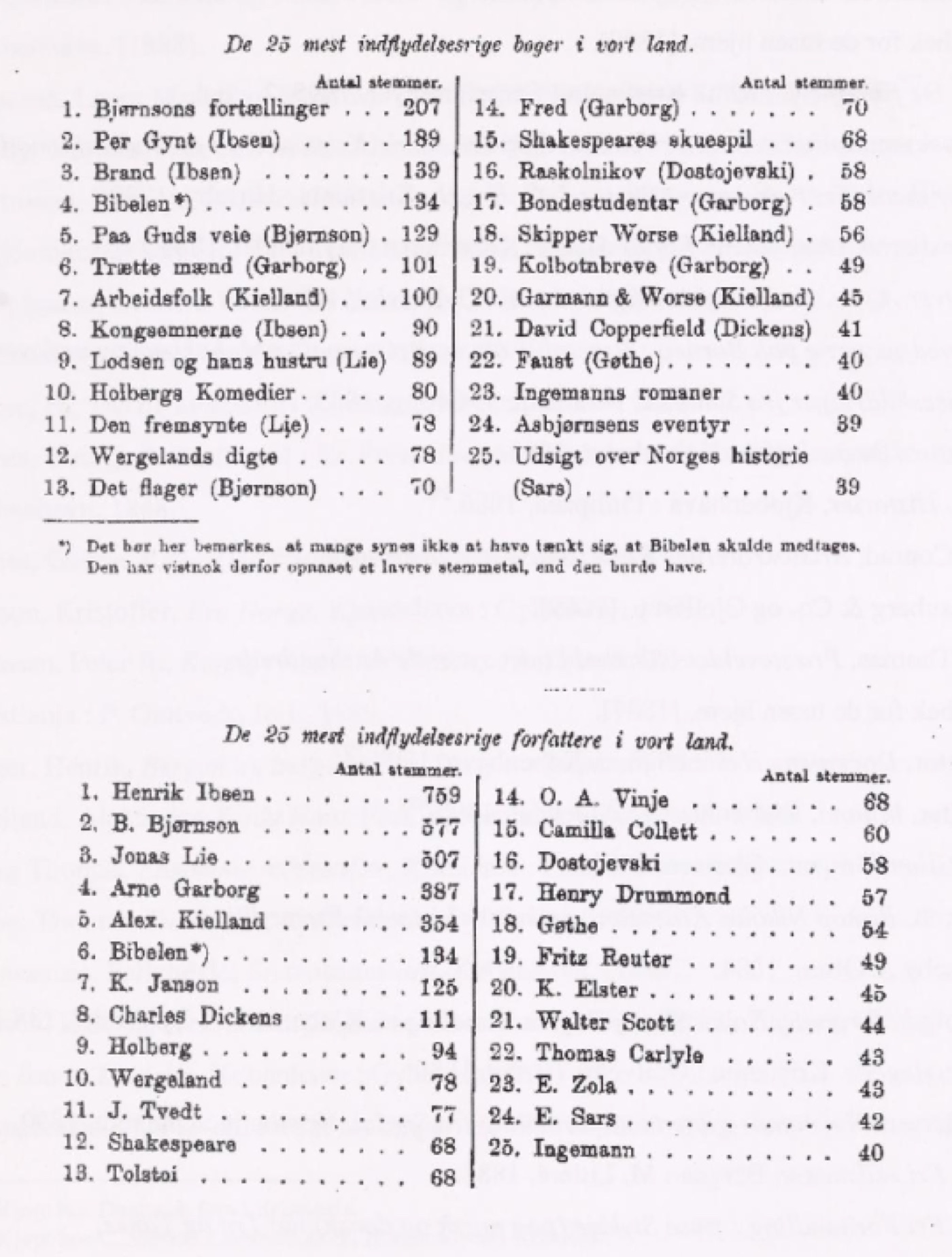
A lot of the names I recognize of course, even if I haven't read them all. But the first name that made me stop was K. Janson. After a bit of searching, I found out that this was Kristofer Janson, a man with a very interesting life.
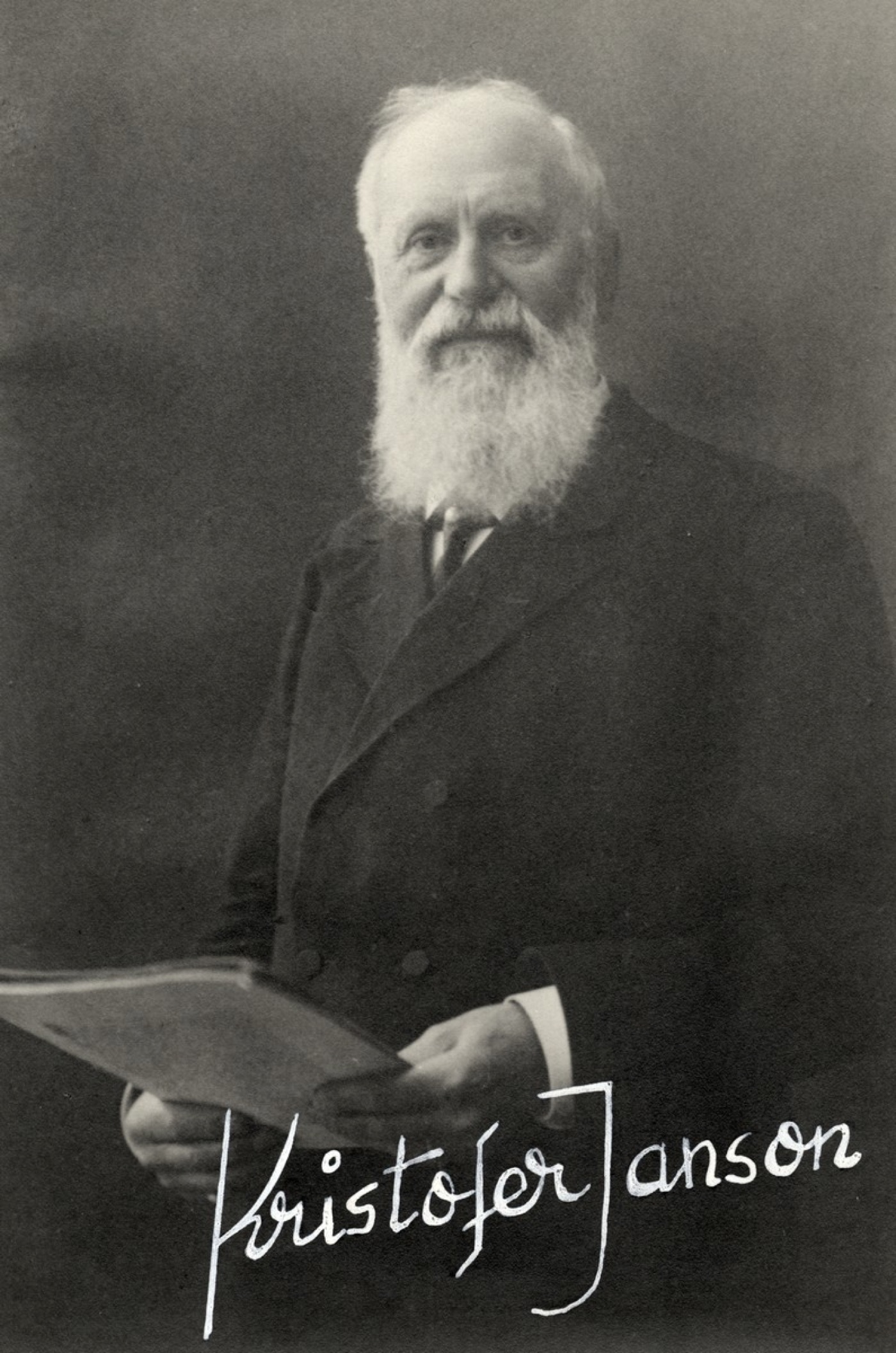
He wrote a large literary output in the new landsmål, the first after Vinje and Ivar Aasen to do it. He went to America and was a minister for a Norwegian community there, and was visited by Hamsun, among others. Later he set up a Unitarian congregation in Oslo.
Fraa Dansketidi
The book that was mentioned as his most important work is a historical novel about Norway in the 1500s that mainly takes place in Lom, but also Trondheim, Hamarkaupangen (barely) and Copenhagen. You can buy it for 50 kr from a local history society, it exists as a scan, and as an interlibrary loan (which is how I read it - the interlibrary loan system in Norway is totally fantastic, and if you haven't tried it yet, try it! Check Bibsøk).
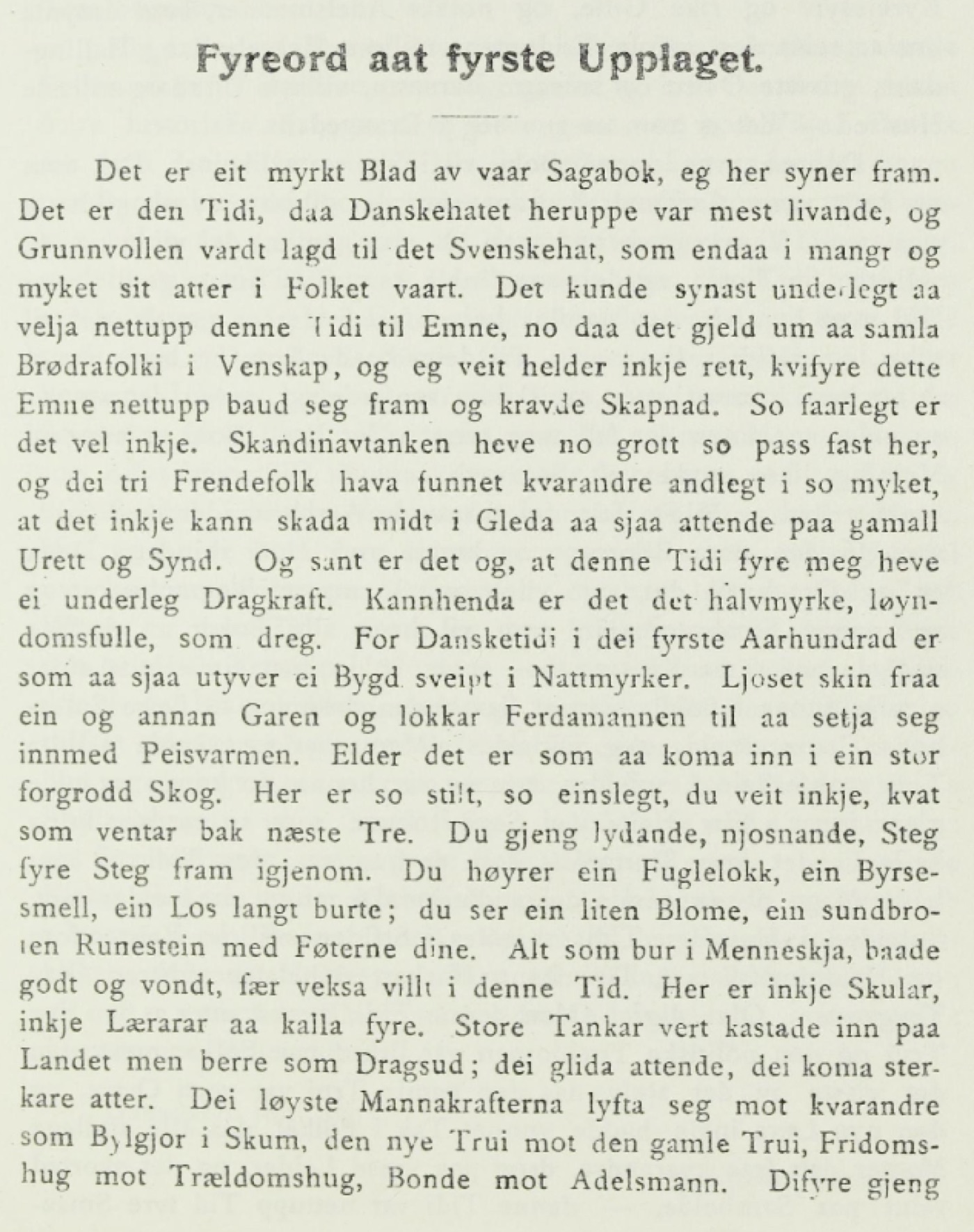
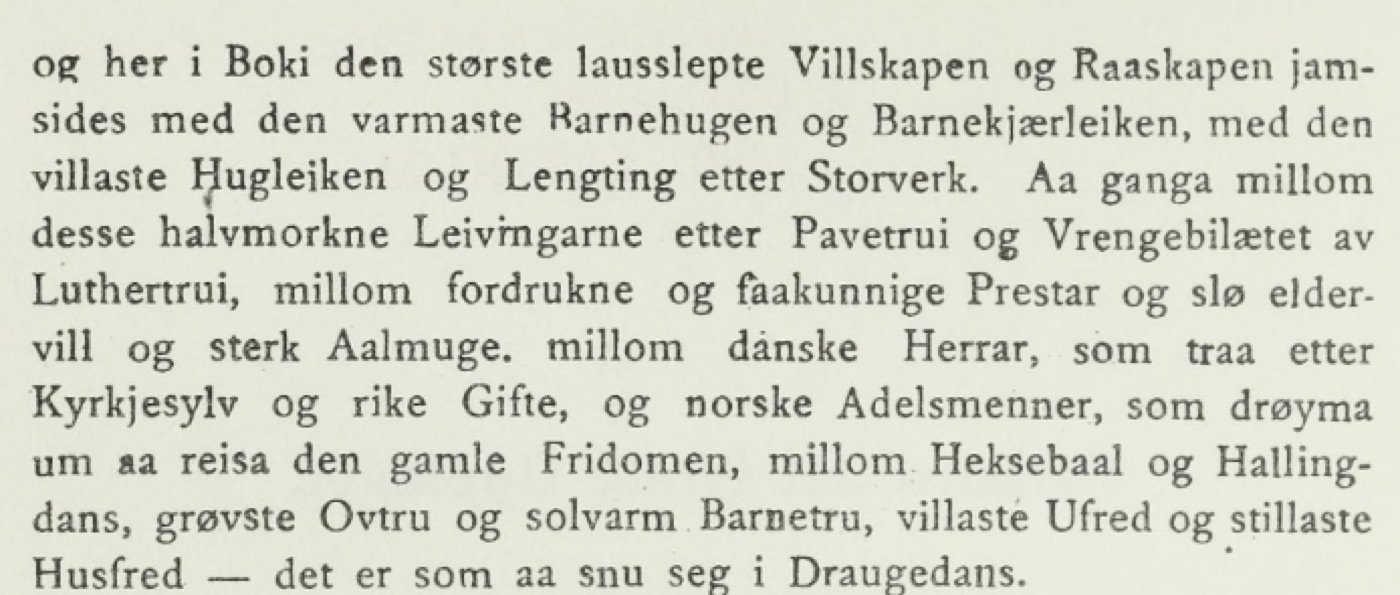
Long story short, I thought the book was totally fantastic and I warmly recommend it! It has a form of language that you have to get a bit used to, but that I got very fond of, and had no problem reading. It's a very lyrical language, with rich descriptions of different characters and nature, quite romantic with touches of chivalric romance. Heroism, honor and virtue, betrayal and forgiveness… This was of course written in the national romantic and nation-building period toward the end of the 1800s, and you can clearly see how everything Norwegian and the Norwegian farmer are portrayed in contrast to the Danes, both the brutal and egotistical leaders, and the downtrodden “thrall-like” Danish peasantry.
Another element that was interesting to me was the conflict between the old and the new “trui” (faith) after the Reformation, how the church was stripped of its church silver and religious images (the silver was sent to Denmark) and the new faith was forced on people. In the book the Catholics are the heroes, there are deposed canons in Trondheim, and a local boy who has gone away, and comes back as a Jesuit on a secret mission.
It should be said here that the book got slaughtered in a long review in Morgenbladet in 1875, which pointed out in particular that the historical account was seriously lacking and misleading. And after the little research I've done myself, that's probably right. At the same time I can easily live with that - you can think of this as a kind of fantasy novel or an “it could have been”, and at the same time it made me very curious about for example how the Reformation was received by “ordinary people”, which opens new paths in the rabbit hole…
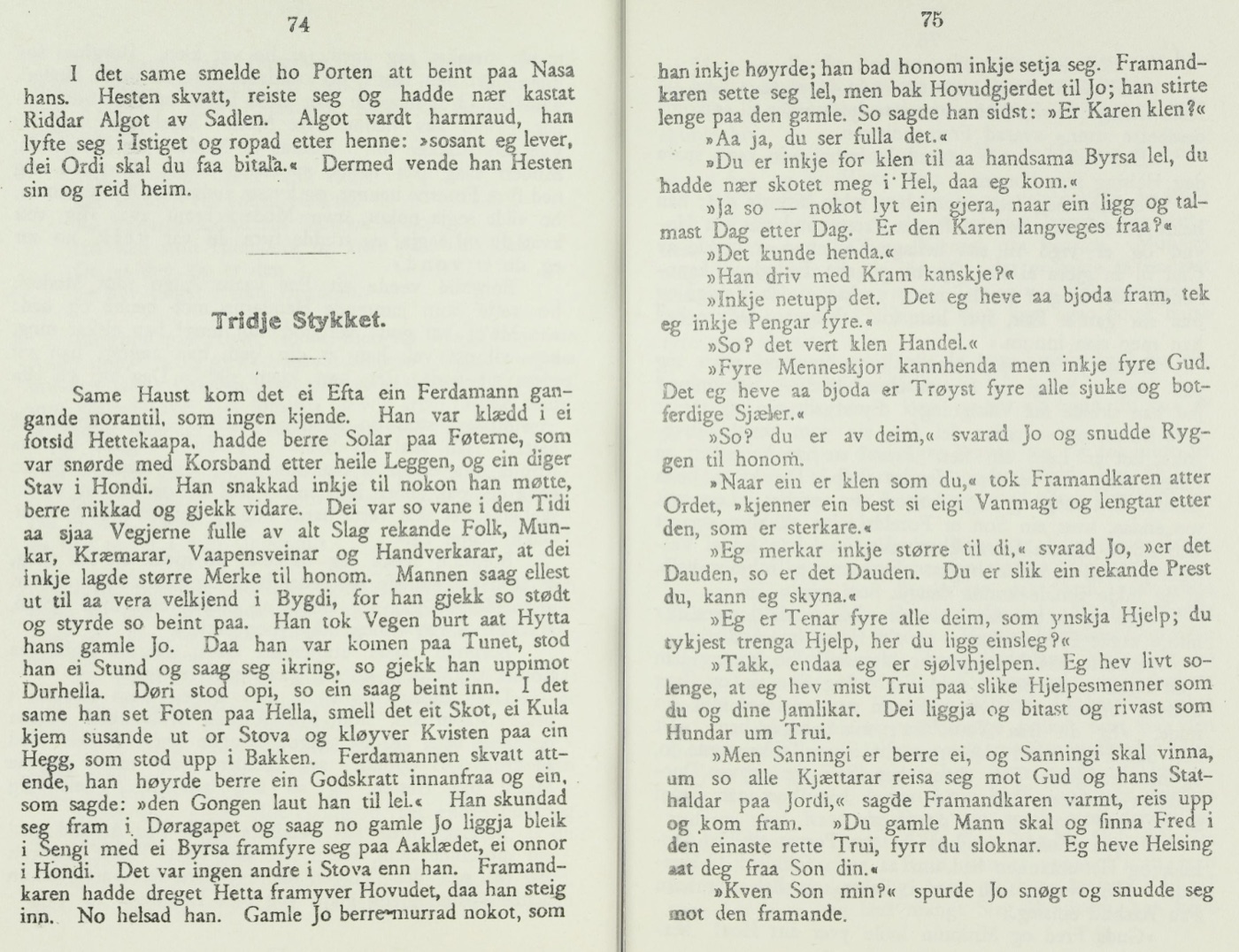
The passage where the Jesuit monk comes back:
The Swedes invade, Erik Munk throws them out, but what about his son?
One of the historical events that the book tells about, and that's based on reality, is when the Swedes invade Trondheim during the 7 Years' War in 1564. Erik Munk, a Danish feudal lord, organizes a force that sails from Bergen to take back Trondheim.
I got curious about this (I honestly knew nothing about the 7 Years' War before this), and read a bit about Erik Munk, who was a special person, to put it mildly. Just the headings from Wikipedia: “Feudal lord and tormentor of peasants, Witch hunter, Action at the North Cape, The fall of Erik Munk”, which ends with him taking his own life in a tower prison in Denmark.
This Erik also had a son named Jens Munk, who lived an incredible life. Illegitimate son of a man who died in disgrace, he came back to Copenhagen at 19, and by then he had already managed to get shipwrecked after being attacked by pirates, work for four years as an assistant in Brazil and pull off a daring feat to save a Dutch fleet from being boarded. Later he goes on several dangerous missions toward Novaya Zemlya to find the Northeast Passage, first privately and then with royal support, before on his last trip he winters at Hudson Bay looking for the Northwest Passage.
Thorkild Hansen has written a totally fantastic book about this exciting life. Thorkild Hansen, a Danish author unknown to me, has apparently written several historical novels, and is definitely someone I want to read more of. He weaves together in a fantastic way sources about the life of Jens Munk with rich material about life in Copenhagen and the colonies, the historical events in Europe at this time and life at sea.
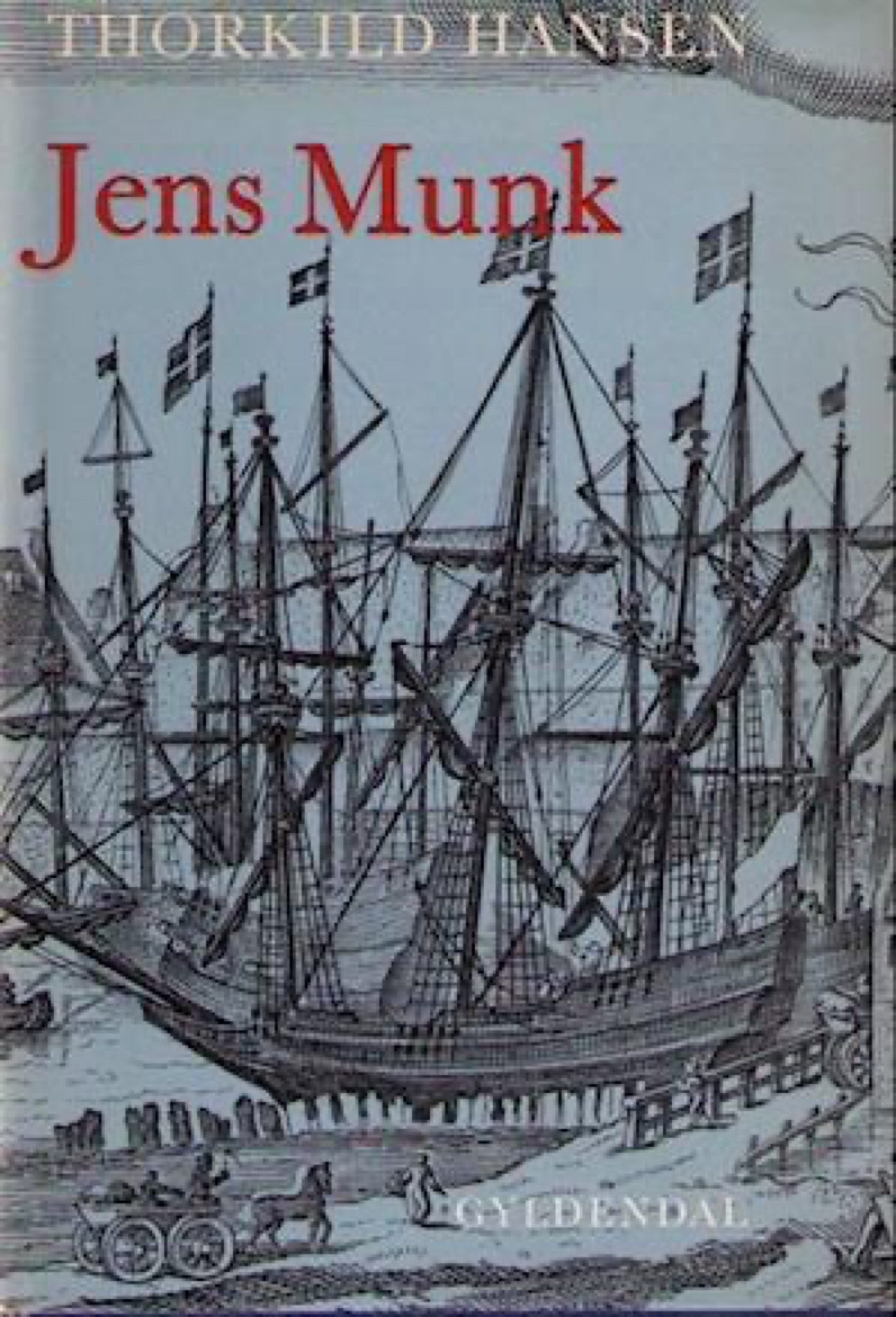
The book is translated into Norwegian and you can get it by interlibrary loan. Apparently there's also a newer Norwegian book about the same man that I haven't read.
As I read about these journeys, I constantly have to turn to maps and a few AI questions, because I have so little historical or geographical context about the northern trade with Russia, the Northwest Passage etc. I read about how Arkhangelsk was an important Russian port for trade in this period, and wondered why - and got a lot of interesting details. I also saw an interesting video about Arkhangelsk that talked a fair bit about the history.
I also had a discussion about other historical literature, which I plan to explore further. And I spent quite a bit of time looking at the map to understand how strategically important the two “passages” are – the northwest, north of the American continent (Canada), and the northeast, north of Russia, both passages go through the Bering Strait and down to Asia.
Ending, for now
That was quite a few jumps. And there are still a lot of open threads that I plan to pick up again later:
I'm still very interested in the history of how “ordinary people” have approached classical literature through the ages. I'm working (slowly) on a French book about working-class culture and high culture.
I plan to read more Kristofer Janson. I just finished a very nice short story collection called “Mangeslags kiærlighed”, and I also have a historical novel about 1814 on the bookshelf.
Nordic history is something I will definitely keep exploring.
And I've now gotten a new interest in northern Russia, and maybe I'll try to read one of the books I linked to above (other historical literature).
Was there anything here you found exciting? Any threads you want to follow up on, or contribute to? Anything that was wrong, or anything that was right? It would be really nice to hear from you — feel free to send me an email!