Rabbit Holes · 11 May 2025
Interlude: Rabbit holes and search engine
Kristofer Janson, Johan Herman Wessel, and amateur history
A few odds and ends before we go back to the newspapers from 1814.
New blog
I read a lot that I want to share, but that doesn't fit here. I think it's fun to dive into different rabbit holes and follow authors, themes, historical events and other things. Who refers to who, who inspires who? What happened at that time? Now I have a new blog "Cultural rabbit holes and common threads". In the first post we go from The Intellectual Life of the British Working Classes, to Kristofer Janson who wrote at the end of the 1800s, to Norway-Denmark in the Seven Years' War in the 1500s, to a somewhat unknown but very exciting Norwegian polar hero who spent the winter at Hudson Bay in the 1600s!
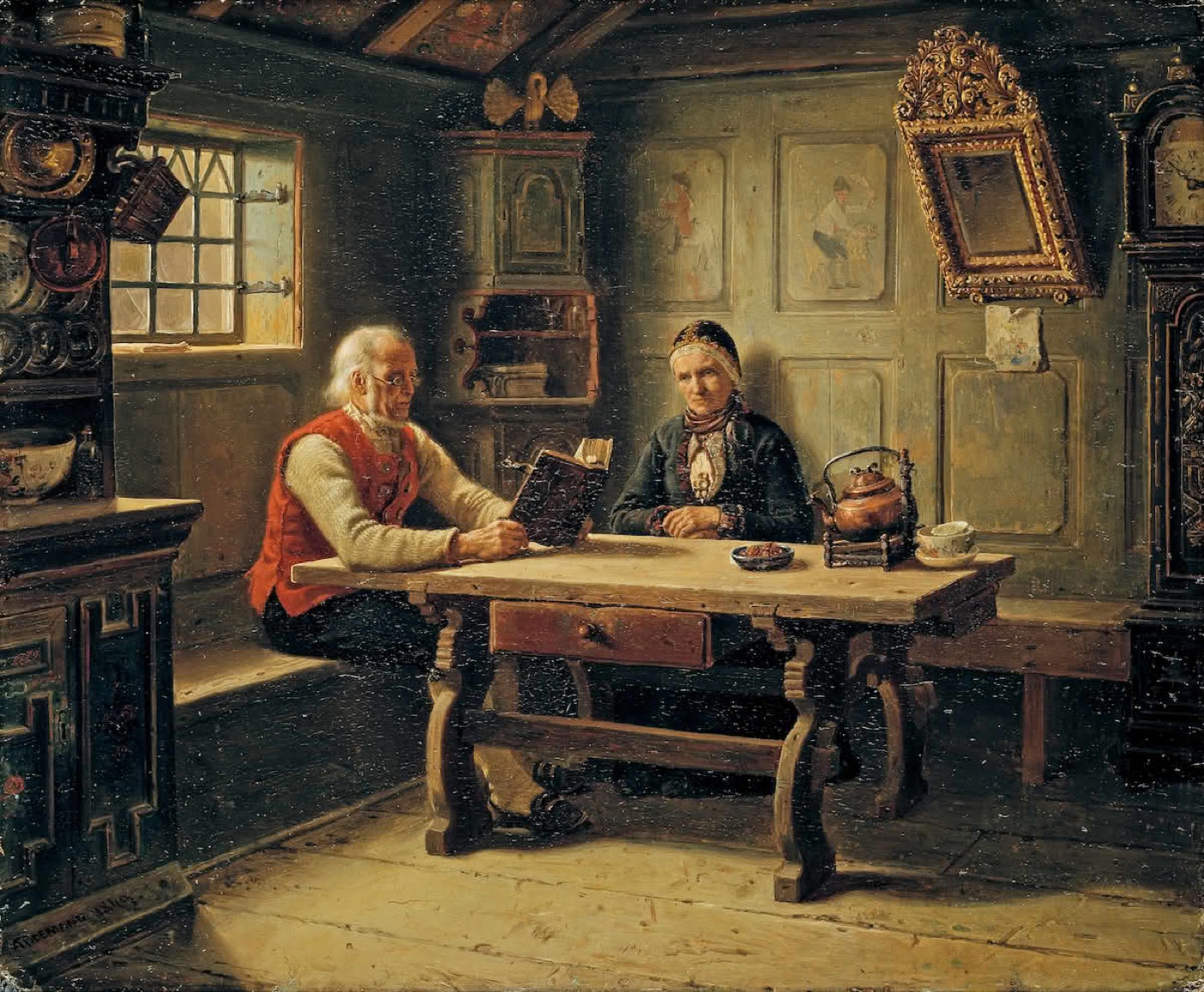
AI experiments
Yesterday there was an “AI-testival” in Hamar, where the goal was to experiment with creating together, mixing art and AI, and creating a meeting place for experimentation.
I took part with a mini-presentation about being an amateur historian with AI. I pointed to some of the experiments I've discussed here, like in an earlier issue where I showed the possibility of automatically generating a podcast based on scanned newspapers, or of getting an AI model not just to transcribe, but also to recreate the whole layout of a newspaper. And in the last issue I did a comparison of different AI services for transcription (for now Gemini is in the lead, but that kind of thing changes fast).
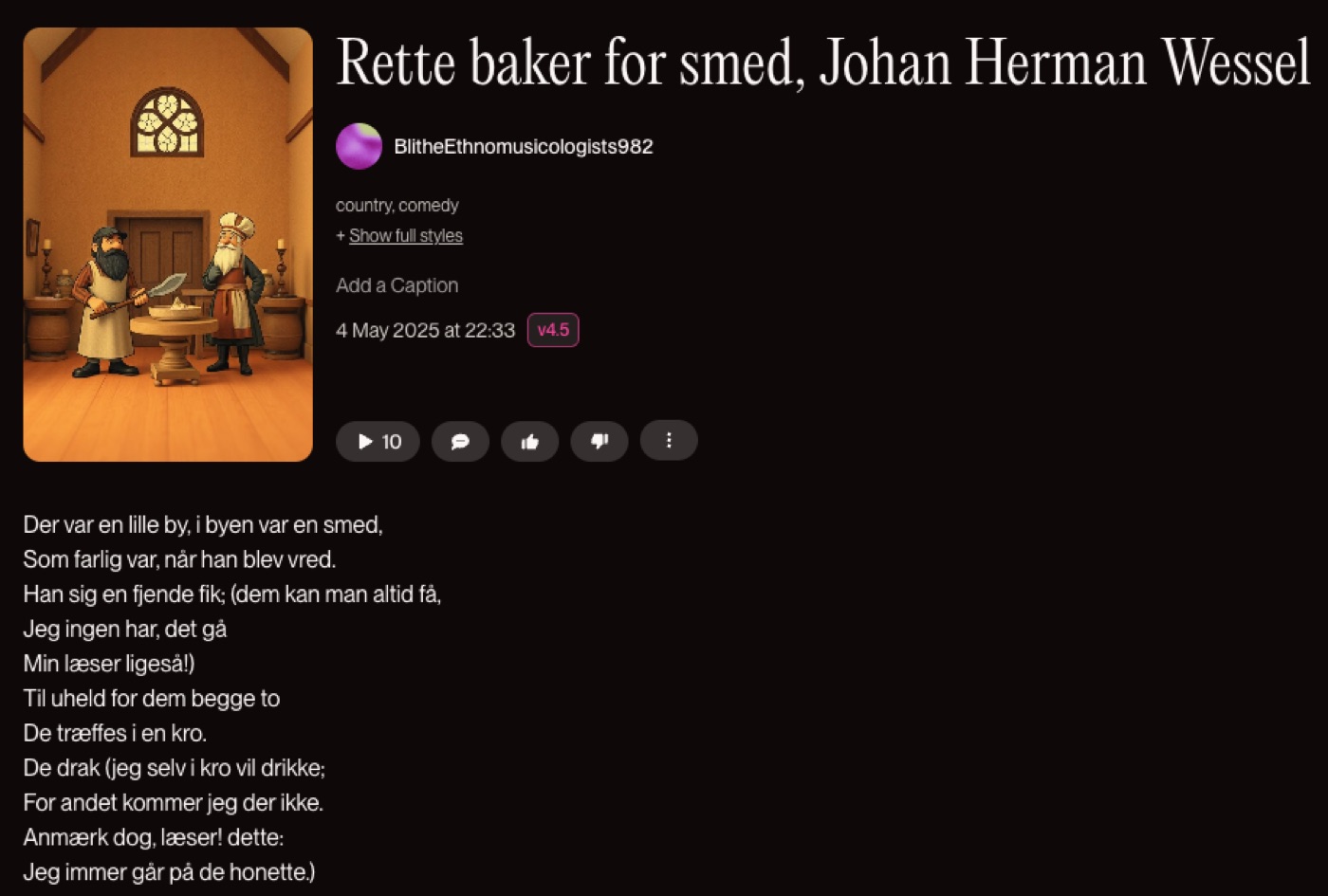
I also showed an experiment I've done with setting older poetry to sound – I've read a fair amount about the scene in Copenhagen at the end of the 1700s, where Det Norske Selskap, with among others Johan Herman Wessel, was active. Wessel has lots of funny and sly poems, all in metered verse, and it struck me that I'd really like to hear them performed. I didn't find any recordings, but it was fun to experiment with generating music. I don't think this one's too bad, and at least it gives you a completely different impression of a text than reading it does. (And it was also fun for me to understand where the expression “å rette baker for smed” comes from). The song
Finally I've experimented with using repl.it to make an app that lets you use AI to search newspapers at Nasjonalbiblioteket. This is a quick prototype, but it's already pretty fun to play with. (You need a Gemini key to use it). Try it yourself!
That's it - in the next post we'll look at the lead-up to 17 May.