Rabbit Holes · 15 May 2025
Tristan and Isolde - from Wagner to Old German, via Old Norse
opera, medieval romance, children's book... and Norwegian folk song!
I just got back from something as exotic as an opera pub in little Hamar - a totally fantastic regular event put on by local world-class talents - tonight the three sopranos Marthe Werring Holmern, Sassaya Chavalit Magnhild Korsvik and pianist Ivan Ivantchev. They finished with a “barcarolle” from Tales of Hoffmann, which is sort of sung by the gondoliers in Venice - totally fantastic. (Here is a recording of some other people singing that song).
And that inspired me to write a bit about how I went from being completely uninterested in opera, to the opposite, in a very short time. I can actually date a couple of the most important moments pretty exactly. 6 May, 14 June, 10 September and 3 October, 2024. Before that I had never seen a single opera, knew almost nothing about opera history, and thought it was completely uninteresting.
The dates, ancient Greek, Wagner and Kirsten Flagstad to Figaro
On 6 May I started reading a totally fantastic book (Who needs Greek? by Simon Goldhill) about how the heritage of ancient Greece and the Greek language has interacted with different societies, cultures and political movements, from Jews in the Old Testament, via Erasmus of Rotterdam who retranslated the Bible from Greek and popularized the study of ancient Greek in Europe, to different ways ancient Greek plays were interpreted in England and Germany in the 1800s and 1900s. This was a continuation of my project that started in Crete, of learning about older civilizations and the Greek language.
One of the people in the book was Houston Stewart Chamberlain, a Brit who married Wagner's daughter, and wrote a kind of antisemitic world history that became incredibly influential, both with the Nazis but also in England. This probably sounds like a strange beginning, but the way Goldhill described the fundamentally different ways of approaching the ancient material, and the shifts that theater and opera went through via among others Wagner, made me think that here was something interesting to get into. I think it also gave me the first taste of how incredibly important opera was culturally and socially “back then”.
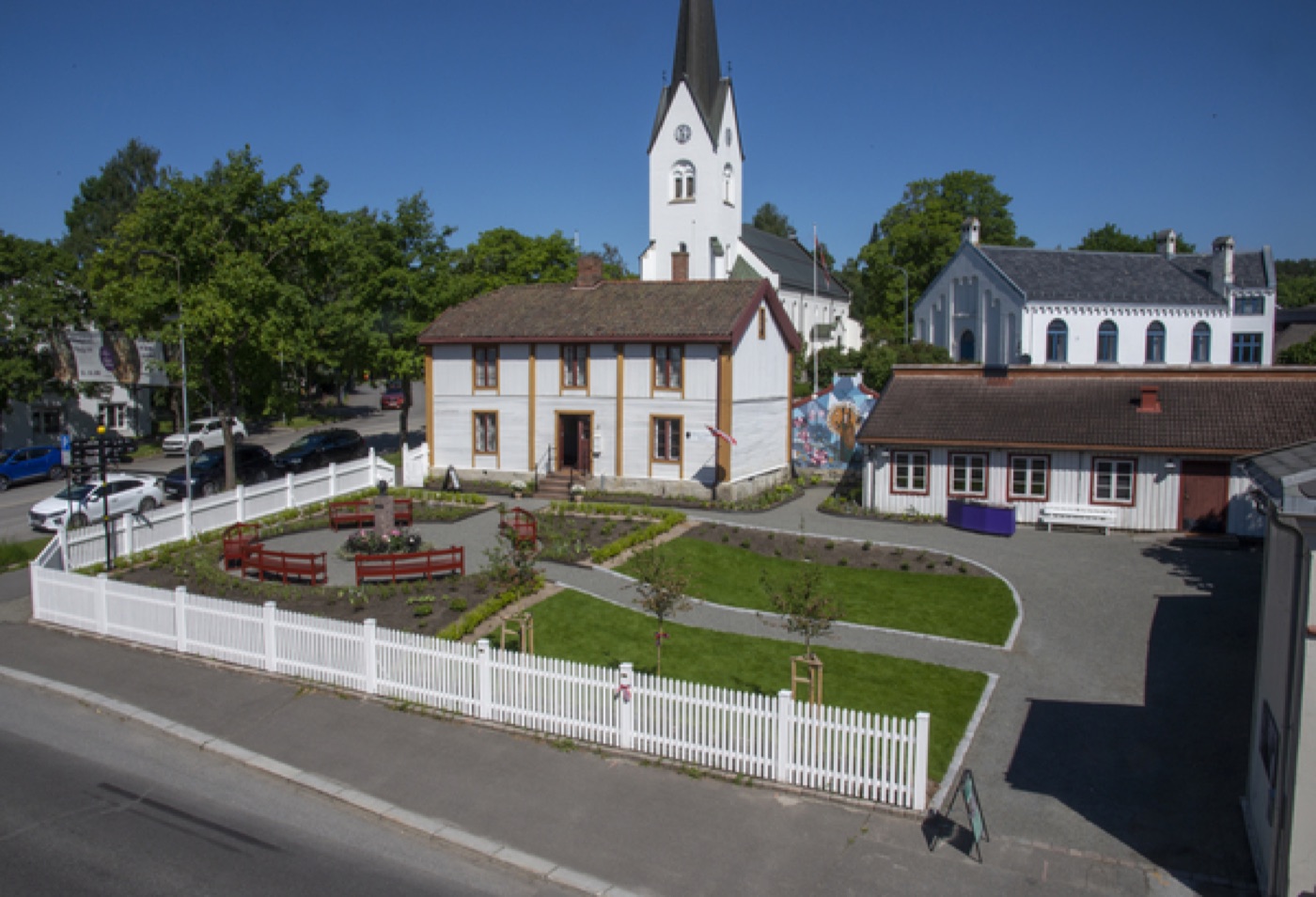
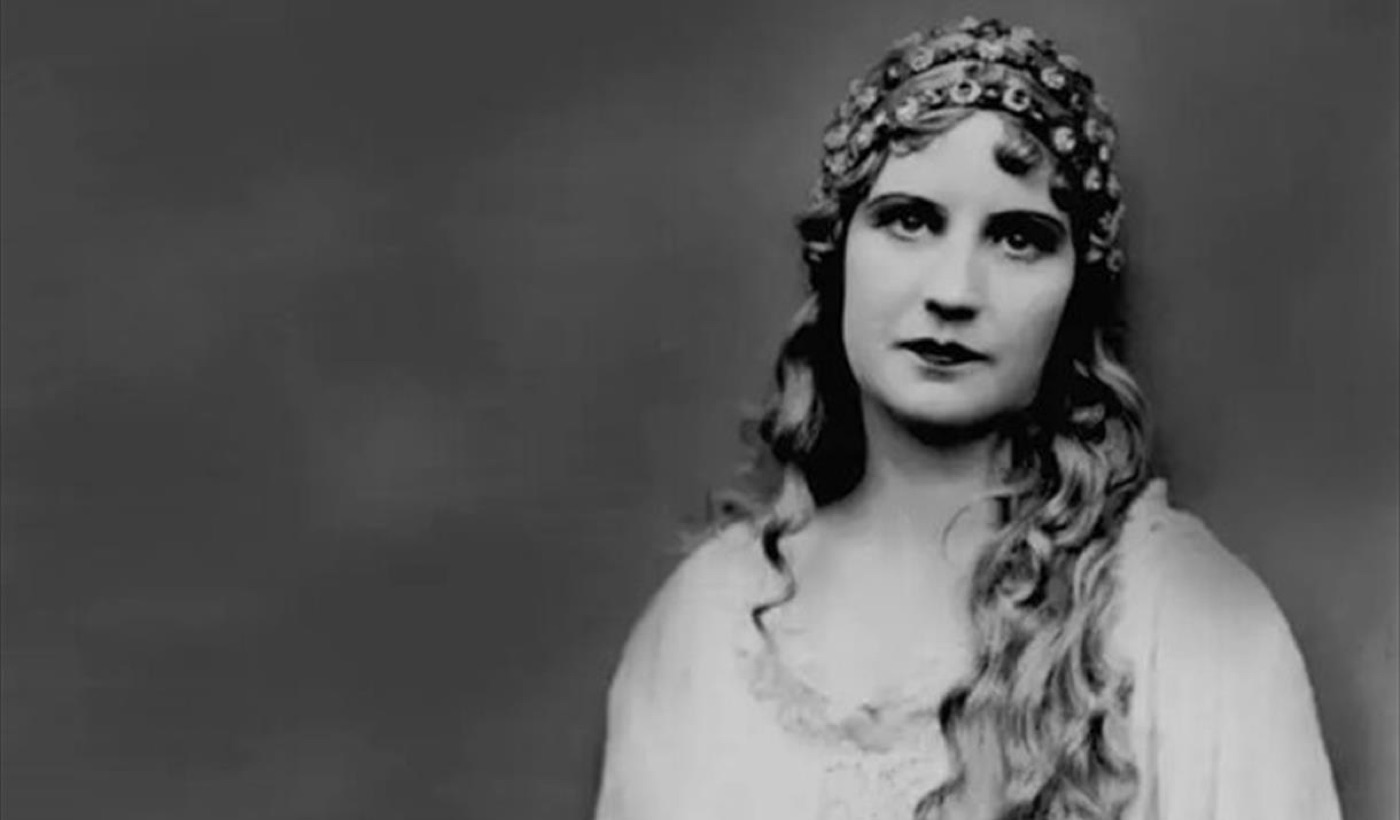
On 14 June there was a Kirsten Flagstad festival. Kirsten Flagstad was born in Hamar (even though she only spent her first year or so in town), and the farm where she was born, which has been turned into a museum, is just a couple of houses away from my office. So it was a bit by chance that my wife and I showed up at a free program in the morning, with a showing of an old documentary, and a fantastic introduction to Wagner by Alexander Zlatanos Ibsen, and his brother Stefan Ibsen Zlatanos.
They're both part of the Norwegian Wagner Society, and they talked passionately about his career, and how he really changed the whole way music is made and understood, with piano accompaniment. It was incredibly educational, and once again made me think “this is actually pretty exciting/interesting, I should learn more about it”.
The barber did it
On 10 September I was scrolling on YouTube, and happened to come across a recording of Il Barbiere di Siviglia (The Barber of Seville) from the Stockholm Opera. I was a bit curious, and started watching. The opening music was catchy and great, visually it was very exciting, and the first number with “Piano, piano” was very funny, with lovely visual comedy… I thought: “Is this opera? I thought opera was just women singing aaaahahaaa”.
I didn't finish the opera that day, but I watched bits of it over quite a few days, and started listening to the music I already “knew” in the car. When I had finished it, I watched it once more with my son, while translating simultaneously. I also thought it was fun to jump between different productions of the same opera – I've found out that unlike theater, there are lots of full-length recordings of opera productions, and often in good quality. I liked for example this one from the opera in Venice:
This was what really kicked off my interest, and since then I've watched a lot of operas on screen, have been to the opera in Oslo several times, and have taken my son to The Barber of Seville in a really great production in Copenhagen (in a cool “silent film” style).
Wagner
It's a long step from Rossini to Wagner, but the story isn't over. On 3 October I happened to come across a book about Kirsten Flagstad at the library: “Stemmen : Kirsten Flagstad - verdensstjerne og syndebukk” by Ingeborg Solbrekken. It told at length and in an exciting way about her childhood, voice training and use of her voice, eventually a fantastic international career (I think most people in Hamar, or in Norway, are aware of how big she was), and also the terrible treatment she was subjected to by the Norwegian state after World War II. I thought this was very exciting, and again you also get an impression of how incredibly big a social phenomenon opera has been, with millions listening on the radio etc. And since Flagstad became especially known for her interpretation of Wagner roles, through it I was also introduced to a bit of that culture, with Bayreuth – and the Metropolitan Opera (which will later become important to me).
I have to admit that when I tried listening to some recordings of her, it didn't click right away. But the seed had been planted, and it grew.
I didn't want to start with the Ring cycle (I still haven't dared to venture into that), but I heard about the opera The Mastersingers of Nuremberg. It's about a kind of early “singers' guild” that had singing contests with very strict rules about how songs were to be composed. A traveler comes to town and falls in love (of course) with the daughter of one of the members of the guild, but finds out that she has been promised to whoever wins the singing contest that's being held the next day. So he decides to sign up, and of course has to learn in a hurry how to meet their requirements. He gets help from an old single shoemaker, who probably could have been interested in the girl himself, but who decides to help the newcomer.
I watched the opera on Met Opera, a paid service that I pay for with the greatest of pleasure – they have many hundreds of operas available in high quality, and I love how elaborate the sets and costumes are, with dozens/hundreds of actors on stage. Opera is after all supposed to be a kind of “cornucopia”, at a time when other theater is often presented as “minimalist”
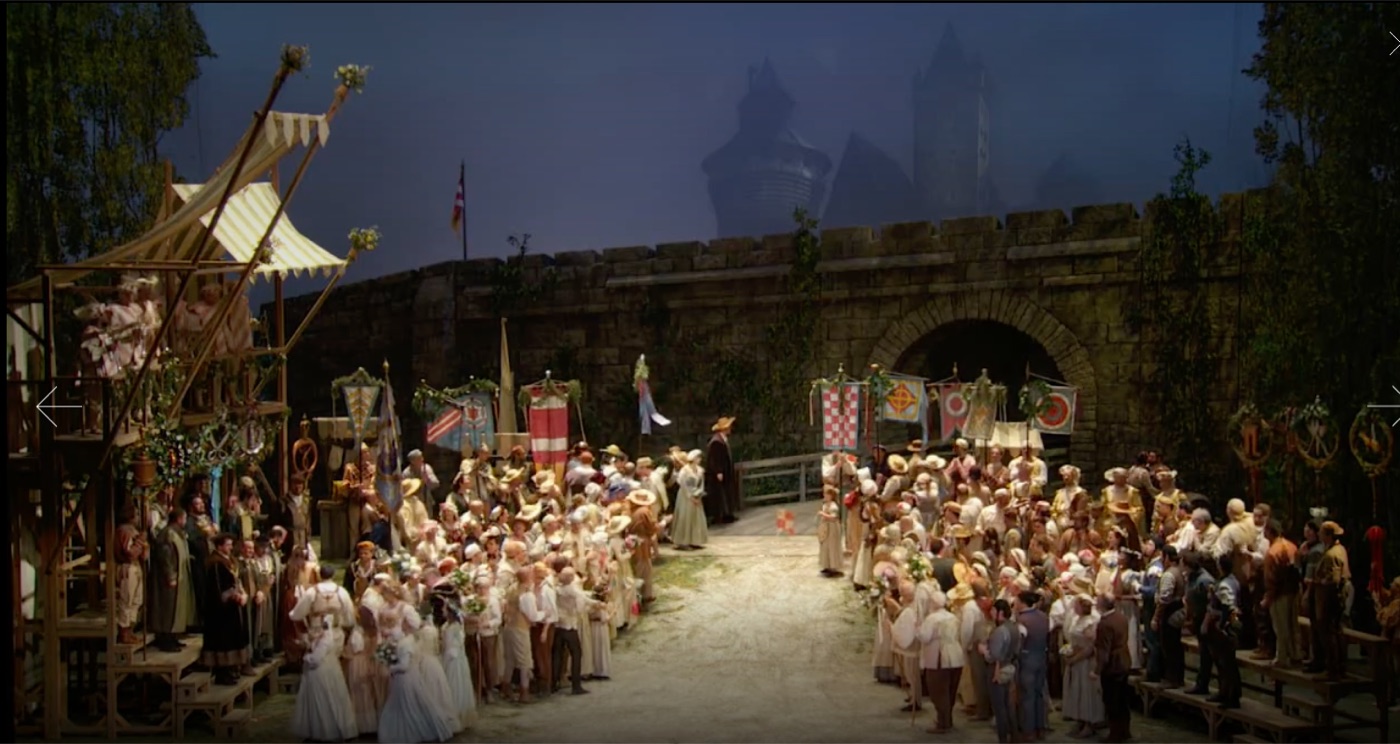
There are several excerpts out there, like this beautiful song, and this one. Recommended. Otherwise there are several full versions available on YouTube, among others from Bayreuth. A beautiful and funny opera that I really appreciated, and that was actually very accessible, despite the length (but when you're watching at home you absolutely don't have to watch it all in one go!)
The shoemaker Hans Sachs is based on a real person who lived in the 1500s, but the visiting junker says he learned from Walther von der Vogelweide, a “minnesinger” who lived in the 1200s and wrote in “Middle High German”. And we'll get back to that!
Tristan and Isolde
The other Wagner opera I've ventured into is Tristan and Isolde. You might know that story a bit? I first got to know it through reading the King Arthur trilogy by Rosemary Sutcliff to my son. Sutcliff is a fantastic children's book author who has retold a lot of myth and historical material. She has also written a whole book about Tristan and Isolde that I have, but haven't read yet.
I also knew that the great Norwegian ballad “Bendik og Årolilja”, which I first got to know in Gåte's version, is based on this legend, but it can also sound completely different. This ballad has mainly taken the element where they are each buried on their own side of a church, and then a tree grows up over each grave, and the two trees intertwine over the church roof.
The story of Tristan and Isolde itself also exists in many versions. In Wagner's version the plot is very compressed, maybe he figured everybody knew the backstory anyway. When the action begins we're on a boat on the way from Ireland to Cornwall, where Isolde is going to be married off to King Marke, Tristan's uncle. Tristan has gone to propose on the king's behalf, and bring Isolde to Cornwall, but the two have a complicated history, and when on top of that they drink by mistake from a magic potion that was actually meant for Isolde and the king, things go wrong.
Once again I watched a version from Met Opera, but there are a couple of full versions on YouTube. This one looks great and has subtitles in several languages:
The video that was here has been removed from YouTube.
Wagner's inspiration, back to Middle High German
The music is grand, and the text is beautiful. I understand the German pretty well, but there were quite a few older expressions I had to look up. Luckily I have an edition of Wagner's texts on my bookshelf and I started reading the libretto from there.
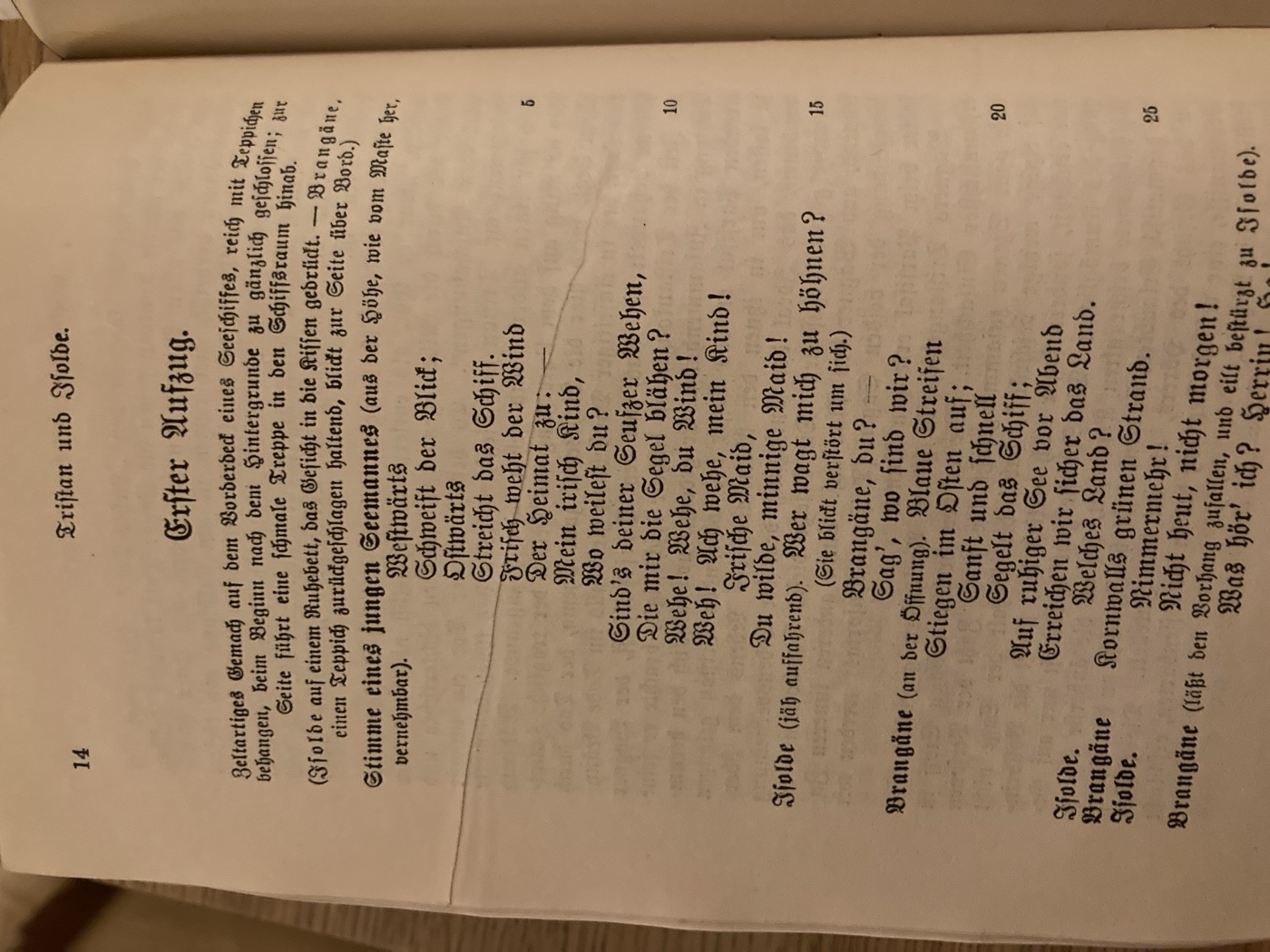
But then I got curious when I read about the piece that Wagner's inspiration had been Gottfried von Strassburg's version from the year 1200. I thought that I had to read that, and I was also curious about what the Old German language looked like, so I ordered a bilingual version through interlibrary loan.
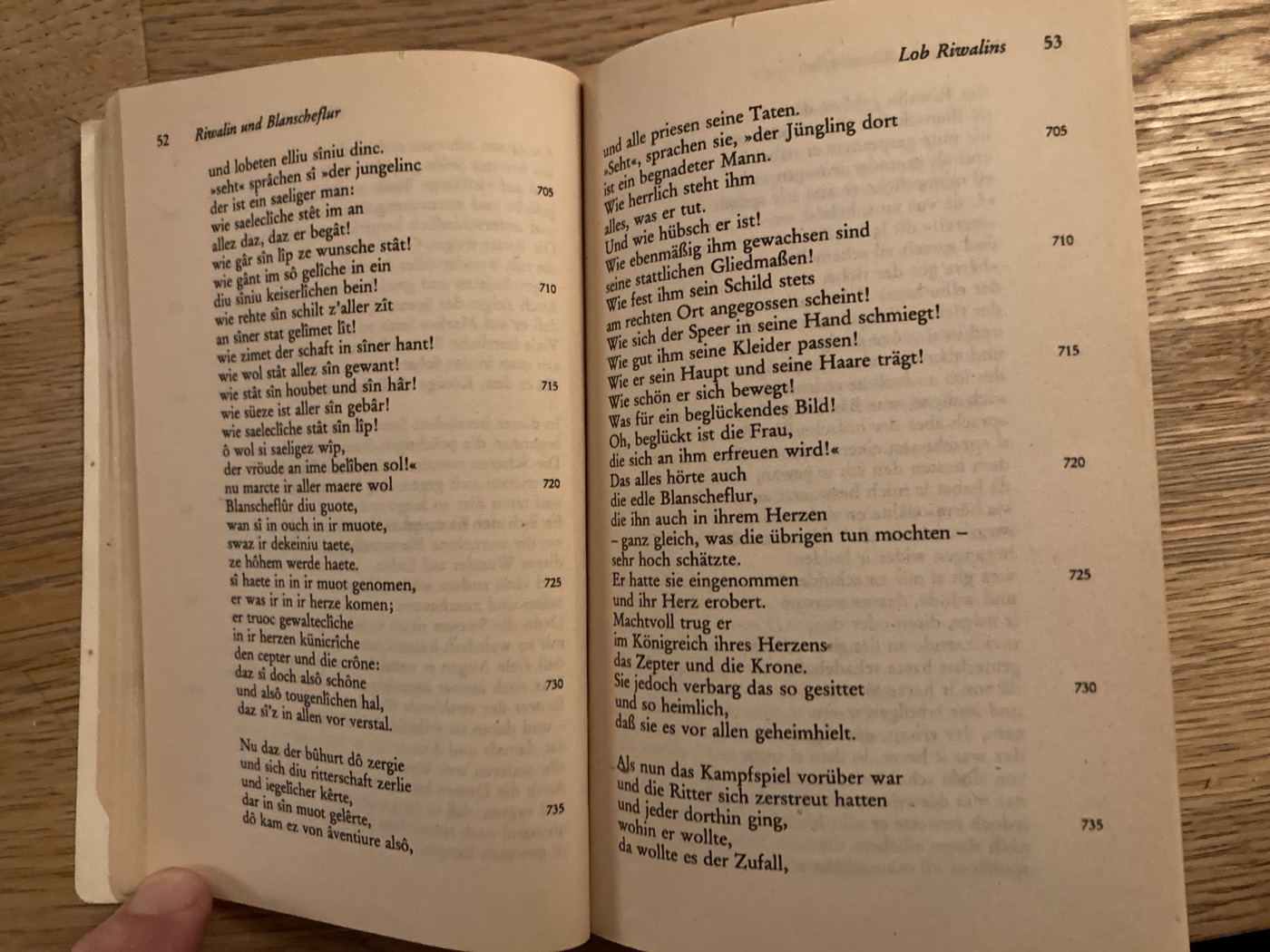
This is of course the same “language” that Walther von der Vogelweide, the famous minnesinger mentioned above, wrote in. (Minne by the way means “love” in older German). I completely fell in love with Middle High German, and the verses Gottfried von Strassburg wrote. Of course I can't read it fluently, but by peeking at the translation, and trying to remember some of the common words, it gradually starts moving along, and the musicality of the language is fantastic.
On top of all the details - this is a long work of 500 pages (with short verse lines, granted), and tons of adventures and details, plus long descriptions of armor and clothing. I remember thinking “I've now read 300 pages and he hasn't even met Isolde yet!”… Talk about getting the whole backstory served up…
I'll admit that after I had read volume 1 in Middle High German (the version above) I chose to read volume two in modern German, to save some time. But I'm definitely going to come back to Middle High German, there are lots of other exciting romances, songs, plus the Nibelungenlied, which was the inspiration for Wagner's Ring cycle. So there's plenty here to dig into!
Old Norse?
In his book Gottfried says that he got the story he's telling from an English book by Thomas of Britain, from 1160. Unfortunately this book has been lost, but we actually have a translation of this book into Old Norse, done in 1226 by “Brother Robert”, called Tristrams saga ok Ísöndar. I read about this in the fantastically interesting book by Stefka G. Eriksen: “Oversatt litteratur i middelalderens Norge”.
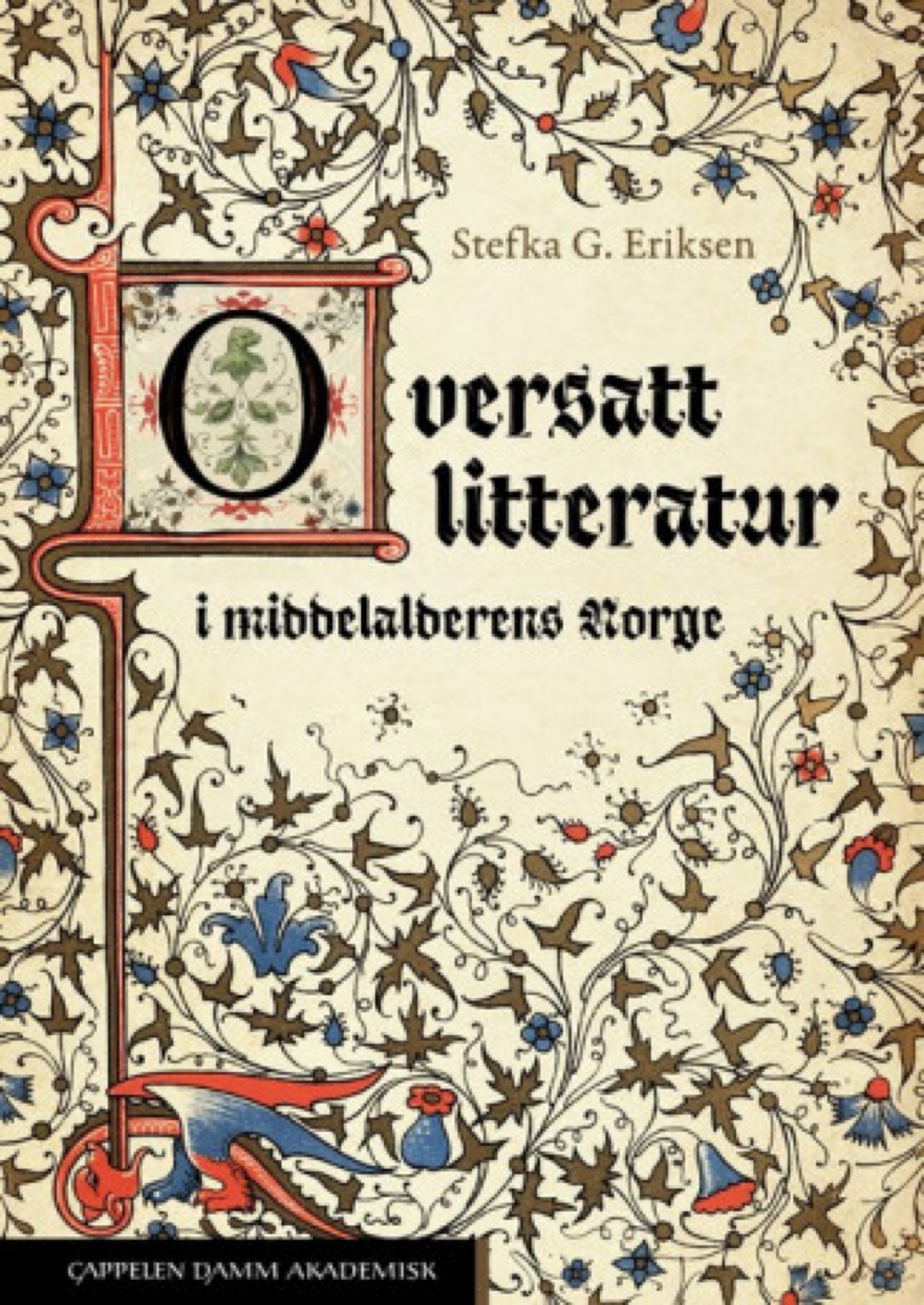
And you can also read the saga online in its entirety here, with a Danish translation.
Á Bretlandi var eitt ungmenni, hinn fríðasti maðr á líkamans fegrð, hinn vildasti ríkra gjafa, öflugr, ok auðigr ríkra kastala ok borga, kœnn til margrar kunnáttu, hinn röskvasti at riddaraskap, hinn öruggasti at allskonar drengskap, vitr ok varr í ráðagörðum, forsjáll ok framsýnn, fullgörr at öllum atgörfum yfir alla menn, er í þann tíma váru í því ríki; ok hèt þessi riddari Kanelangres at nafni.
In Bretland (Brittany) there lived a young man of the most exquisite bodily beauty and the most lavish with costly gifts; he was powerful and rich in great castles and strongholds, skilled in many arts, the quickest in knightly pursuits, the most unfailing in every kind of manhood, wise and shrewd in counsel, foresighted and thoughtful, perfect in all accomplishments above all other men who at that time were in that kingdom.
Like I said there are an incredible number of versions, adaptations and works of art inspired by this legend/story, here's a pretty big overview. So, lots more to explore, there are even other operas written about the same material.
The music was revolutionary?
We've talked about a lot, but one of the starting points was that according to the Zlatanos brothers Wagner's music was so revolutionary. And if you read a bit about the Tristan and Isolde opera, some people say this was a turning point in the history of music. Those are big words, and a bit hard to understand for someone who isn't that well versed in music theory. You could probably read whole books about this, but I've at least just barely started exploring it, and especially this famous chord.
Because there's a “Tristan chord”, which a lot has been said and written about. Here's an introduction by the always charming Stephen Fry:
(Stephen Fry has actually made a 2-hour documentary about his relationship to Wagner, which I'm planning to watch).
I also tried to get ChatGPT to make a personalized curriculum for me, so that I could understand this better. Maybe a good start?
Next steps
There are lots of rabbit holes to jump further into here:
All of Wagner's output, lots of individual operas I haven't seen yet, plus the whole Ring cycle (I've heard it's going to be staged in Oslo eventually)
Understanding better how music has developed, and what Wagner's contribution was. It's often hard today to understand how something could be revolutionary, that we take for granted today. But luckily there are fantastic educational resources.
Tristan and Isolde - I'm planning to read the Old Norse version, and have ordered a modern French retelling of an Old French version
I'll probably come back to Middle High German eventually too, now at least I know what it is, and in one of his verses Gottfried introduces a bunch of colleagues, so I just have to keep reading!
Read Tristan and Iseult by Rosemary Sutcliff to your kids, and watch The Mastersingers of Nuremberg! Auf Wiedersehen…