Legacy · 18 November 2024
Everything that doesn't survive
We all know Shakespeare, Holberg, Ibsen etc. But what about all the other plays that were put on at the same time, that nobody remembers? What was Ibsen compared to in his own time?
Two posts in "Peer, du lyver!", November 2024, and a follow-up in April 2025
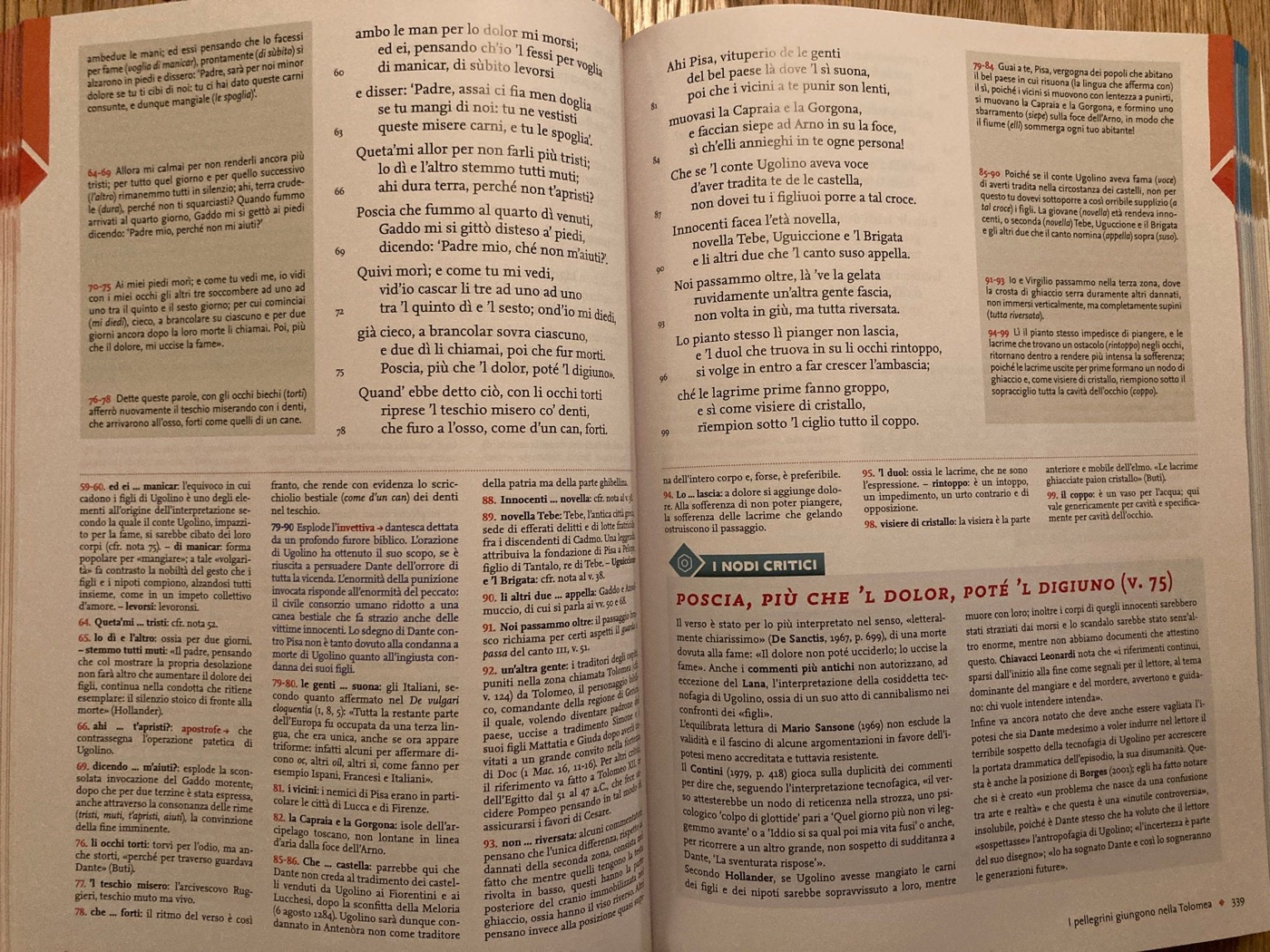
I just find it so fascinating to flip through old newspapers, and see how they talked about things "back then". Nb.no is of course fantastic, and now I felt like seeing how Ibsen was received in Germany. Here is the first time I found him mentioned, a note about The Feast at Solhoug from 1856, a production in Oslo.
It says that "the lyrical language was praised, but the play apparently lacks any dramatic character at all" (freely translated). They also mention a play about Thorarin and Valgerd by an unknown author, which is said to have "fine dramatic and historical depiction, but shows that the author is still floating in uncertainty about the actual goal of the play"... All this in an article that also talks about boundary surveying, the northern lights and other meteorological phenomena. (A bit weird that Germans were interested in reading about that?)...
A Friday night in front of the fireplace
I happened to have Friday night off and my wife was away, so I decided to dive deep down a few rabbit holes. I found a long article by Bjørnstjerne Bjørnson who also writes about both plays. I was fascinated by the contemporary reporting on these two plays that were put on at the same time, but have had such incredibly different afterlives... One of the plays is on my bookshelf, as part of Ibsen's collected works, reprinted again and again. The other was only performed once, and even though it was published, it has never been republished...
So I decided to read both plays. I had the Ibsen on my bookshelf of course, so I sat down in front of the fireplace and read. Before I started I had no idea what it was about. This play was of course very different from all the "late" contemporary realist ones, and also felt much more naive than Peer Gynt. It reminded me most of Oehlenschläger, a Danish Romantic poet that I came across by accident in the library's stacks, and that I liked so much that I bought his collected works (published 1850!).
Clearly Ibsen was very inspired by folk poetry, and I thought the language was very lyrical and beautiful — definitely something I want to read again. (There is a long discussion of his sources of inspiration here.) I couldn't find any recordings of performances, neither on Youtube (also tried German and English) nor on NRK.no, not even radio theater (it would otherwise have been very well suited to radio theater, with the beautiful language and the little songs). There are some recordings of the music that was written for the play back then, but since then an opera with the play as libretto has actually been written, by Wilhelm Stenhammar. I listened to it over the weekend, and I think it's pretty great music.
Thorarin og Valgerd
Now to Thorarin og Valgerd. As I said, only published once, but luckily scanned and available on nb.no. It turns out that the author was called Lauritz Sundt, he was an industrialist who later wrote two more plays, but none of them had any real success.
As I said, it's fun to think about everything that "doesn't survive history" — we all know Shakespeare, Holberg, Ibsen etc. (You can for example read the book Den norske litteratur, fra 1814 til våre dage, which came out in 1862! It suggests that Thorarin og Valgerd should have gotten more attention).
So this play only exists in the original edition, it has never been republished. It was probably hard to get hold of before, now there's a scan. But only in Gothic type — and even though that's not so hard to learn to read, it's probably an obstacle for many (as it was for me, until recently). So it's fun to wonder how many people have actually read this play in the last 100 years — maybe not that many...
The play takes place in Iceland in the 1300s and is about heroism and betrayal, blood revenge and the Icelandic Althing, Christianity against the old Norse gods (spoiler: Christianity wins in the end — there's a great scene at the end where the hero and his wife-to-be, after a lot of complications, his nurse and loyal men are locked up in a hut and about to be burned alive — everyone other than the hero has been offered safe passage and been begged by the hero to leave, but they all chose to stay with him... Then, as they're saying goodbye to each other, they suddenly hear the chanting of Te Deum — it's a group of priests who have come by boat from Norway, and who save them!)
If anything negative is to be said, the play is a bit too long, and could probably stand to be tightened up a bit, but I really enjoyed reading it myself! The two other plays are apparently even worse, but you shouldn't rule out that I'll read those too. Maybe I'll become Lauritz Sundt's biggest living fan! ;)
"Last performed in Copenhagen in 1890"
I was reading the introduction to a book of old Danish plays that I borrowed at the library. It said "This play was most recently performed in Copenhagen in 1890", and I thought — wow, that really fell out of favor! Until realizing that the edition I was reading was from 1896.
8 September 2024 · @houshuang
One manuscript
Found a high school Latin textbook from 1927 at the recycling center in Hamar for 5 kr, by the way. I recognized the first text — Catullus' poem about the poor dead bird of his beloved... That poem has its own Wikipedia page, by the way. It says that only a single manuscript survived to the 1300s (which was then copied). It's pretty crazy to think about how little it would have taken for us never to have had this poem preserved... (Same with Beowulf which was thrown out the window of a burning house!) and how incredibly much has been lost...
Afterward: Hulda, April 2025
I'm going to see Hulda in Lillehammer on Saturday. Based on a play by Bjørnstjerne Bjørnson that I plan to read — haven't read anything by him yet, but I have his collected works at home, "rescued" from Resirkula. A bloody play set in Norway in the 1100s. From the description it reminds me of the Ibsen play The Feast at Solhoug, which I read earlier, along with another play that was put on at the same time but that has been forgotten by our time — Thorarin og Valgerd, which actually took place in Iceland and was a family feud.

From Rabbit Holes