Essay · The chain reaction · 1 July 2024
One thing led to another
It snowballed, one thing led to another. Opera as an art form was explicitly an attempt to recreate the magic of Greek theater. Why did nobody tell me?
Short version — I've always thought of myself as someone who loved reading, learning languages, learning about society... Have traveled a lot, did a PhD in education, thought I was pretty well informed.
Heraklion
But a couple of years ago I was on Crete with the family, for the first time. It was meant to be quite a relaxing trip, but of course we had to stop by a few places, like the fort in Heraklion. I stood there looking at the meter-thick walls and reading that it had been under siege for thirty years (second longest siege in the world it said, still don't know where the longest was — tried to imagine what it was like to grow up inside those walls, live a whole life under siege — must surely be a fascinating historical novel!), I read about Venice, about the Ottoman Empire...
And I got a kind of shock... I had lived and studied in Northern Italy for two years, been to Venice many times, but never known that Venice had "colonies"! And the Ottoman Empire... that was a word I had heard, but it meant so incredibly little to me... Was it the same as Constantinople? Was Constantinople actually in Istanbul, or somewhere else in Turkey? When was it? At the same time as the Roman Empire?...
From a letter to a writer at Minerva, July 2024
I got very fascinated by the idea of the Greek language, with such an old continuous history, now spoken by as many people as live in Sweden... while there are hundreds of millions of people who speak a descendant of Latin... And I started learning Greek. At first the idea was just to learn modern Greek — among other things I bought Sophie's World in Greek and started reading it in parallel with a Norwegian edition. But while I was searching the web for resources for learning Greek, I very quickly ended up in forums where people learn and share resources about ancient Greek... And I got pulled in by the enthusiasm and the great learning materials they shared... And once you start hanging out in forums like that the road to Latin is short, and I fell into that trap too...
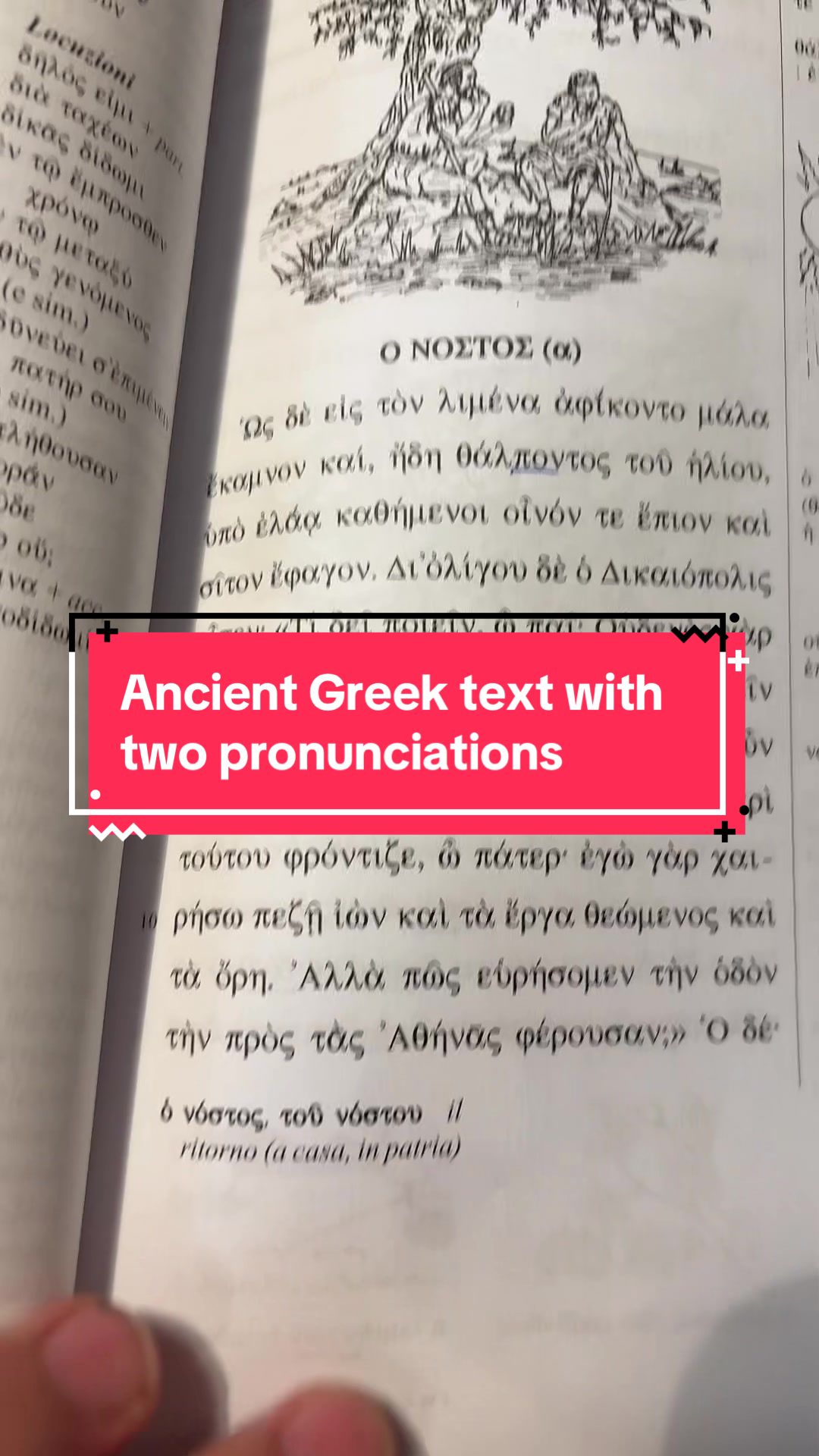
Video · TikTok @panepistimiou · July 2025
Reading Ancient Greek text with modern and ancient pronunciation.
One of the most interesting topics I've found since diving into "the classics" has been the concept of "reception" — something I didn't know was a thing you could do research on. I think it's incredibly fascinating to look at how cultures at different times have reacted so incredibly differently to things like Greek myths, Homer, Latin poets etc (and built on them — in literature, visual art, music etc)...
It was actually the interest in how Latin and Greek texts had influenced literature over the last 1000 years (different histories of reception, e.g. Simon Goldhill's "Who needs Greek", which is totally fantastic), that got me interested in "classical literature", eventually theater, and finally opera...
From a letter to a professor of classics at NTNU, January 2025
And through all this I suddenly started getting interested in classical "newer" culture (for me everything less than 1000 years old is "newer" ;))... When you look at how Shakespeare was so influenced by the translation of Ovid that came out a couple of years before, follow the lines back to Chaucer (who is really funny to read for a Norwegian who knows French and a little Latin!), Dante etc... And suddenly I'm reading Dante, Shakespeare, and Ibsen... Ibsen is fantastic!
Theater
I've always thought theater was cool, and in addition to a lot of children's theater with my son I've caught a show here and there, in different countries. But it's mostly been modern plays, that you see once without any context, and afterwards you think "that was interesting" or not... But nothing more.
Whereas now I've started to actually dig into for example Shakespeare — with a lot of help from totally fantastic Youtube channels and podcasts that explain and teach me what I never got to learn in school... as well as fantastic digital recordings of performances etc. Suddenly I'm watching three different productions of Macbeth, have streaming subscriptions to both National Theater and The Globe, am reading the text of the play...
Same thing with Ibsen... And it turns out that even the plays I thought I knew, I didn't really know properly... I thought I knew who Peer Gynt was, but apparently I had never seen the whole play until now — it's fantastic! So much philosophy and stuff to think about...
I read my first play (since jr. high) in April 2024, and since then I've read many and think it's great fun.
French drama, via a book from 1862
Once when I was searching for something about Ibsen I came across a book called "Norsk litteratur fra 1814 til våre dager", written in 1862. Of course I had to read it! It started a bit before 1814 with the Norwegian Society, Zarine as a bad imitation of Zaire, Love Without Stockings etc. At this point I hadn't heard a word about any of these, neither the literary movements nor the people. But my curiosity was awakened!
Now I'm lucky enough to read French and German pretty well. So of course I had to go off and read both Zaire by Voltaire, and Zarine by Nordahl Brun. As well as Love Without Stockings. All of it very enjoyable and interesting... Then I came across Michael Rosing's travel diary from 1788, when he spent 6 months traveling around Europe visiting different theaters. Incredibly interesting — when he describes walking around Versailles a year before the revolution, it almost gave me chills!
Then I got more interested in French drama, I saw Phèdre at the National Theatre (streaming), and then found Ina Madelene, with the French TV archive. I ended up reading Phèdre, Bérénice and Le Cid and watching them all as French TV theater in black and white. Wonderful! (Even the "announcer men", with big glasses, who seriously and earnestly introduce the play beforehand are totally magical I think).
Phèdre is also incredibly fascinating — there you can really talk about Western culture being a dialogue, like Mortimer Adler talked about — you can see Phaedra by Euripides, Phaedra by Seneca, Phèdre by Racine, and modern interpretations like Phaedra's Love by Sarah Kane, or Phaedra by Simon Stone...
I've gotten very interested in classical theater — first Shakespeare and Ibsen, but now I'm reading Racine and about how classical French drama was copied in Denmark (partly by Norwegians, like Nordahl Brun) — and it wasn't just about Greek themes (like Phèdre) but also based on Aristotle's three unities, etc... At this point I got curious whether anyone in Norway was doing research on this kind of thing. In the last couple of months I've read with great interest:
Read in spring 2025
Teatralitetens verden: barokk scenekunst
Fra Heliodor til Petter Dass
Mellom europeisk tradisjon og nasjonal selvbevissthet
All of them have been incredibly interesting. They've opened my eyes to many literary works I hadn't heard of, and also given me many concepts and ways of understanding works that I didn't have at all, as someone with no formal background.
From letters to a historian of religion at Høgskolen i Innlandet (December 2024) and a professor emeritus at NTNU (April 2025)
Opera
I've started listening to/watching a lot of opera (digitally), and there almost all the stories are based on classical myths, and opera as an art form was explicitly an attempt to recreate the magic of Greek theater, "invented" by humanists in Italy at the end of the 1500s! Why did nobody tell me? Fantastic to see the oldest piece still being performed, from 1607 about Orpheus and Eurydice.
Then I worked my way forward, and got interested in how literature and art have been so influenced by Greek myths and the Bible, and Latin works like the Aeneid and the Metamorphoses, read Shakespeare, tons of Ibsen, Holberg, read about the Norwegian Society in Denmark which led me to French classicism, opera (which was of course inspired by Greek tragedies when it was "invented") led me to classical music... (And in all this I have the advantage that by now I speak most of the languages of Western Europe).
And through opera I got interested in classical music, which has led to several visits to the Oslo Concert Hall etc.
From a letter to a producer of theater and opera for TV, April 2025
From Rabbit Holes · Tristan and Isolde · 15 May 2025
And then I got inspired to write a bit about how I went from being completely uninterested in opera, to the opposite, in a very short time. In fact I can date a couple of the most important moments pretty exactly. 6 May, 14 June, 10 September and 3 October, 2024. Before that I had never seen a single opera, knew almost nothing about opera history, and thought it was completely uninteresting.
On 6 May I started reading a totally fantastic book (Who needs Greek? by Simon Goldhill) about how the legacy of ancient Greece and the Greek language has interacted with different societies, cultures and political movements, from Jews in the Old Testament, via Erasmus of Rotterdam who retranslated the Bible from Greek and popularized the study of ancient Greek in Europe, to different ways ancient Greek plays were interpreted in England and Germany in the 1800s and 1900s. This was a continuation of my project that began on Crete, of learning about older civilizations and the Greek language.
Read the whole thing: Tristan and Isolde — from Wagner to Old German, via Old Norse →
I keep crawling down rabbit holes — one of the privileges I at least feel after leaving academia is that I have more "mental space" after work to do weird things, and no deadline, nothing that has to be published...
I'm still a very happy dilettante. But I think it's fun, the more I learn the more fun it is, and the more I get out of what I read.
The strange thing for me is that Greek and Latin have led to a big interest in all of classical culture (some of this is probably specific to me, but think there's something general here — which could be an interesting point in terms of why this should get more into schools). Not talking so much about the languages themselves, even though I think they're fantastically fun, but understanding more and more of the history and the important texts and how these have had such an incredibly big influence on all of intellectual life...
More on this: It all started with Kirsten Flagstad
From Rabbit Holes
 Rabbit HolesRette baker for smed, rhyme and rhythmFrom André Bjerke to French tragedies, Wessel and pantomime
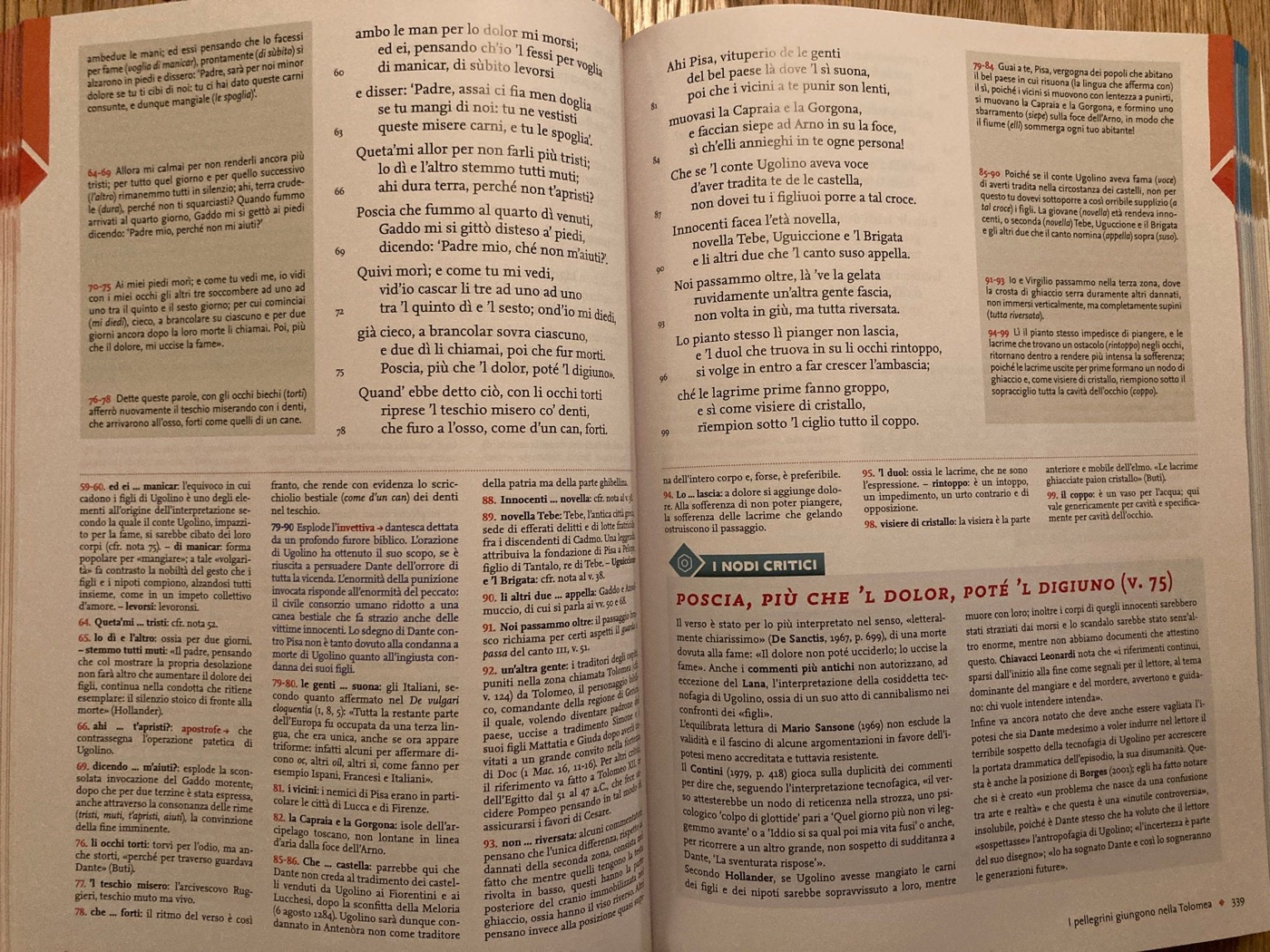 Rabbit HolesThe theater of fear, first Ugolino in the tower prisona German fear-theater, inspired by Dante who was himself inspired by Greek myths...
 Rabbit HolesKristofer Janson, historical novels, Jens Munk and the Northwest PassageKristofer Janson's historical novels, Jens Munk and the Northwest Passage.